Used

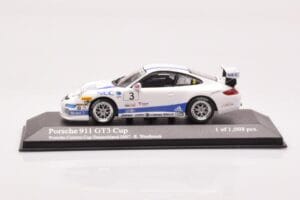
Porsche 911 997 GT3 Cup #124 Mattheus / Geoffroy / Vanbellingen / Fumal 24 Hours of Spa 2005 Minichamps 1:43
Only 3 left
Price:
33.00 €
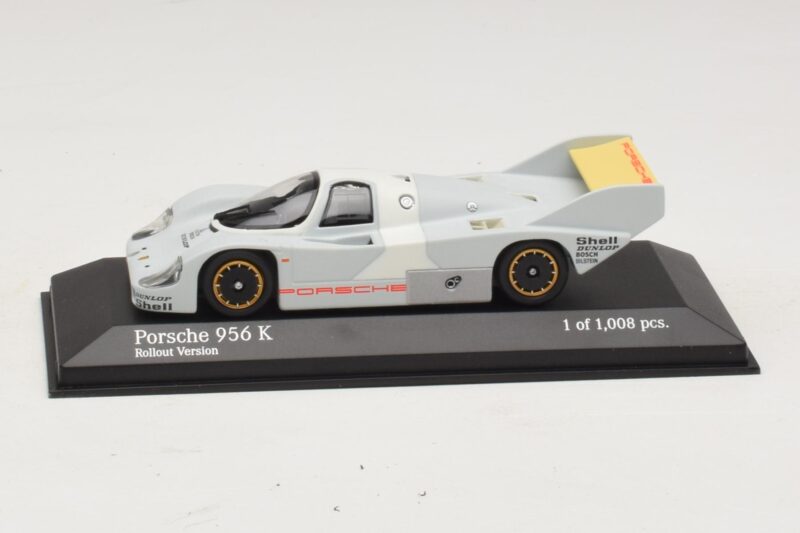
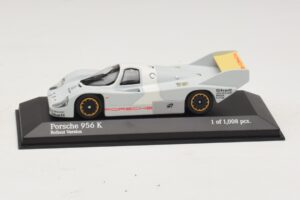
TL;DR: Minichamps' 1:43 Porsche 956K Rollout Version reproduces the 1982 Group C prototype in its bare factory-test livery, sealed-body zinc alloy diecast with no sponsor graphics competing against the ground-effect sills, low nose, and raw aerodynamic shape the race livery would later cover.
Before a Group C prototype ever wore sponsor colors, it ran laps in bare metal or primer white, the livery painters' blank canvas. Minichamps' rollout-version 956K freezes that moment, letting the 956's genuinely radical ground-effect shape, the thing that made it dominant, stand without a single decal competing for attention.
The 956 introduced underbody venturi tunnels to sports car racing, channels shaped into the floor that generated downforce without the drag penalty a wing alone would cost. Minichamps casts the rollout version as a single sealed shell, and with no sponsor graphics to look at, the eye goes straight to that shape: the low, pointed nose, the sculpted sills running back to the tail, and the K-kit's wider rear track over the standard 956. A one-piece casting suits this subject particularly well, since the point of a rollout livery is precisely that nothing distracts from the bodywork itself.
Teams ran cars in bare aluminum, primer, or a single flat color during initial shakedown testing, before the race livery and sponsor decals went on for competition. Minichamps' reproduction keeps that same restraint, a matte or lightly finished body color with minimal graphics, which is a deliberate contrast against the heavily sponsored 956s and 962s most collectors already own. The paint still needs to read convincingly at this scale even without decoration to hide behind, and the panel gaps and vent detailing carry more weight here than on a fully liveried subject.
When Porsche introduced the 956 in 1982, it brought full ground-effect aerodynamics to a category that had mostly relied on wings and splitters, and the result reshaped Group C competition almost overnight. The car's underbody tunnels, twin-turbo flat-six, and low-drag bodywork combined for straight-line speed and cornering grip that rival manufacturers spent years trying to match.
The 956 went on to win Le Mans outright and dominate the World Sportscar Championship through the early 1980s, a run of success that eventually forced the FIA to close the loophole that had allowed such extreme underbody tunnels. This rollout version captures the car at the very start of that story, before any of it had happened yet.
Most 956 and 962 models on a collector's shelf wear full race livery, which makes an unadorned rollout version a deliberate contrast piece rather than a substitute for one. At roughly 10cm in 1:43, it sits easily alongside liveried Group C stablemates without needing a separate display theme, and it rewards the kind of collector who wants to look at engineering rather than sponsorship. Paired with a fully liveried 956 or 962, it tells a more complete story about how these cars actually reached the grid.








You save 16.00 €
Lowest price in the 30 days before the reduction: 123.00 €