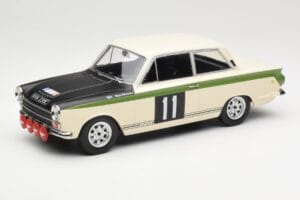
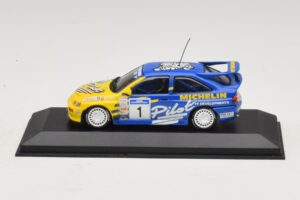
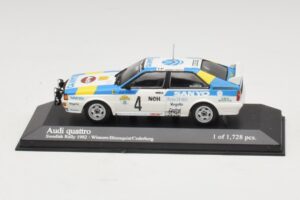
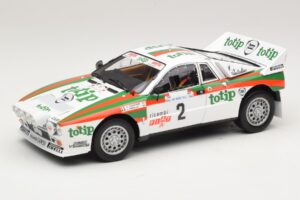
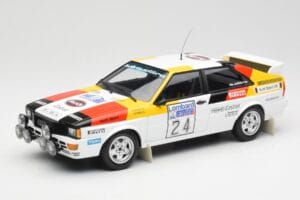
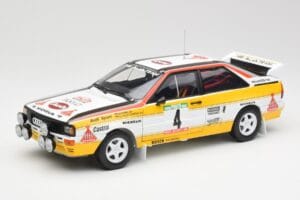
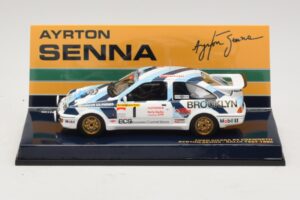
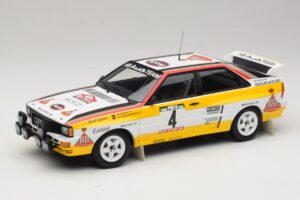
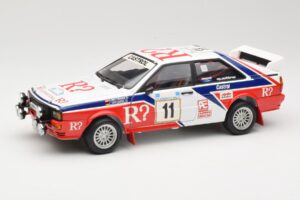
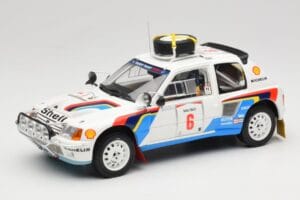
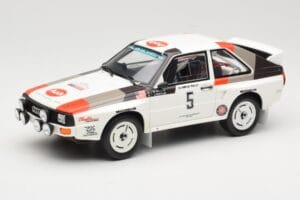
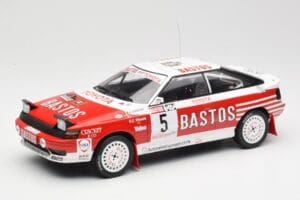
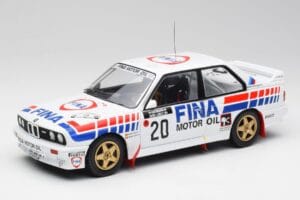
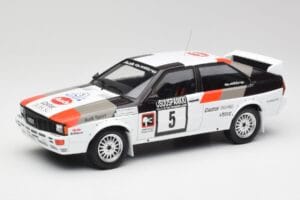
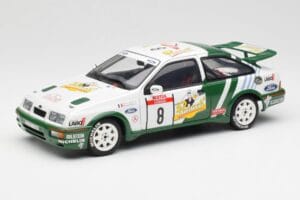
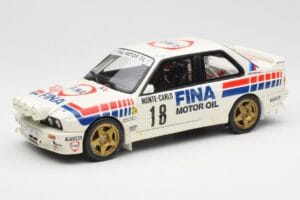
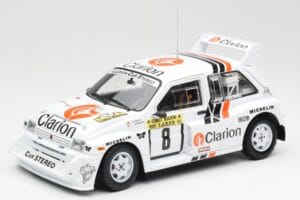
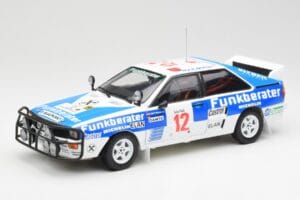
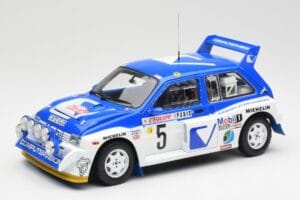
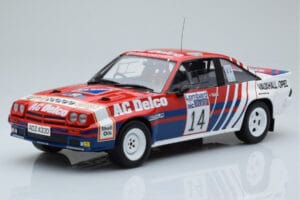
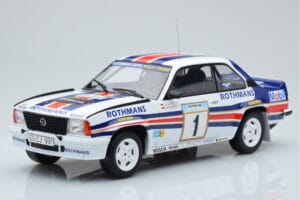
TL;DR: Group B and Group A legends scale models document rally's most powerful era from Audi, Lancia, Ford, and Peugeot, built at 1:18 and 1:12 in diecast, resin, and composite from IXO, Otto, and Minichamps. Coverage spans the 1960s through the 2000s, centered on the 1980s Group B and Group A transition.
Rally history has no era more mythologized than Group B, a brief window of near-unrestricted regulation that produced cars far more powerful than the sport had ever seen, followed by Group A's stricter, more sustainable formula. This range documents both.
Group B and Group A Legends and Rally's Turning Point
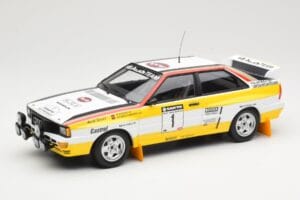
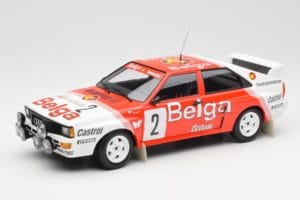
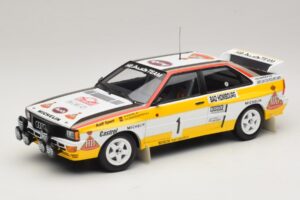
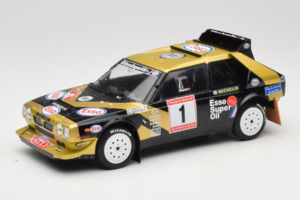
Group B's short lifespan is central to its legend: regulations allowed manufacturers to build four-wheel-drive machines with minimal restriction, and Audi's Quattro program helped establish that layout as the rally standard before Lancia, Peugeot, and others pushed the formula toward genuinely extreme performance. Safety concerns ended the category after only a few seasons, which is exactly why surviving cars and their scale reproductions carry such documentary weight for rally collectors today.
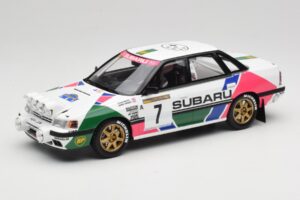
Group A replaced Group B with a stricter, production-based ruleset that prioritized sustainability over outright power, and the category ran for considerably longer as a result. This range's coverage of both eras lets collectors trace exactly how rally regulation evolved from unrestricted extremity toward a more controlled, longer-term competitive formula.
Manufacturers Producing Group B and Group A Models
IXO, Otto, Minichamps, Kyosho, and Sun Star all reproduce subjects from this category:
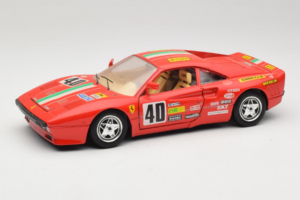
- 1:18 suits collectors focused on livery and body kit detail for individual hero subjects.
- 1:12 appears on select flagship subjects for deeper mechanical and suspension detail.
- Composite construction appears alongside diecast and resin, reflecting the technical complexity of these rally machines.
Era coverage running from the 1960s through the 2000s reflects both the category's core 1980s period and its broader rally lineage context.
Building a Group B and Group A Collection
A collection focused on this category benefits from tracking a specific manufacturer's transition from Group B to Group A, since that shift shows directly how regulation change reshaped a single brand's rally program. Collectors drawn purely to the era's extremity often concentrate entirely on Group B subjects, accepting the smaller pool of available models in exchange for the category's outsized mythology.
Frequently Asked Questions
Why is Group B considered rally's most extreme era?
Near-unrestricted regulations let manufacturers build four-wheel-drive cars with minimal power limits, producing some of rally history's most powerful machines before safety concerns ended the category after only a few competitive seasons.
How did Audi influence the Group B era?
Audi's Quattro program helped establish four-wheel drive as the dominant rally layout during this period, a shift that reshaped competition car design well beyond Group B itself and influenced the Group A category that followed.
What replaced Group B and why?
Group A introduced a stricter, production-based ruleset following Group B's cancellation on safety grounds, prioritizing sustainability over outright power and running for considerably longer as a competitive category.
Which scale is best for Group B rally car detail?
1:18 gives livery and body kit detail enough physical space to read clearly for most collectors, while 1:12 suits those specifically interested in the suspension and mechanical detail that defined these unrestricted-era machines.