Last one
Used
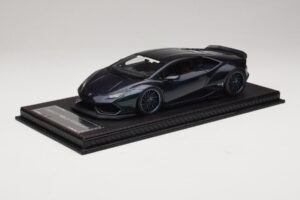
1:18 sits at the center of serious scale model collecting: large enough to show interior stitching and panel lines, compact enough that a dozen cars still fit a bookshelf. This range covers supercars, Formula 1 machines, and vintage classics built in diecast and resin, giving new and experienced collectors a genuine spread of tiers to choose from.



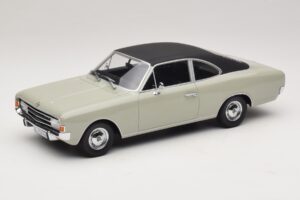
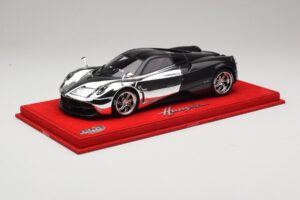
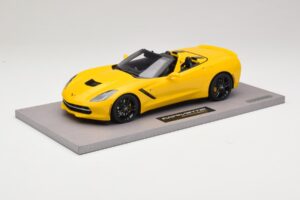



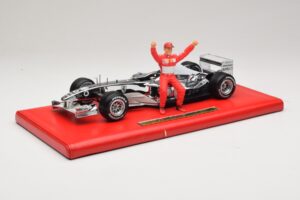





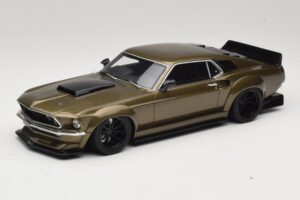


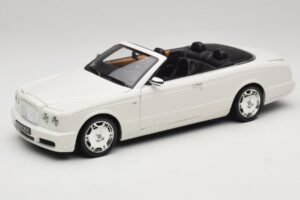
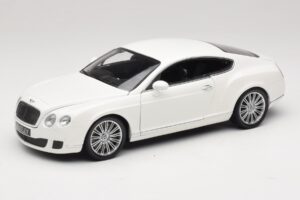
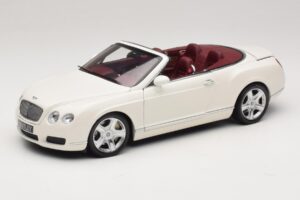
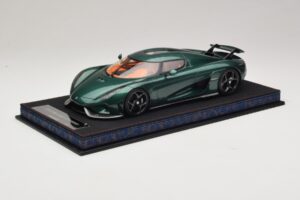
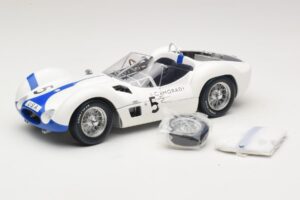


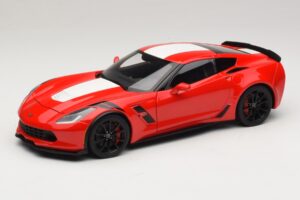





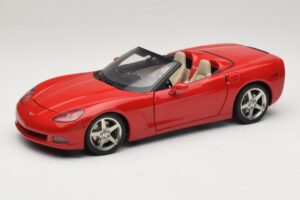

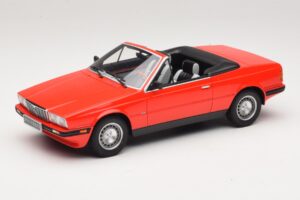


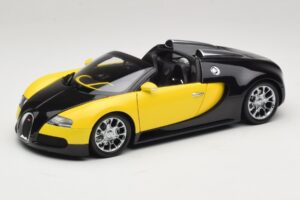
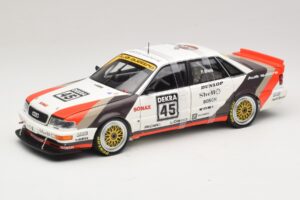

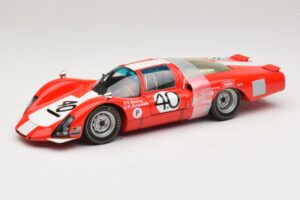

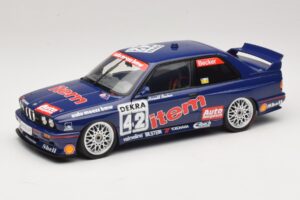
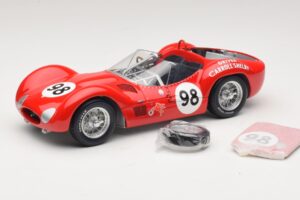
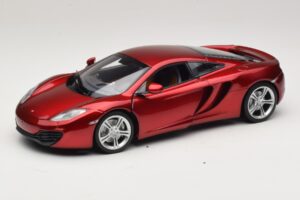
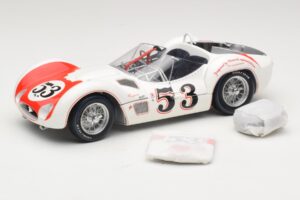

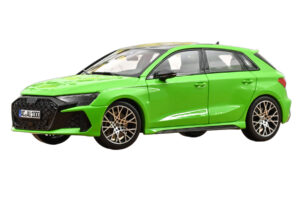
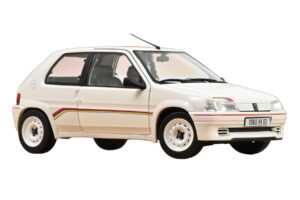

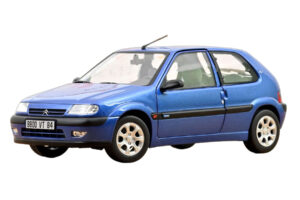
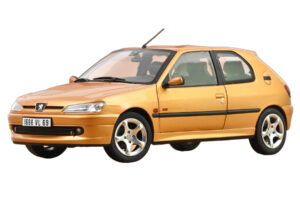
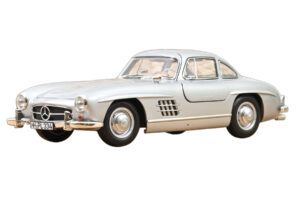
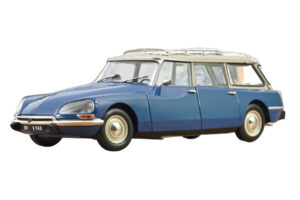
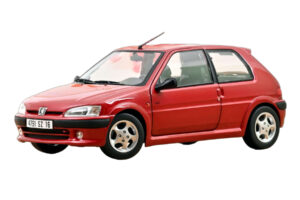


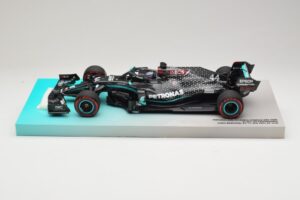

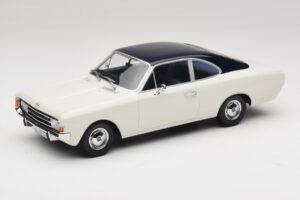

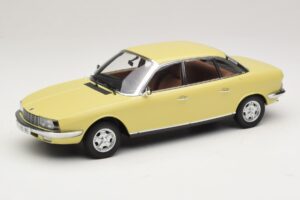


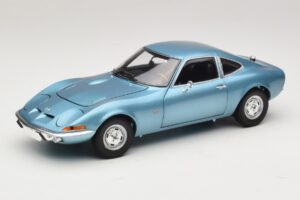
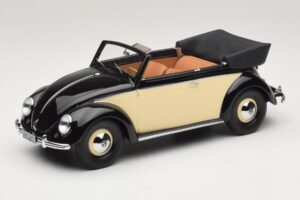
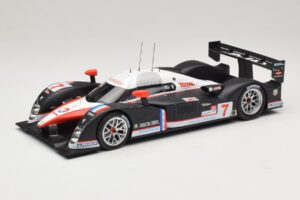
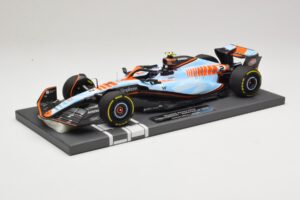




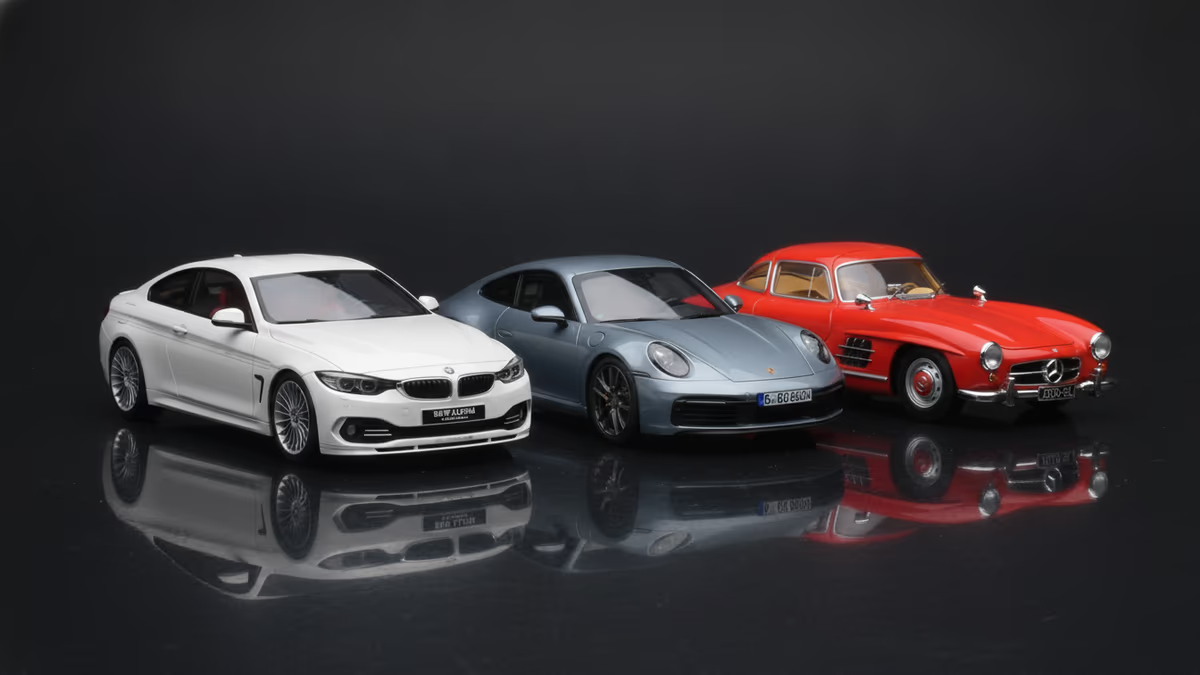
TL;DR: 1:18 is the flagship scale for collectible model cars — replicas roughly a foot long, large enough for full interiors, engine bays and, on diecast models, opening doors and hoods. We stock more than six thousand 1:18 model cars, new and used, from starter pieces to premium diecast and resin. Below: why the scale dominates collector cabinets, how the two materials differ at this size, and how to buy when every production run is finite.
Ask a room of collectors which scale anchors their cabinet and most will point to the same shelf. 1:18 is where the hobby shows off. The format is large enough to reproduce a dashboard you can actually read, an engine bay worth studying and paint that behaves like the real thing under light — yet compact enough that a single shelf still holds a respectable lineup. With more than six thousand 1:18 model cars in our catalog, from a chrome-silver Ferrari 360 Modena to a Giugiaro Prima concept study, the practical question is rarely whether the subject you collect exists here. It is which manufacturer to trust, which material suits the subject, and when a used listing is the smarter way in. The guide below works through each in turn.
The arithmetic behind the notation explains a lot. At one-eighteenth of the original car, most road-car replicas come out roughly a foot long — big enough that detail stops being suggestion and becomes reproduction. At this size a manufacturer can fit fabric seatbelts, photo-etched badges, readable gauges, plumbing and wiring in the engine bay, even textured carpet in the footwells. That density is what earned the scale its centerpiece status: a well-executed 1:18 replica rewards the kind of close, slow inspection that smaller formats can only hint at, and it keeps rewarding it years after the purchase.
Presence matters just as much. A 1:18 model carries real weight on a shelf — visually, and in diecast form literally — and a single strong piece can hold a display the way one painting holds a wall. Collectors who work across formats tend to use 1:43 scale models for breadth, building full grids and complete generations in the compact European standard, and reserve 1:18 for the subjects that deserve the deep treatment. The two scales complement each other; the larger one simply takes the starring role. Further up still, 1:12 pushes into museum territory, but 1:18 remains the point where detail, price and shelf space stay in workable balance — which is precisely why it became the default answer to the question of where a collection should begin.
Both materials do their finest work in 1:18, and they split the scale between them. Diecast models are cast in zamak, a zinc alloy with genuine heft, and the construction supports what many collectors consider the whole point of a large scale: opening doors, hoods and trunks, steerable wheels, a hands-on relationship with the replica. Manufacturers such as CMC, AUTOart, Minichamps, Kyosho and Norev built their reputations on this material, and its price range runs from approachable to flagship without ever leaving one quality tradition.
Resin takes the opposite path. The casting process holds sharper body lines and thinner details, which is why manufacturers like GT Spirit, OttOmobile and BBR choose it for low-volume subjects — but the body stays sealed, with no opening panels to interrupt the silhouette. The trade is detail-in-motion for perfection-at-rest, produced in smaller runs that tend to leave distribution quickly. Neither material is objectively superior; they answer different collecting instincts, and plenty of serious cabinets hold both without apology.
Most 1:18 collections grow along one of a few lines. Some collectors follow a single car brand — a cabinet of nothing but Porsche model cars is a classic of the genre, with Mercedes-Benz, BMW and Ferrari shelves close behind. Others commit to one manufacturer and trust its house style across many subjects, or chase a theme: one racing era, one body style, the cars of a single decade. Whatever the organizing idea, the scale rewards selectivity. At roughly a foot per car, shelf space is a genuine budget, and experienced collectors treat each new slot as a decision rather than a reflex. A display case earns its keep here too — it keeps dust off the paintwork and turns a row of models into something closer to an exhibition.
The buying rhythm is shaped by one hard fact: production runs end. A reference is tooled, produced in a finite quantity, distributed — and then the manufacturer moves on to the next release. There is no standing reprint behind a popular model; once a run sells through, regular distribution is done with it for good. That is why the used side of this catalog carries equal weight. Our used models arrive from the secondary market, many of them mint in the original box, and they open up what the new market has already closed: discontinued references, sold-out liveries, releases you missed the first time around. In this hobby, used rarely means tired. It usually means unobtainable new — and a large share of the most desirable 1:18 replicas in existence answer to that description.
Care, at this scale, is straightforward but non-negotiable. Keep models out of direct sunlight, which fades paint and yellows clear parts; dust with a soft brush rather than a cloth; and keep every box, insert and certificate, because on the secondary market condition and completeness carry more weight than almost anything else. The replica you buy casually can become the one another collector spends years hunting — and the shape it is in when that day arrives decides what it means to them.
Every scale accumulates its own folklore, and 1:18 more than most — questions about value, rarity and who builds the strongest replicas circulate wherever collectors compare cabinets. The short answers below stick to what holds durably true in this market rather than chasing a snapshot, because individual prices move and catalogs evolve while the logic underneath them barely changes at all.
No single manufacturer wins on every axis, which is exactly why the question never settles. At the premium end, CMC and AUTOart are prized for engineering depth, while Minichamps and Kyosho are trusted for consistent accuracy across enormous catalogs. In the value tier, Norev and Almost Real deliver a remarkable share of that quality for considerably less, and Solido keeps the entry point honest. The more useful question is what you value most — opening-part engineering, subject coverage, or price-to-detail ratio — because each answer points to a different name on the box.
The spread is wide by design, and it is the relationships rather than the price tags that stay stable. A starter-tier replica costs a fraction of a premium one; a limited run from a respected manufacturer holds its position far better than a mass-produced piece; and a discontinued reference that collectors still want will usually command more on the secondary market than it did in regular distribution. Condition and the original box move value more than almost any other factor — the same replica, mint and complete versus loose and faded, can sit in entirely different brackets.
There is no single settled answer, and any list claiming one goes stale quickly. What matters is how rarity actually works in the hobby: it comes from small production runs, dealer-exclusive editions, withdrawn liveries and color variants that never reached wide distribution. Crucially, rarity only translates into desirability when demand exists — an obscure replica nobody collects is merely uncommon. The pieces collectors chase hardest combine a small run with a beloved subject, and in 1:18 that combination appears more often than in any other scale.
The pattern repeats across the hobby: models from premium manufacturers, produced in limited numbers, depicting subjects with lasting followings — Porsche, Ferrari, the great racing liveries — kept mint with box and paperwork intact. Age alone does nothing; an old replica without demand stays inexpensive, while a sought-after discontinued run can appreciate steadily from the day distribution ends. If you collect with one eye on value, buy the references you genuinely want while they are available new, and protect their condition as carefully as the finish deserves.
That, in the end, is what this page is for: more than six thousand 1:18 model cars in one place, new releases next to used and discontinued references, starter pieces next to premium diecast and resin. Filter by car brand, manufacturer, material or condition, start from the subjects that already mean something to you, and give the flagship scale the shelf it has earned.