Last one
Used
Back in stock
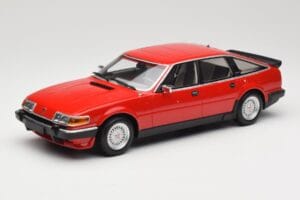
Minichamps built its reputation on season-by-season motorsport consistency, covering Formula 1, DTM and GT3 racing with a livery accuracy that lets collectors assemble complete grids. This collection spans Porsche, BMW, Mercedes, Audi, Ford and McLaren across 1:18, 1:43 and 1:12 diecast and resin.
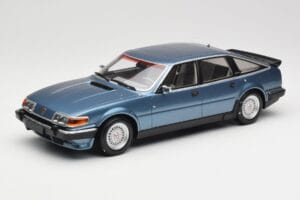

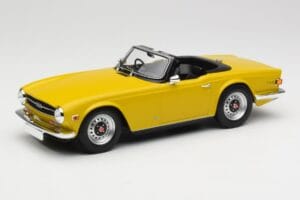
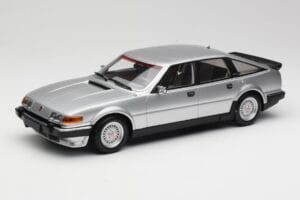
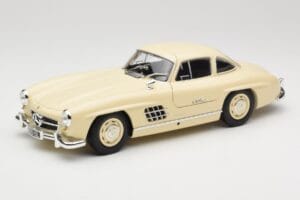

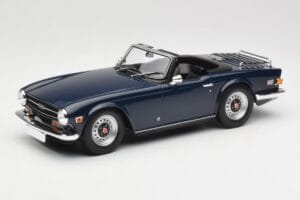
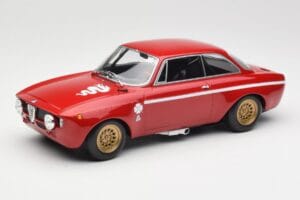
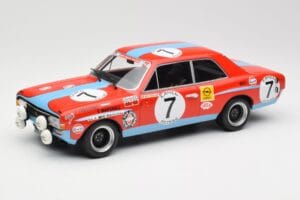

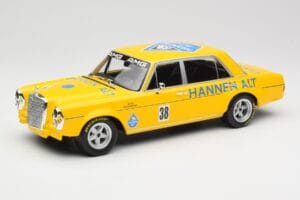
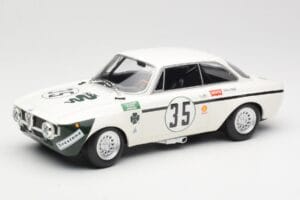



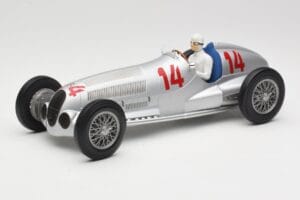

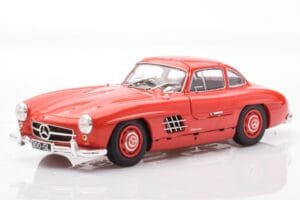
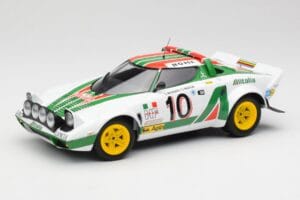
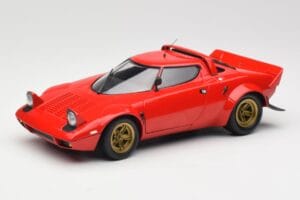
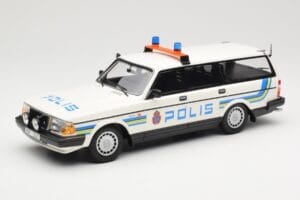

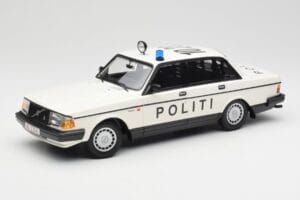
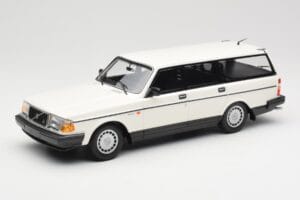

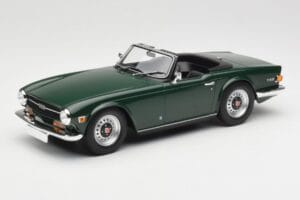
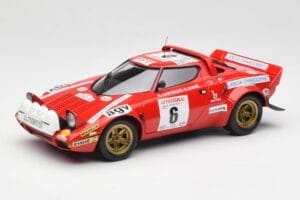


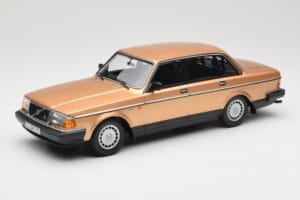
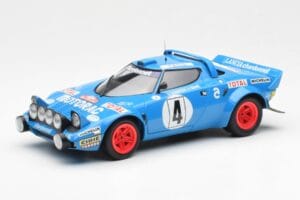
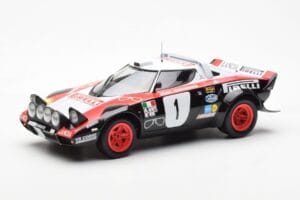
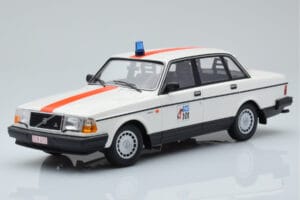
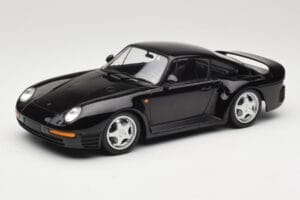
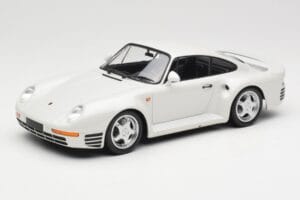
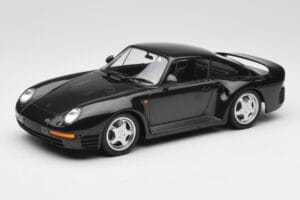



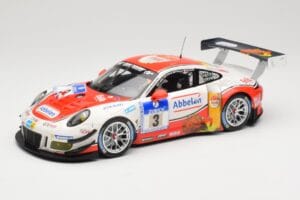


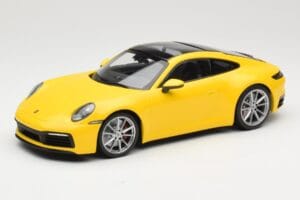

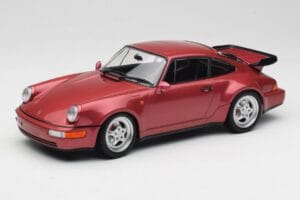
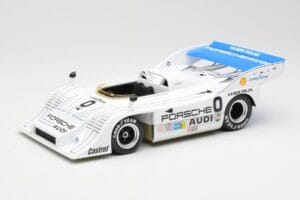




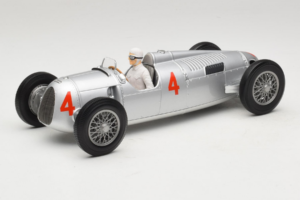
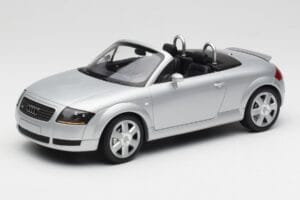
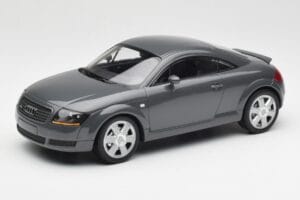
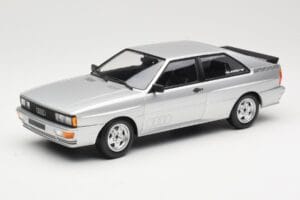

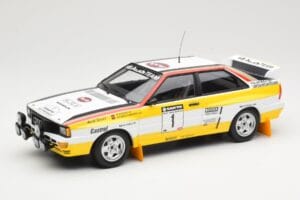
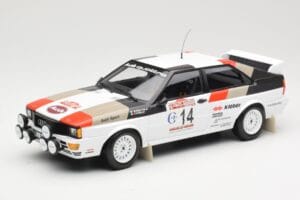









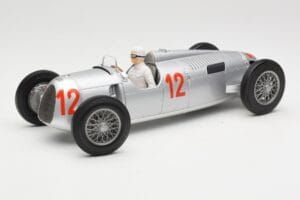
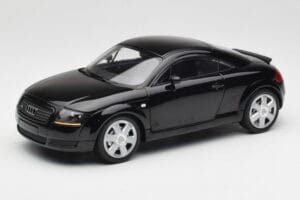


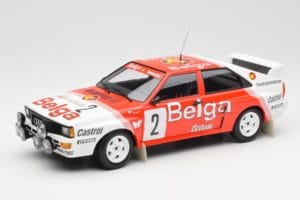
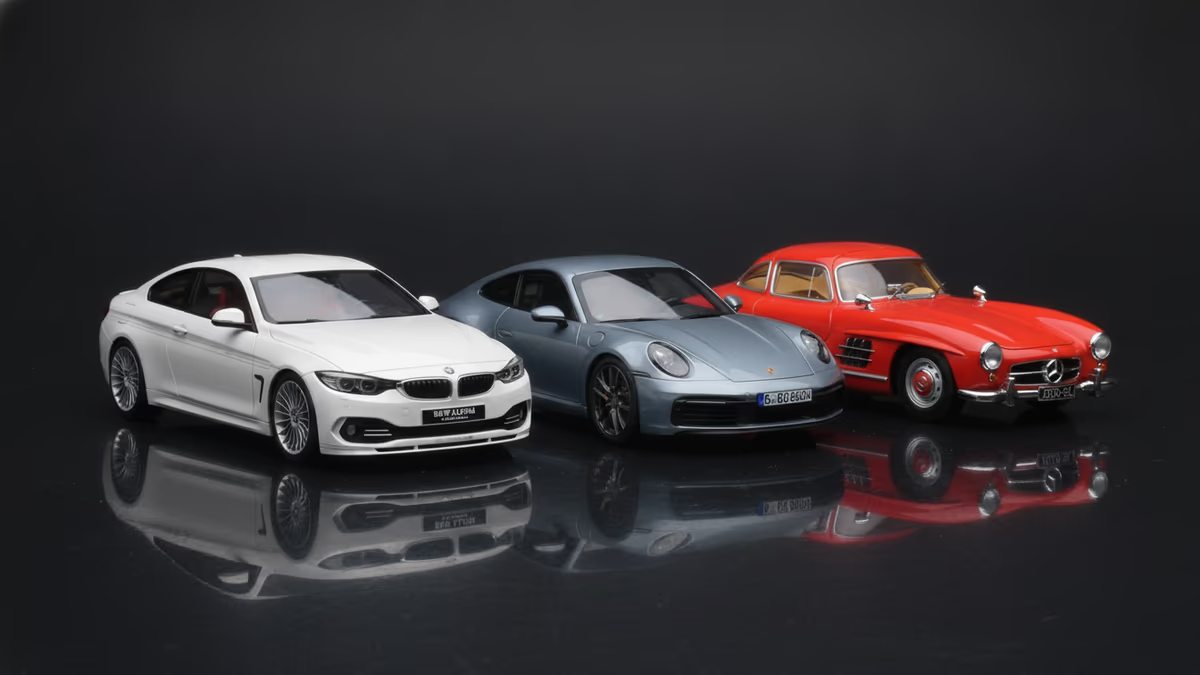
TL;DR: Minichamps is the German manufacturer that turned scale collecting into a system: diecast model cars from Aachen, best known in 1:43, 1:18 and 1:64 scale, with road cars, touring cars and Formula 1 covered in equal depth. We stock more than three thousand Minichamps references, new and used. Below: how the company grew out of a mail-order catalog, what each scale does best, and how to buy when every production run is finite.
Some manufacturers are remembered for one celebrated release. Minichamps is known for coverage. Pick a subject — a Porsche road car, a touring car season, a Formula 1 grid — and the odds are good that Aachen has replicated it, usually in more than one scale and often in several liveries. That breadth is exactly why so many collectors end up organizing whole cabinets around the name, and why this page earns its keep: with more than three thousand Minichamps model cars in our catalog, the practical question is rarely whether the reference you want exists. It is which scale to collect it in, how the manufacturer's history explains the shape of its catalog, and when the used listings are the smarter place to look. The sections below take those questions in order.
The company behind the name was founded in Aachen, Germany, in 1990 as Paul's Model Art GmbH by Paul G. Lang, and it grew directly out of the Danhausen model-car catalog, a mail-order institution among European collectors. That origin is more than trivia. Minichamps was built by people who had spent years selling models to collectors before producing any of their own, and it shows in how consistently the catalog has tracked what collectors actually chase — championship cars, faithful liveries, the road models people remember from their own streets — rather than whatever was easiest to tool.
The first diecast released under Paul's Model Art, in 1990, set the tone with almost uncanny precision: a 1:43 replica of the Audi V8 that won the German Touring Car Championship that year in the hands of Hans-Joachim Stuck. A championship-winning touring car, in the classic European collector scale, captured in the season of its victory — the template for everything that followed was present in model number one. The company was officially renamed Minichamps GmbH in 1996, but the formula never changed: motorsport at the core, road cars alongside, and a release cadence ambitious enough to keep grid-builders busy for decades.
Browse the used market for long enough and you will meet both names — Minichamps and Paul's Model Art — sometimes in the same listing. They refer to the same Aachen manufacturer: Paul's Model Art is the company's original name, and it marks the earlier chapter of the same catalog. The practical takeaway is simple. When you hunt discontinued references, search under both names, because a listing filed under one can quietly hide the exact model you have been trying to find under the other, and some of the most interesting early releases wear the original branding.
Minichamps is predominantly a diecast manufacturer — zamak alloy bodies with real weight to them, not sealed resin — and it is best known for three scales: 1:43, 1:18 and 1:64. That material choice is a quiet advantage. While much of the racing-replica world has moved toward sealed casting, a diecast body means the format can support opening panels and a hands-on relationship with the model that sealed resin simply does not allow. It also means the catalog spans an unusually wide price range, from approachable road cars to flagship racing subjects, without ever leaving one manufacturer's quality standards.
The 1:43 catalog is the backbone. At roughly four inches long, 1:43 scale models are the format Europe historically collected in, and they are the reason Minichamps shelves so often look like complete stories: an entire racing season on one shelf, a full generation of a road car on the next. If your ambition is a grid — every entry from a championship year, or every livery a single chassis wore — 1:43 is the scale that makes the project physically and financially possible, and no other manufacturer makes it easier to pursue.
In 1:18 scale the same subjects become centerpiece objects, roughly a foot long, with the detail density to reward close inspection. This is where the diecast construction pays off most visibly: doors and hoods that open, engine bays and cabins to study, heft that makes the replica feel like an object rather than an image. Collectors typically run a small number of 1:18 references as anchors and let 1:43 carry the breadth; the two scales complement each other rather than compete. The 1:64 line rounds out the range at the small end, where shelf space stops being a constraint at all.
As for subjects, the German road car canon is home territory — Porsche model cars in particular run deep, with BMW and Mercedes-Benz close behind — but it is the racing side that built the reputation. Formula 1 is where many collectors first meet the name, whether through a favorite driver's car or a season they watched live, and touring cars have been part of the DNA since that first Audi V8. If a car mattered on a Sunday afternoon somewhere in Europe, the odds that Aachen replicated it are better than with almost any other manufacturer in the hobby.
The single most useful thing to understand about buying Minichamps is that production runs end. A reference is tooled, produced in a finite quantity, distributed — and then the manufacturer moves on to the next release. There are no standing reprints waiting behind popular models; when a run sells through, regular distribution is finished with it for good. This is why experienced collectors buy the references they care about while they are available new, and why the ones they missed become hunting projects rather than shopping-cart items.
That is also why the used side of this catalog matters as much as the new one. Our used models are sourced from the secondary market, frequently in mint condition with the original box, and they cover exactly the territory regular distribution no longer can: discontinued references, sold-out liveries, the releases from earlier chapters of the catalog — including models filed under the Paul's Model Art name. Used, in this hobby, does not mean worn out or second best. It means no longer available new, and for a manufacturer with a history reaching back to 1990, that describes a large share of the most interesting references in existence.
Minichamps pricing reflects what the models are: licensed replicas with a level of finish that stands up to close inspection, produced in finite quantities rather than open-ended volume. Within the catalog, the relationships are stable — a 1:43 reference costs a fraction of its 1:18 counterpart, and sought-after discontinued models command more on the used market than they did in regular distribution. Condition drives value on that market more than anything else, so keep every box and insert, display models away from direct sunlight, and dust them with a soft brush rather than a cloth. The reference you buy casually can turn out to be the one another collector spends years hunting.
This page holds the full picture: more than three thousand Minichamps model cars, new releases alongside used and discontinued references, from 1:64 shelf-fillers to 1:18 flagships. Filter by scale, car brand or condition, start with the subjects that already mean something to you, and let the catalog's depth do what it has done for collectors since the first Audi V8 — turn a handful of models into a collection with a spine.