Last one
Used

Hypercars push the outer limit of automotive engineering, and the manufacturers who reproduce them push scale modeling in the same direction. This collection spans carbon-bodied road rockets from Bugatti, Koenigsegg, Pagani and McLaren, built across diecast, resin and composite construction from 1:64 up to imposing 1:8 display pieces.





























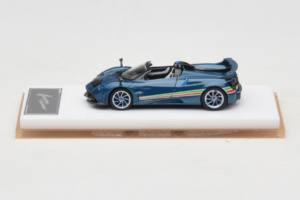






























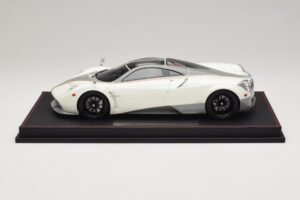



TL;DR: Hypercar scale models cover Bugatti, Koenigsegg, Pagani, McLaren, Ferrari, Lamborghini, Porsche and Aston Martin across 1:64 through 1:8, mostly from the 2000s onward. Diecast, resin and composite construction each serve different tiers, from accessible entry pieces to hand-finished investment-grade builds.
A hypercar exists to set records: top speed, lap time, horsepower per liter. That extremity is exactly what makes the segment compelling for hypercar scale models collectors, since every carbon splitter, active wing and quad-exhaust layout becomes a genuine test of a manufacturer's tooling. This page maps the manufacturer tiers, scale choices and eras that define hypercar collecting today.
The hypercar segment is built almost entirely on aggressive, angular bodywork, which rewards manufacturers with tight tooling and punishes anyone cutting corners on panel lines. Bburago covers the entry tier with accessible zinc-alloy diecast, opening panels included, giving newer collectors a first Bugatti or Lamborghini without a serious outlay. Minichamps sits in the middle ground, balancing detail with production scale across several marques. AUTOart and GT Spirit push into resin and composite territory, chasing the sharper surface lines that a Koenigsegg's carbon monocoque or a Pagani's exposed weave demands. Names like Henson & Heaven appear further into the specialist end of the catalogue, reflecting how deep the hypercar niche now runs.
A hypercar's bodywork is functional before it is beautiful. Vents, diffusers and wings exist to manage airflow at speeds few owners will ever reach, and reproducing that geometry accurately is harder than replicating a classic coupe's flowing lines. Koenigsegg and Pagani, in particular, build cars with exposed carbon weave and asymmetric detailing that only shows up correctly on models built with sharp mold tooling. This is why resin and composite construction feature so heavily at the top of the hypercar tier ladder: sealed bodies hold tighter tolerances than an opening diecast shell ever can on this kind of geometry.
1:18 remains the natural home for hypercars, large enough to show the aerodynamic detailing that defines the segment while still fitting a normal display shelf. 1:12 and 1:8 step up for a single hero subject, typically a Bugatti or a Pagani, where the extra size resolves engine bay and interior stitching that 1:18 can only suggest. At the other end, 1:64 lets a collector assemble the full hypercar landscape, Ferrari through Koenigsegg, on a single shelf without the space commitment larger scales demand.
Because hypercar production runs are small in real life, many collectors chase completeness within a single manufacturer's era rather than one of everything. A Bugatti-only shelf tracing the brand's modern era, or a mixed marque display spanning the 2010s output from McLaren, Koenigsegg and Pagani side by side, both tell a coherent story. Mixing construction tiers within a themed display is common and sensible: an entry Bburago alongside an upper-tier resin piece of the same era shows how far tooling has come without needing every purchase to be investment-grade.
1:18 is the standard starting point. It is large enough to show aerodynamic detailing clearly, widely available across manufacturer tiers, and easy to display alongside other 1:18 cars without dominating a shelf.
Neither is universally better. Diecast with opening panels shows off engine and interior detail, while sealed resin or composite builds hold tighter panel lines on the sharp, angular bodywork that defines most hypercars. The choice depends on whether display accuracy or interactive features matter more.
Coverage concentrates on the 2000s through 2020s, the period when Bugatti, Koenigsegg and Pagani established the modern hypercar category, with some 1990s subjects marking the segment's earlier roots.
Yes. Many collectors mix tiers deliberately, using accessible diecast for broad marque coverage and reserving premium resin or composite builds for standout subjects that anchor the display.