Last one
New arrival

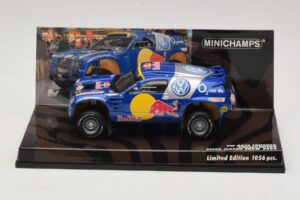
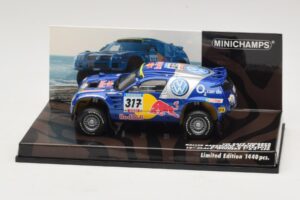
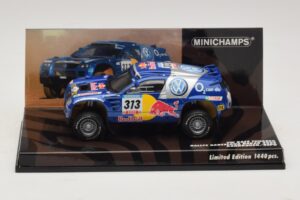
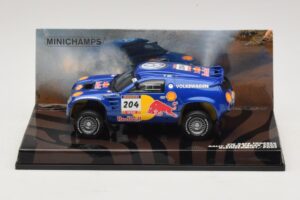
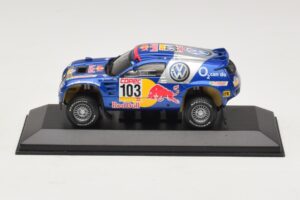
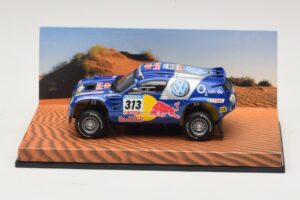
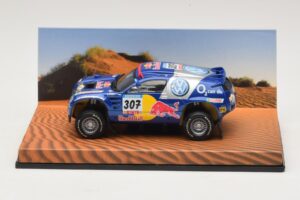
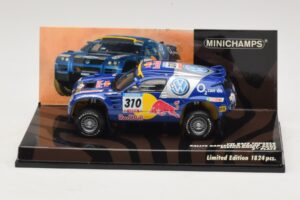
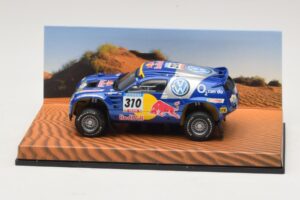
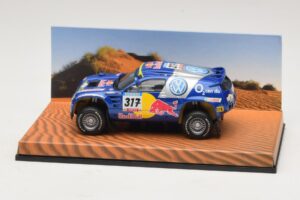
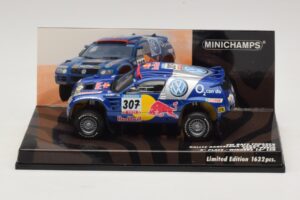
Volkswagen Race Touareg Red Bull #224 B. Saby / Stevenson Dakar Rally 2005 Minichamps 1:43
Only 1 left
Price:
37.00 €
Formula 1 expanded its manufacturer roster and DTM returned to prominence in the 2000s, alongside a new generation of grand tourers and supercars. This range covers Porsche, Mercedes, BMW, and Toyota across 1:43, 1:18, and 1:12 scales in diecast and resin.






















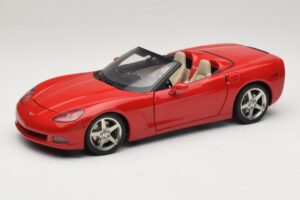
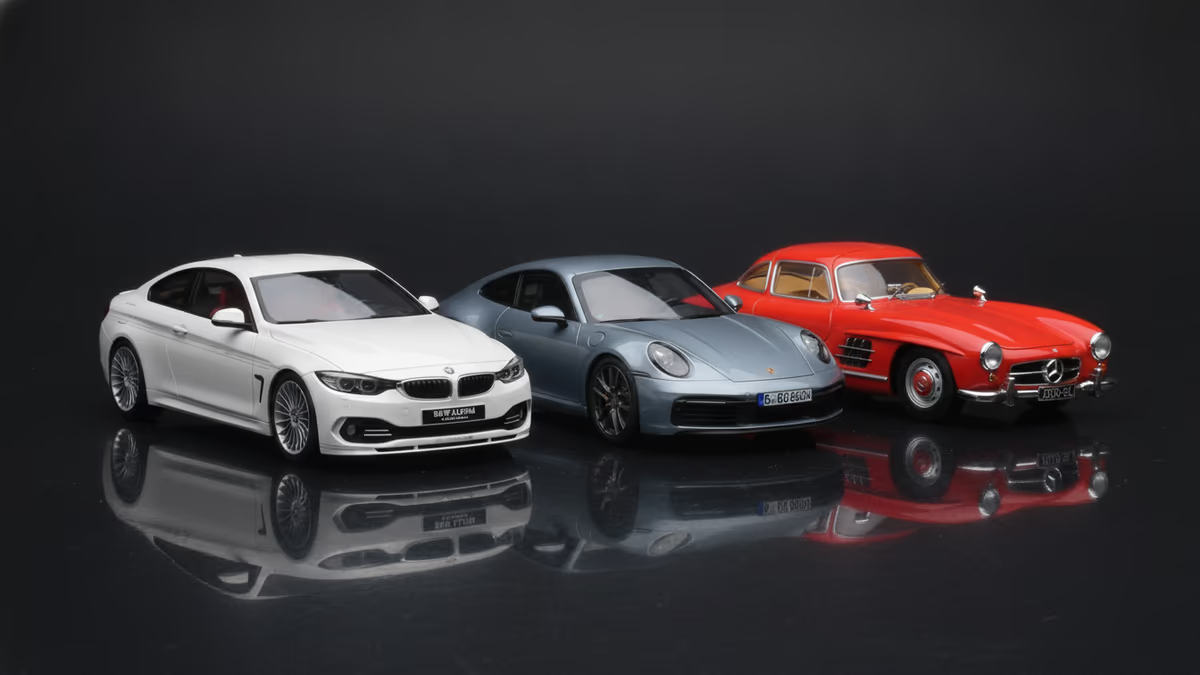
TL;DR: 2000s model cars document Formula 1's manufacturer era, DTM's modern revival, and premium sports and supercar development from Porsche, Mercedes, and Toyota, built across 1:43, 1:18, and 1:12 in diecast and resin. The decade marks motorsport's shift toward global manufacturer competition.
Motorsport went corporate in the 2000s, with major manufacturers pouring resources into Formula 1 and DTM while road cars pushed further into supercar and grand tourer territory. This range documents that shift across racing and road subjects alike.
The 2000s saw Formula 1 draw in full manufacturer teams competing directly under their own badges rather than as engine suppliers alone, and this range's Formula 1 coverage reflects that period's dense competition between works squads. Scale reproductions from this era favor accuracy in evolving aerodynamic packages, since the decade saw some of the sport's fastest visual evolution season to season.
German Touring Car racing returned in a modern form during this decade, with Mercedes, Audi, and Opel fielding purpose-built silhouette racers on a fresh set of technical rules. One-Make Cup Series subjects from the same period add a further motorsport dimension, documenting spec racing categories where identical machinery puts driver skill front and center.
Minichamps, AUTOart, Kyosho, Otto, and Norev all reproduce 2000s subjects across a broad scale range:
Grand tourer and supercar coverage from this period reflects a road-car industry increasingly influenced by motorsport-derived technology and materials.
This decade rewards collectors who pick a specific championship season or manufacturer rivalry rather than trying to cover the whole era broadly. Formula 1's manufacturer years produced enough distinct liveries and technical stories to sustain a focused collection on their own, while a grand tourer or supercar theme offers a road-car alternative for collectors less drawn to racing.
Major car manufacturers competed directly under their own team names during this period rather than solely supplying engines, producing distinct works-team liveries and rivalries that scale collectors document season by season.
The 2000s revival introduced a fresh technical ruleset and returned works manufacturer competition to the category after a hiatus, giving the decade its own distinct liveries and rivalries separate from the 1990s original run.
1:43 remains the practical standard for documenting a full season or grid, while 1:18 suits collectors focused on a single car or driver where cockpit and aerodynamic detail matter more.
Grand tourers and supercars from this decade reflect growing motorsport influence on road-car technology, giving collectors a strong non-racing theme that still connects thematically to the period's competition history.