BMW X6M F86 Red Norev 1:18
Price:
94.00 €
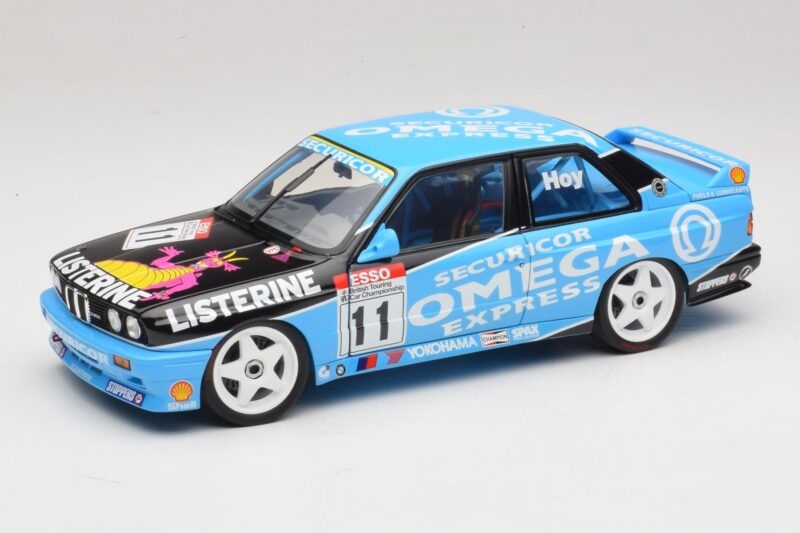
TL;DR: Minichamps' 1:18 diecast reproduces Will Hoy's #11 Omega-liveried BMW M3 E30, the car that won the 1991 British Touring Car Championship. Doors open on this Group A homologation special, exposing the roll cage built into a road-derived shell, while the tampo-printed livery carries the title-winning colors true to that season.
The BMW M3 E30 was Group A's defining homologation special, built in road-going numbers just large enough to satisfy racing regulations while carrying a genuine competition pedigree from the factory down. British touring car racing in the early 1990s still ran cars visibly related to their showroom versions, and Hoy's title run gave the M3 one of its clearest national championship credentials outside Germany. Minichamps preserves that specific #11 livery.
BMW built the E30 M3 specifically to satisfy Group A's homologation requirement of a minimum production run, which meant the touring car racer and the showroom coupe shared a genuine mechanical relationship rather than existing as separate machines wearing similar badges. That link is part of why the M3's touring car success resonated so widely: fans watching Hoy's #11 car could point to a version of the same chassis parked at a BMW dealership. The road car's wide box-arch fenders, a styling cue added specifically to clear wider racing rubber, carry straight through onto the racing bodywork Minichamps reproduces here.
Will Hoy's 1991 championship came during the M3's later competitive years in British racing, after the car had already proven itself across European touring car series through the late 1980s. That accumulated pedigree, wins across DTM and various national championships and now the BTCC title, is a large part of why the E30 M3 remains one of the most collected touring cars of its generation. Minichamps' #11 Omega livery marks a specific, documented result rather than a generic period color scheme, the detail separating a championship-specific release from a car dressed in colors it never actually wore in period.
This M3 opens its doors, giving a direct look at the stripped, roll-caged cockpit that Group A regulations allowed teams to build inside a largely stock-appearing shell. Where the exterior stays close to the showroom M3's proportions, the interior tells the racing side of the story: a cage bolted through the transmission tunnel, a single racing seat where the road car carried four, and none of the trim a buyer would find in a dealership example. That contrast between road-legal skin and stripped-out interior is a large part of what makes Group A touring cars interesting to open up rather than display sealed.
A door on a well-built 1:18 diecast should settle with a defined resistance rather than swing loosely on its hinge, staying at whatever angle it is left rather than drifting shut under its own weight. That resistance matters more on a touring car casting like this one because the door line runs directly through a livery that needs to read correctly whether the door sits open or closed. Minichamps keeps the tampo graphics registered across that shut line so the Omega branding does not visibly shift or misalign the moment the door swings open for a closer look at the cage inside.
The E30 M3's touring car silhouette is defined by details that look subtle on the road car and become the whole story once a livery is applied over them: the boxed wheel arches, the raised rear deck lip that improved the saloon's aerodynamics, and a windscreen rake shallower than the standard 3 Series it was based on. Minichamps' casting keeps those proportions correct rather than smoothing them toward a generic saloon shape, which matters because a slightly wrong arch width or deck angle would read as obviously off to anyone who has seen the real homologation car. Zinc alloy diecast gives the body real weight, a density that settles the model solidly on a shelf rather than feeling hollow, and it holds the boxy arch edges crisply rather than rounding them the way a softer material might. Paint on the metal shell carries a deep, consistent gloss under a display lamp, and the tampo-printed Omega branding sits directly on that painted surface rather than as a separate decal layer prone to lifting at the edges over years of handling. The wheels sit at a period-correct touring-car offset beneath those flared arches, filling the wheel wells the way the real 1991 car did rather than looking tucked in.
A title-winning livery gives this M3 a natural role as an anchor piece rather than one entry among many similar-looking touring cars. Collectors building a BTCC theme by season will find Hoy's 1991 car a specific, well-documented reference point, while those collecting by chassis rather than by series can pair it with M3s from DTM or other European touring car programs to trace the E30's competition record across borders. At 1:18, the model holds a standard display shelf comfortably, and the opening doors give it an inspection angle that many sealed race liveries at this price point skip. For a buyer assembling a Group A shelf specifically, a documented championship result like this one carries more long-term display interest than an unraced color scheme ever will.

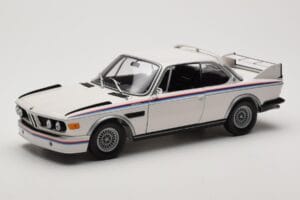
You save 28.00 €
Lowest price in the 30 days before the reduction: 142.00 €

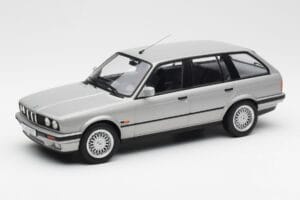

You save 47.00 €
Lowest price in the 30 days before the reduction: 237.00 €


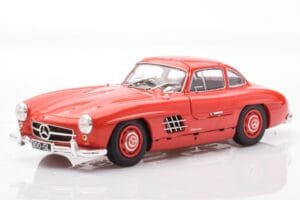

You save 16.00 €
Lowest price in the 30 days before the reduction: 123.00 €