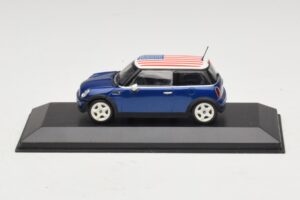
TL;DR: Opening feature scale models include functioning doors, hoods, and trunks that reveal interior and engine bay detail, built in diecast and composite across Mercedes, BMW, Porsche, Ferrari, and Chevrolet subjects spanning Vintage Classics through modern Supercars at 1:18, 1:43, 1:24, and 1:12.
Opening features are what separate diecast from sealed resin in most collectors' minds, and for good reason: a door that genuinely swings open on a hinge, a hood that lifts to show an engine bay, turns a model from an object viewed at a distance into one a collector can interact with directly.
Opening Feature Models Across Manufacturer Tiers
Minichamps, Norev, and Bburago build opening features into much of their mainstream diecast range, with panel-gap precision varying by tier even as the mechanism itself stays consistent. AUTOart pushes opening-feature diecast toward higher fidelity, often approaching resin-level panel tightness while retaining full door, hood, and trunk function. Kyosho applies the same approach to supercar and premium sports subjects, where an opening hood revealing a detailed engine bay is often the single most compelling feature on the model.
- Doors: the most common opening feature, revealing interior trim and seating.
- Hoods: exposing engine bay detail, often the most technically impressive element.
- Trunks: less common but valuable on subjects where cargo detail matters.
- Combined features: premium releases often include all three on a single model.
The Trade-off Behind Opening Features
Building a door, hood, or trunk that opens requires hinge clearance the sealed body of a resin model never needs to accommodate, which is why opening diecast typically carries slightly wider panel gaps than its sealed resin counterpart on the same subject. Collectors who value handling and interior visibility over the absolute sharpest possible panel lines consistently choose opening-feature diecast for exactly this reason, treating the trade-off as a fair exchange rather than a compromise.
Collecting Strategy Around Opening Features
Collectors building a display meant to be handled and shown to visitors tend to favor opening-feature models specifically, since a door that swings open or a hood that reveals an engine bay makes for a more engaging demonstration than a sealed piece behind glass. Pairing an opening-feature diecast alongside a sealed resin version of the same subject also makes an effective side-by-side comparison of what each construction approach prioritizes.
Frequently Asked Questions
Why do opening-feature models have wider panel gaps than resin?
A functioning door, hood, or trunk needs hinge clearance that a sealed resin body never has to accommodate, so opening diecast typically carries slightly wider panel gaps as a direct trade-off for the added interactivity.
Which manufacturers are known for the most detailed opening features?
AUTOart and Kyosho push opening-feature diecast toward higher fidelity, often approaching resin-level panel tightness while retaining full door, hood, and trunk function, particularly on supercar and premium sports subjects.
Are opening features more common on certain vehicle classes?
Opening hoods revealing engine bay detail are especially common on supercars and premium sports subjects, where the engine itself is a major part of the car's appeal, while doors appear broadly across nearly every vehicle class.
Should a collector choose opening-feature diecast over sealed resin?
It depends on priorities. Collectors who value handling and interior visibility typically prefer opening-feature diecast, while those prioritizing the sharpest possible panel lines and surface precision often choose sealed resin instead.