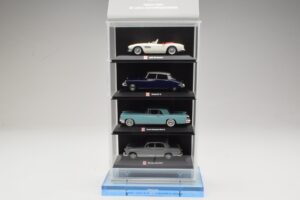
Auto Bild Modelcar Set 2006 Minichamps 1:43
Price:
142.00 €
Not every collecting shelf follows a marque. Auto Bild, Germany’s largest automotive magazine, partnered with Minichamps on a run of 1:43 diecast replicas chosen for editorial reasons rather than badge loyalty, spotlighting unusual, noteworthy, or newsworthy cars from the 2000s. The result is a genuinely eclectic Special and Unique Models range built for collectors who value a story over a lineup.
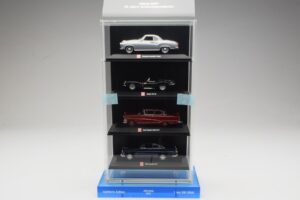
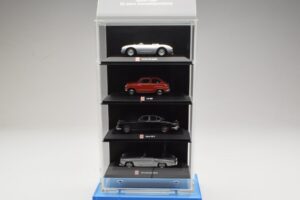
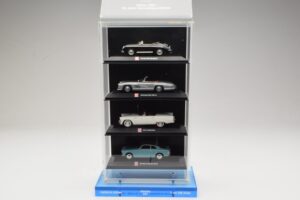
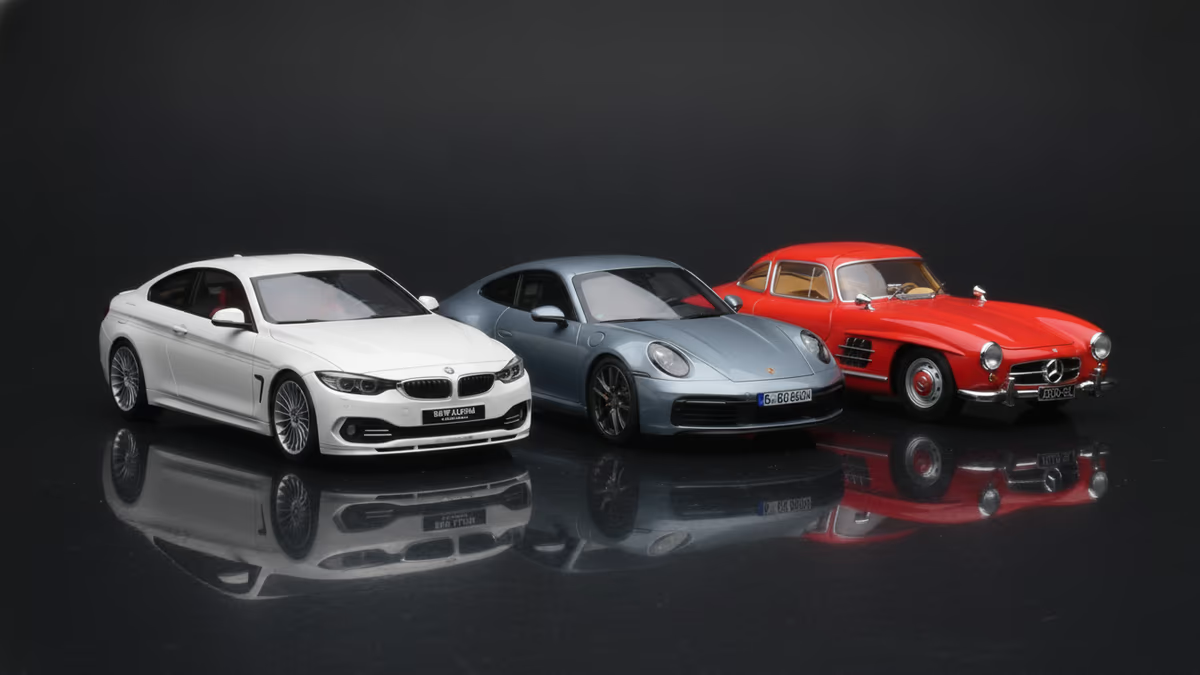
TL;DR: Auto Bild diecast models are 1:43 Minichamps replicas produced under Germany's leading automotive magazine, chosen for editorial interest rather than marque loyalty. Diecast construction from the 2000s favors durable, accessible pricing, making this a niche but characterful entry point into German motoring journalism rendered in scale.
Not every diecast collection tracks a single marque. Auto Bild, Germany's largest automotive magazine, lent its editorial voice to a run of 1:43 Minichamps replicas built around cars the magazine's own testers and readers flagged as worth remembering, from oddities to headline-makers. The result is a scattered but genuinely characterful Special and Unique Models range from the 2000s, diecast-built and grounded in journalism rather than brand allegiance.
Auto Bild built its readership on road tests, reader polls, and blunt reporting that made it one of Germany's most widely read automotive publications through the decades. That editorial voice carried directly into a run of 1:43 diecast models produced with Minichamps, and the selection logic separates this category from every brand-focused shelf in the hobby. Rather than chronicling one manufacturer's lineup, Auto Bild diecast models gather cars the magazine itself flagged as noteworthy: oddities, underdogs, and vehicles that made headlines for reasons beyond raw horsepower figures.
That editorial filter is the whole appeal of the category. A collector working through this shelf is not tracking a chronology or a single badge; they are following a magazine's taste, and that means a mainstream saloon can sit beside something genuinely obscure without feeling out of place. The 2000s-era coverage reflects the magazine's output during a decade when print circulation and reader polls still carried real weight in shaping which cars earned attention. For a collector drawn to German motoring culture, the appeal sits less in owning a product line and more in owning a scrapbook of automotive journalism rendered in scale.
Minichamps earned its reputation on 1:43 diecast that balances accessible pricing with genuine tooling accuracy, and the Auto Bild line sits comfortably inside that tradition. Zinc-alloy construction gives each model real heft for its size, a quality that registers the moment it leaves the box: where a casting is built with opening doors, they swing on proper hinges rather than snap-fit tabs, and the body carries enough weight to sit flat on a shelf without wobbling.
At 1:43, detail resolution has real limits next to larger scales, but the format compensates with breadth. A magazine-branded special edition line benefits from that trade-off, because the goal was never to showcase one flagship subject in maximum detail. It was to document a wide, editorially curated set of cars at a size that lets an entire run occupy a single shelf. Paint finish on Minichamps 1:43 work is typically even, with badges and trim well-masked, the kind of finish that holds up under a desk lamp without revealing rough edges. Whether any individual casting opens is worth checking on the product page rather than assumed from the material alone.
1:43 scale keeps a car's footprint close to that of a smartphone standing on end, which is exactly why the format suits a collection with no single unifying subject. A dozen Auto Bild models can share a single shelf without demanding the deep, dedicated Vitrine space that a 1:18 hero-piece collection requires, and that density matters when the theme is breadth rather than one flagship car.
Because the category pulls from across the magazine's editorial coverage rather than one marque's model range, display planning benefits from grouping by decade, vehicle type, or story rather than by badge. A shelf organized around 2000s road-test darlings reads differently than one organized around oddities the magazine singled out for their rarity, and either approach gives the collection a legible logic that random accumulation lacks. Lighting matters here as much as anywhere else in the hobby: keep the shelf out of direct sun, since UV exposure fades paint and yellows clear parts on any 1:43 diecast, Auto Bild included, faster than most collectors expect over several years of display.
Most brand or marque categories give a collector a built-in organizing principle: track the badge, the generation, or the racing season. Auto Bild diecast models offer no such scaffold, which is precisely what makes building a coherent collection here a genuine curatorial exercise rather than a simple checklist.
A practical starting point is choosing a secondary axis: era, vehicle type, or the kind of story that earned a car its spot in the magazine's coverage. Some collectors chase every model tied to a specific decade of Auto Bild reporting; others build around a recurring theme, such as unusual specials or cars the magazine's readers voted onto a notable list. Because the range skews toward the unexpected, it also rewards collectors who enjoy research: tracking down why a particular car earned its place in the lineup often turns into its own small project. That research-driven appeal separates this shelf from a straightforward brand collection, and it is worth leaning into rather than fighting.
Placed against the rest of the 1:43 hobby, Auto Bild diecast models occupy a genuinely unusual position. Most 1:43 collecting runs either brand-focused, tracking a marque's full model range, or motorsport-focused, documenting a racing season car by car. Auto Bild sits outside both patterns, positioned by editorial judgment rather than manufacturer catalog or competition record.
In price and construction terms, the range sits at the accessible end of Minichamps' output, consistent with mid-tier diecast built for broad collecting rather than investment-grade rarity. That positioning makes sense for the category's purpose: it was never meant to be a prestige line, but a tie-in that let magazine readers own a small piece of the stories they had been reading about. For a collector new to the hobby, that combination of low barrier to entry and genuinely offbeat subject matter makes Auto Bild diecast a low-risk way to sample scale model collecting before committing to a marque-specific, higher-tier shelf.
Evaluating a model of a car you don't already know well demands a different approach than judging a Ferrari or Porsche replica against decades of familiarity. With Auto Bild subjects, start with proportion: does the roofline, greenhouse, and stance read as correct relative to photographs of the real car, rather than relying on memory of what the badge usually looks like.
From there, check the basics that separate a careful casting from a rushed one regardless of subject: panel gaps should run consistent around the body, glazing should sit flush without visible gaps at the corners, and badge and trim printing should be crisp enough to read under close inspection rather than smudged. Wheel design and offset matter more than collectors often expect, since an ill-fitting wheel throws off the stance of the entire model. Because these subjects are often less documented than mainstream marques, a side-by-side photo comparison with the real car is the most reliable check available, and it is worth doing before adding an unfamiliar model to the shelf.
Auto Bild diecast models are chosen by editorial judgment rather than tied to one manufacturer's lineup. Instead of tracking a badge across generations, the range gathers cars the magazine's testers and readers flagged as noteworthy during the 2000s, which gives the shelf a journalistic rather than chronological logic.
The range is built in 1:43 diecast by Minichamps, using zinc-alloy construction that gives each model real heft and a durable finish. The scale keeps footprints compact enough that a broad, eclectic collection fits comfortably on a single shelf rather than requiring dedicated display cases.
Yes. The accessible, mid-tier pricing typical of Minichamps 1:43 work makes it a low-risk way to sample scale model collecting, and the genuinely offbeat subject matter offers more variety than a single-marque starter collection would provide at a similar price point.
Choose a secondary axis, such as era, vehicle type, or the kind of story that earned a car its spot in the magazine's coverage. Grouping by decade or by a recurring editorial theme gives the display a legible logic that random accumulation lacks.