Last one
Used
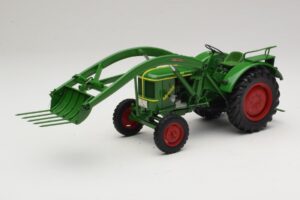
Deutz built its name on pioneering internal combustion engines before branching into the tractors and industrial machinery that carried its badge through Germany’s postwar rebuilding years. Minichamps reproduces that engineering heritage in 1:18 diecast, giving collectors a special-interest subject that sits well outside the usual sedans and sports cars filling most shelves.
TL;DR: Deutz scale models bring Germany's pioneering engine and industrial-machinery maker to 1:18 diecast, produced by Minichamps in a special-and-unique-models format that steps outside typical car subjects. Rooted in the 1950s postwar rebuilding era, this niche collectible suits collectors chasing industrial heritage and marques mainstream diecast rarely touches.
Deutz scale models trace back to one of Germany's oldest engineering names, a company whose work on internal combustion predates the automobile industry itself. Minichamps reproduces that legacy in 1:18 diecast, choosing a special and unique subject from the 1950s rather than a mainstream passenger car. For collectors who build displays around industrial heritage and postwar reconstruction rather than sports cars and racing liveries, this is a rare entry point into a marque diecast almost never touches.
Deutz belongs to a different collecting tradition than most of the marques filling a typical shelf. It isn't a sports car maker chasing lap times or a luxury brand selling status; it's an engineering company whose name is tied to the internal combustion engine's earliest commercial development, decades before Deutz-Fahr tractors and diesel-powered trucks carried the badge into farms and job sites across Europe. That history gives a Deutz scale model a different kind of weight than a badge built purely on styling. Collectors drawn to this category tend to care about mechanical history and industrial design as much as automotive glamour, and they often build shelves that mix passenger cars with the tractors, engines, and utility vehicles that actually powered postwar Europe's recovery. A 1950s subject fits that story precisely, landing in the decade when German industry was rebuilding at full speed and machinery like this was doing the real, unglamorous work behind the era's better-known economic turnaround. Reproducing that in diecast, rather than leaving it to a specialist agricultural-model niche, is what makes this particular release worth a second look.
Minichamps built its reputation on motorsport and road-car diecast, so a Deutz subject sits slightly outside the manufacturer's usual territory, which makes fidelity worth checking carefully rather than assuming from the name alone. Start with panel fit around any engine covers, cabs, or access panels the real machine carried; diecast tolerances run a touch wider than resin, so consistent, narrow gaps at this scale are a genuine sign of careful tooling rather than a rushed casting. Paint finish is the next tell. Industrial subjects rarely wore glossy showroom paint in period, so an accurate model should reflect that with a more restrained, working-machine finish rather than an artificially glossy coat better suited to a sports car. Weight matters too: a metal body should feel substantial for its size, with none of the hollow lightness that signals thin-wall casting. Decals and lettering deserve close inspection under good light, since period-correct badging and stenciling are usually the clearest evidence a manufacturer researched the actual subject rather than approximating it. A model that gets these details right earns its place regardless of how unfamiliar the badge is to most collectors.
The Deutz name goes back to the 1860s, when its engineering work on gas and internal combustion engines helped lay groundwork the entire automotive industry would later build on. That head start gave the company a foothold that outlasted most of its early contemporaries, and by the twentieth century it had moved into diesel engines, agricultural machinery, and heavy trucks rather than passenger cars. The 1950s were a pivotal decade for that direction. Germany's industrial base was rebuilding fast, agriculture was mechanizing at a pace it hadn't before, and manufacturers supplying that work, Deutz among them, found steady demand for exactly the kind of durable, unglamorous machinery this era produced. It's a different heritage than a sports car marque offers, built on decades of continuous engineering rather than a handful of headline racing seasons, but it carries real weight for collectors who value mechanical history. A model from this period isn't reproducing a status symbol; it's reproducing a small piece of the machinery that quietly kept postwar industry running, which is its own kind of significance on a shelf built around more than just glamour.
Diecast construction suits an industrial subject in ways it doesn't always suit a sports car. The zinc-alloy body brings real heft, and that weight reads as appropriate rather than excessive on a machine that was built to be heavy and durable in real life, unlike a lightweight racing chassis where added mass works against the illusion. Paint sits on a hard metal shell here too, which holds a flat, working-machine finish evenly without the risk of the thin patches that can show up on more delicate cast resin. The trade-off is the same one diecast always carries: casting tolerances run a shade wider than resin allows, so panel lines and access-cover gaps sit a touch broader than a hand-built resin equivalent would achieve. For a subject like this, that trade rarely matters, since the real machine's own construction was never about razor-edged panel fit in the first place. At 1:18, an industrial or special-interest subject often has a boxier, more utilitarian footprint than a car, which changes how it sits on a shelf and how much visual weight it carries relative to its physical size.
A single Deutz piece works best as an anchor for a broader industrial or special-interest theme rather than a standalone purchase, since the marque alone doesn't offer the deep back catalogue a passenger-car collection can draw on. Collectors who enjoy this corner of the hobby usually build outward from one piece rather than trying to complete a marque, simply because the releases are too scattered across manufacturers to collect any other way. A few directions make sense:
Because special and unique subjects like this rarely get reissued, treat availability as temporary rather than guaranteed. A collector who wants to build the theme out over time should expect real gaps between releases from any given manufacturer, and should be ready to buy when a fitting subject appears rather than waiting for something more complete to come along later. That patience is part of what makes this particular corner of the hobby rewarding for the collectors who stick with it.
Caring for a diecast industrial subject follows most of the same rules as any metal model, with a few points worth extra attention given the age of the real machine it represents. Keep it out of direct sunlight, since UV exposure fades paint over time regardless of the subject, and a flat, working-machine finish shows fading more visibly than a glossy showroom coat would. Dust with a soft brush rather than a cloth, particularly around any raised lettering or fine stenciling, since a cloth can smear ink-based decals that a spray-painted surface would shrug off. Diecast handles routine handling better than resin, but it isn't indestructible; support the body rather than any small protruding details like exhaust stacks or mirrors when moving it between shelves. Original packaging is worth keeping for this category more than most, since documentation and box art often carry real information about a subject that has no broader marketing history to fall back on the way a famous sports car does. A dedicated shelf or cabinet section for industrial and special-interest subjects, kept separate from the main passenger-car display, tends to give pieces like this room to be appreciated on their own terms rather than getting visually lost next to more conventional cars.
Manufacturers occasionally step outside their usual catalogue to reproduce a special or unique subject, and Deutz's engineering heritage gives it genuine appeal to collectors focused on industrial history rather than motorsport glamour. These releases tend to be scarce precisely because they're the exception rather than the rule for a given manufacturer.
It places the model in Germany's postwar rebuilding decade, when industrial and agricultural machinery like this was doing essential, unglamorous work behind the country's better-known economic recovery. The era shapes the finish and detailing choices, favoring a working-machine look over the glossy styling associated with the same decade's sports cars.
Diecast suits it well. The zinc-alloy body brings real weight that feels appropriate for a machine built to be heavy and durable, and a hard metal shell holds a flat, working finish evenly. The wider casting tolerances that diecast carries matter less here than on a sports car chasing razor-sharp panel lines.
Keep it out of direct sunlight to protect the paint, dust with a soft brush rather than a cloth to avoid smearing any stenciled lettering, and support the body rather than small details like stacks or mirrors when moving it. A separate shelf section for industrial subjects helps it stand out.