Last one
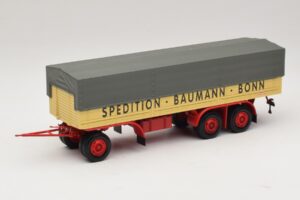
Kassbohrer built its reputation on trailer engineering before the name became better known through its Setra bus connection, and its 1960s semi-trailer trucks remain an underserved corner of commercial-vehicle collecting. This 1:43 Minichamps diecast collection documents that haulage heritage, giving specialist collectors a durable, accessible way to track a manufacturer better known for what it built than for its badge.
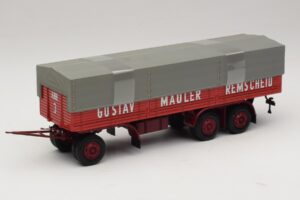
TL;DR: Kassbohrer model trucks are 1:43 Minichamps diecast documenting the German manufacturer's 1960s semi-trailer trucks, built by a company recognized for self-supporting trailer chassis engineering and its later Setra bus connection. Diecast construction favors durability over fine detail, suiting a haulage subject collectors track for engineering history rather than badge glamour.
Kassbohrer's name carries more engineering weight than brand recognition among general collectors, and that's exactly the appeal for commercial-vehicle specialists. The company built self-supporting trailer chassis and semi-trailer trucks through the 1960s, work that later fed into the Setra bus lineage the Kassbohrer name is now more often associated with. This 1:43 Minichamps diecast collection documents that earlier haulage-focused chapter, giving collectors a durable way to track a manufacturer defined by engineering rather than glamour.
Kassbohrer built its reputation less on flashy trucks and more on trailer engineering, a distinction that matters to anyone collecting the brand seriously. The company's semi-trailer trucks from the 1960s reflect a period of genuine technical development in German haulage, when self-supporting trailer chassis designs were changing how freight moved on the country's expanding road network. That engineering focus is also what connects Kassbohrer to a name many collectors know better: Setra, the bus brand whose self-supporting construction philosophy traces back to the same manufacturer.
For a collector, that lineage matters because it reframes what a Kassbohrer model actually represents. This isn't a badge collected for prestige or racing history; it's a record of a company that solved practical haulage problems and later applied that same engineering thinking to passenger transport. Tracking Kassbohrer semi-trailer trucks alongside Setra buses, where both are available, tells a more complete story of the manufacturer's actual contribution to postwar German transport than either subject does alone.
The semi-trailer truck sat at the center of Kassbohrer's business, and the 1960s output in this collection reflects the format at a genuinely significant point in its development. Self-supporting trailer construction, where the trailer's body itself carries structural load rather than relying purely on a separate frame, represented a real engineering shift in how haulage trailers were built during this period, and Kassbohrer was among the manufacturers pushing that approach forward.
Collecting these trucks means collecting a specific engineering conversation from mid-century commercial transport, not just a truck shape. The tractor-trailer combinations from this era show how cab design and trailer construction were evolving together to handle increasing freight loads on West Germany's growing autobahn network. For collectors who care about the technical side of commercial-vehicle history rather than just the visual side, 1960s Kassbohrer semi-trailers offer a genuinely substantive subject, one where the engineering story is at least as interesting as how the truck actually looks on a shelf.
A semi-trailer combination poses a specific challenge for diecast tooling that a single rigid truck does not: the articulation point between tractor and trailer has to hold up to repeated handling without loosening, and the trailer's proportions have to stay correct whether it's shown coupled or standalone. Minichamps' zinc-alloy construction handles that demand well, giving the coupling mechanism real mechanical integrity rather than a fragile snap-fit connection that degrades with use.
At 1:43, a full semi-trailer combination still occupies real shelf length even in a compact scale, which is worth planning for before committing to a themed haulage display. The material's weight also matters here: a properly weighted trailer sits flat and stable rather than tipping under the tractor's pull, a small detail that separates a well-engineered casting from a lightweight one. As with any diecast subject, whether a specific model includes opening cab doors or a tilting trailer bed should be checked per product rather than assumed from the scale or era.
Collecting Kassbohrer works best as part of a broader commercial-vehicle project rather than a standalone chase, mainly because the brand's model availability is narrower than a mainstream passenger-car marque. A practical approach pairs 1960s Kassbohrer semi-trailers with contemporary trucks from other German manufacturers of the same decade, building a haulage-yard scene that reflects how mixed the era's road freight actually looked rather than isolating one badge.
Because the trailer engineering story connects directly to Setra's bus lineage, some collectors extend a Kassbohrer haulage collection into passenger transport as a second, related theme. That pairing gives the collection a genuine narrative thread: one company, two very different vehicle types, unified by the same underlying chassis philosophy. For collectors drawn to the technical rather than the glamorous side of commercial-vehicle history, that engineering throughline offers more collecting depth than chasing trucks by decade alone would provide.
Within the broader hobby, Kassbohrer occupies a specialist niche even by commercial-vehicle standards. Truck and trailer collecting already draws a smaller audience than passenger-car collecting, and within that niche, a semi-trailer-focused manufacturer with a name better known through a related brand sits further still from mainstream attention. That obscurity is part of the appeal for collectors who specifically want depth over popularity.
In pricing and construction terms, the category sits at accessible, mid-tier diecast levels typical of commercial-vehicle subjects generally, well below investment-grade hand-built pricing. Manufacturers price truck and trailer diecast for a dedicated but modest audience rather than the broader passenger-car market, which keeps entry costs reasonable for collectors building out a themed haulage display. For anyone genuinely interested in postwar German trailer engineering rather than truck aesthetics alone, Kassbohrer offers real substance at a price point that rewards patient, specialist collecting.
Evaluating a semi-trailer casting starts with the coupling point between tractor and trailer, since that articulation should move smoothly and hold the trailer at a realistic angle rather than sagging or binding. Cab proportions matter just as much as on any truck model, and a well-researched casting will get the specific cab shape correct for the era rather than substituting a generic haulage-truck silhouette.
From there, check that the trailer's ride height and axle spacing look correct relative to the tractor, since a mismatched trailer height is one of the most common ways a semi-trailer model's stance goes visibly wrong. Livery and lettering, where present, should print crisply enough to read the operator markings that period trucks typically carried. Because Kassbohrer references are less widely documented than mainstream passenger-car subjects, comparing against period photographs remains the most reliable way to judge whether a casting genuinely reflects the manufacturer's actual 1960s output.
Kassbohrer built self-supporting trailer chassis and semi-trailer trucks through the 1960s, engineering work that later connected to the Setra bus lineage. The company is recognized more for that structural engineering approach than for a widely known badge, which is part of why the brand appeals to specialist collectors.
A semi-trailer model needs a functioning coupling point between tractor and trailer that holds a realistic angle without sagging, plus correct trailer ride height and axle spacing. Those articulation and proportion details matter more here than on a rigid single-unit truck casting.
Yes. Kassbohrer's trailer engineering philosophy, particularly its self-supporting chassis construction, connects directly to the Setra bus brand, which many collectors know better than Kassbohrer itself. Pairing haulage trucks with Setra buses builds a more complete picture of the manufacturer's actual engineering contribution.
Yes, particularly paired with contemporary German trucks from the same decade. Building a mixed 1960s haulage-yard scene rather than isolating one badge reflects how varied road freight actually looked at the time, and gives a Kassbohrer collection more visual and historical context.