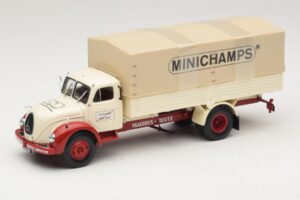
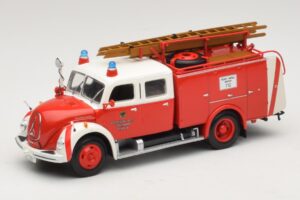
TL;DR: Magirus-Deutz models in this collection are 1:43 diecast pieces from Minichamps, reproducing 1950s heavy-duty trucks and service and emergency vehicles from the German manufacturer famed for extendable fire-ladder trucks and Deutz's air-cooled diesel engines. The scale suits both cargo trucks and ladder apparatus, holding cab, ladder, and chassis detail true to the era.
Few marques carry as much genuine emergency-service pedigree as Magirus-Deutz, a name still tied to fire and rescue apparatus today. This collection's Magirus-Deutz models span two vehicle classes: heavy-duty trucks and dedicated service and emergency vehicles, both built by Minichamps in 1:43 diecast. The pairing reflects how the real manufacturer worked across civilian hauling and municipal safety equipment during the 1950s, giving collectors a way to display both sides of that industrial identity.
Magirus-Deutz Truck Models and Their Place in 1:43 Diecast
Magirus-Deutz truck models sit at an unusual intersection within commercial vehicle diecast: a marque known equally for hauling trucks and for fire-and-rescue apparatus, both represented in this collection's 1:43 lineup. That dual identity gives the category more collecting range than a single-purpose truck marque typically offers, since a shelf can pair a straightforward cargo truck with a ladder-equipped service vehicle from the same manufacturer and era.
At 1:43, a Magirus-Deutz fire-ladder truck, with its extended ladder assembly folded for transport, still reads clearly as specialized equipment rather than a generic box truck, since the scale preserves the proportional relationship between cab, chassis, and ladder frame. A standard hauling truck from the same lineup shrinks to roughly 18 to 20 centimeters, comfortable shelf company for six or more models along a typical run of shelving. Minichamps produces this collection's Magirus-Deutz range, working at a tier generally recognized for tight tolerances and careful finishing, which matters more than usual here given how much fine ladder and equipment detail a service vehicle carries compared to a plain cargo truck.
From Ladder Trucks to Air-Cooled Engines: The Magirus-Deutz Story
Magirus built its name on fire and rescue equipment long before the merger with Deutz, and the extendable ladder truck the company became closely associated with turned into such a recognizable symbol that the eagle emblem on its apparatus is still recognized across European fire services today, even where Magirus itself no longer supplies the vehicle. Deutz brought a different but equally distinctive strength: air-cooled diesel engines, a design choice that simplified maintenance and improved reliability in vehicles that needed to start and run in demanding conditions, whether hauling freight or racing to an emergency call.
The 1950s combination of Magirus's specialized vehicle engineering and Deutz's engine technology produced trucks and service vehicles built for two different kinds of urgency: the steady, repetitive urgency of freight hauling during postwar reconstruction, and the sudden urgency of fire and rescue response. That dual heritage is part of why the marque still draws collectors who care about neither trucks nor fire apparatus exclusively, but about the specific engineering culture that produced both from the same manufacturer during the same decade.
Reading Fidelity in a Minichamps Fire and Service Vehicle
Service and emergency vehicles carry more fine detail than a standard cargo truck, which makes fidelity easier to judge and easier to get wrong. Before adding a Magirus-Deutz model to a shelf, check the details that separate a considered casting from a rushed one:
- Ladder assembly: individual rungs and a hinge point that reads as functional, not fused into a solid block.
- Livery and lettering: crisp tampo printing on municipal or fire-service markings, without bleed at the edges.
- Warning equipment: bells, lamps, or roof-mounted gear proportioned correctly against the cab.
- Chassis and wheel detail: axle spacing that matches the load-bearing role of the vehicle class.
Minichamps generally holds these details well across its commercial vehicle line, working at a tier that sits above mass-market pricing but below hand-built specialist work. That positioning matters most on a service vehicle, where a soft ladder casting or blurred livery undermines the model's entire reason for being in a collection focused on emergency apparatus rather than plain hauling trucks.
Diecast Construction for Emergency and Heavy-Duty Vehicles
Diecast's weight and structural rigidity suit both vehicle classes in this collection, though for different reasons. A hauling truck benefits from the planted, substantial feel that metal construction gives a long chassis, while a fire-and-rescue vehicle benefits from the same rigidity supporting a raised ladder assembly or roof-mounted equipment without sagging or flexing over time on the shelf.
Paint depth on flat cab panels reads clearly in diecast, an advantage for the plain hauling trucks in this lineup, while the more complex geometry of a ladder truck's rear section asks more of the casting process to keep every angle clean. Casting tolerances run slightly wider than resin allows, so the finest ladder rungs or roof-rack framing may show marginally less crispness than a hand-built resin equivalent would achieve, a trade-off that comes with diecast's durability and lower price point. Whether a specific model's compartment doors or ladder mechanism actually articulate is a detail that varies piece by piece and belongs on the individual product listing.
Collecting Magirus-Deutz Across Two Vehicle Classes
The heavy-duty truck and the service-and-emergency vehicle in this lineup invite two different collecting approaches, and many collectors end up pursuing both rather than choosing one. A hauling truck fits naturally into a broader postwar commercial vehicle display alongside other 1950s freight trucks, while a fire or municipal service vehicle fits into a dedicated emergency-vehicle theme that might span several marques and decades.
Displaying both classes together under the Magirus-Deutz name tells a more complete story than either alone: the same manufacturer answering two very different needs from the same industrial base during the same reconstruction decade. Collectors newer to commercial vehicle diecast often start with the more visually distinctive service vehicle, since the ladder assembly or warning equipment gives it more shelf presence than a plain cargo truck, then add the hauling truck later once the marque's engineering identity has proven worth the continued investment of shelf space and attention.
Displaying and Preserving 1950s Emergency Vehicle Models
A ladder truck's extended fittings are more delicate than a plain cargo bed, so handling deserves extra care. Lift a Magirus-Deutz service vehicle by its chassis or base rather than by the ladder frame or roof-mounted equipment, which can bend or detach under the kind of grip that would do a plain truck no harm at all.
Dust settles into ladder rungs and equipment racks more readily than onto a flat cargo bed, so a soft brush reaches into those recesses better than a cloth, which tends to catch on fine detail rather than lift dust away from it. Keep both vehicle classes out of direct sunlight, since UV exposure fades red and municipal-livery paint noticeably faster than it does more muted commercial colors. A glass-fronted cabinet slows dust buildup considerably and protects delicate service vehicle equipment better than open shelving, a worthwhile trade against the higher cost per display slot for a collection built around detailed apparatus rather than plain trucks.
Frequently Asked Questions About Magirus-Deutz Models
What makes Magirus-Deutz different from other 1950s truck marques?
Magirus-Deutz combined Magirus's fire and rescue vehicle heritage with Deutz's air-cooled diesel engines, producing both hauling trucks and specialized emergency vehicles from the same manufacturer. That dual identity gives this collection two vehicle classes rather than one, appealing to collectors interested in commercial freight and municipal service apparatus alike.
Should I start with the truck or the service vehicle?
Many collectors start with the service or emergency vehicle, since its ladder assembly and warning equipment give it more shelf presence than a plain cargo truck. The hauling truck works well as a follow-up purchase once the marque's engineering identity feels worth building out further.
How does diecast handle a ladder truck's fine equipment detail?
Diecast holds the ladder frame and roof equipment with reasonable crispness, though tolerances run slightly wider than resin allows, so the very finest rungs may read marginally softer. That trade-off comes with better durability and a lower price point than a hand-built resin equivalent would carry.
Do Magirus-Deutz models need different care than other diecast trucks?
Yes, mainly around handling. Lift a service vehicle by the chassis rather than the ladder or roof equipment, which bends more easily than a plain cargo bed. Dust also settles into ladder rungs more readily, so a soft brush works better than a cloth for regular cleaning.