Used
This model is currently sold out. Enter your email and we'll let you know when it's back in stock.
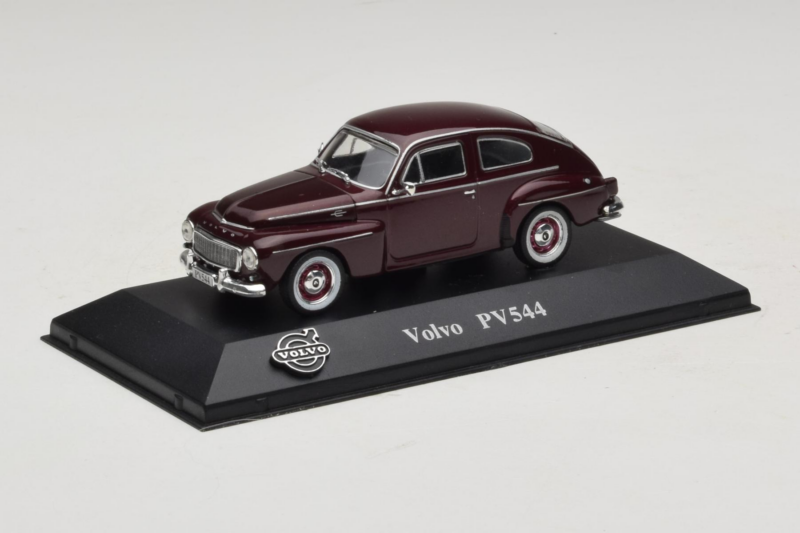
TL;DR: Atlas' 1:43 diecast Volvo PV544 wears dark red over the compact Swedish sedan's rounded, aerodynamic body. Volvo built the PV544 through the late 1950s and into the 1960s, and the car earned a reputation for toughness that carried it to real rally success, a trait this small-scale diecast represents rather than a single specific competition result.
The PV544's rounded shape looks almost pre-war at a glance, but the car under that body proved tough enough to compete on some of Europe's roughest rally stages well into the 1960s.
Atlas renders the PV544 at 1:43, a scale that suits the car's compact footprint and rounded, almost bulbous silhouette without demanding much shelf space. The diecast body carries the sedan's distinctive oval rear window and sloped trunk line, details that made the PV544 look dated next to its more angular contemporaries even when new. Dark red paint sits well on those curves, giving the small model enough visual weight to hold its own next to other 1:43 sedans from the same era. Diecast construction at this scale keeps the shape crisp along the roofline and fenders, and while opening features are minimal at 1:43, the proportions read accurately from every angle. For a collector building a European sedan lineup, the PV544's shape is instantly distinct from anything built by other manufacturers in the same period.
Volvo built its early reputation on durability rather than styling, and the PV544 backed that reputation up in competition, taking wins and strong results in European rallying during a period when Scandinavian manufacturers were proving that solid engineering could beat outright power on demanding stages. The car's unibody construction and simple, robust mechanicals meant it could absorb punishment that would have broken lighter, more delicate competitors, and that toughness became central to Volvo's identity for decades afterward. Its styling traces back to prewar Volvo design language even as the car soldiered on into the early 1960s, a holdover shape sold alongside genuinely modern competitors. It pairs naturally with later Volvo Amazon or 140-series pieces to trace the brand's engineering continuity.