



Aston Martin Lagonda S2 Green Cult Models 1:18
Sold out
1
/
6
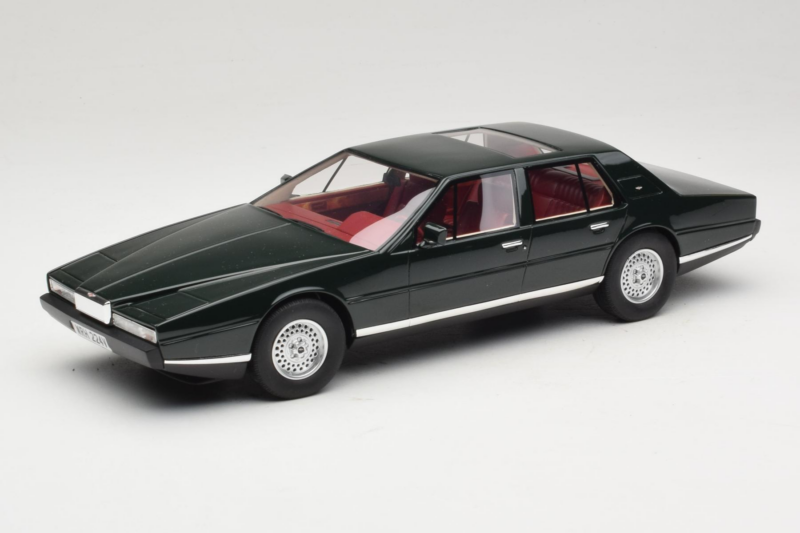
Cult Models' 1:18 diecast Aston Martin Lagonda Series 2 reproduces William Towns' razor-edged wedge design in Green. Diecast construction gives the Lagonda's flat panels and sharp creases genuine presence, a niche but distinctive subject for collectors who want something other than the usual Aston Martin coupe.
1 / 6
[{"index":0,"id":"1372420","thumb":"https:\/\/models118.com\/wp-content\/uploads\/2026\/06\/aston-martin-lagonda-s2-green-cult-models-1-18-300x200.png","medium":"https:\/\/models118.com\/wp-content\/uploads\/2026\/06\/aston-martin-lagonda-s2-green-cult-models-1-18-800x533.png","full":"https:\/\/models118.com\/wp-content\/uploads\/2026\/06\/aston-martin-lagonda-s2-green-cult-models-1-18.png","srcset":"https:\/\/models118.com\/wp-content\/uploads\/2026\/06\/aston-martin-lagonda-s2-green-cult-models-1-18-800x533.png 800w, https:\/\/models118.com\/wp-content\/uploads\/2026\/06\/aston-martin-lagonda-s2-green-cult-models-1-18-64x43.png 64w, https:\/\/models118.com\/wp-content\/uploads\/2026\/06\/aston-martin-lagonda-s2-green-cult-models-1-18-300x200.png 300w, https:\/\/models118.com\/wp-content\/uploads\/2026\/06\/aston-martin-lagonda-s2-green-cult-models-1-18.png 1800w","sizes":"(max-width: 1023px) 400px, 640px","srcsetAvif":"https:\/\/models118.com\/wp-content\/uploads\/2026\/06\/aston-martin-lagonda-s2-green-cult-models-1-18-800x533.png.avif 800w, https:\/\/models118.com\/wp-content\/uploads\/2026\/06\/aston-martin-lagonda-s2-green-cult-models-1-18-64x43.png.avif 64w, https:\/\/models118.com\/wp-content\/uploads\/2026\/06\/aston-martin-lagonda-s2-green-cult-models-1-18-300x200.png.avif 300w, https:\/\/models118.com\/wp-content\/uploads\/2026\/06\/aston-martin-lagonda-s2-green-cult-models-1-18.png.avif 1800w","srcsetWebp":"https:\/\/models118.com\/wp-content\/uploads\/2026\/06\/aston-martin-lagonda-s2-green-cult-models-1-18-800x533.png.webp 800w, https:\/\/models118.com\/wp-content\/uploads\/2026\/06\/aston-martin-lagonda-s2-green-cult-models-1-18-64x43.png.webp 64w, https:\/\/models118.com\/wp-content\/uploads\/2026\/06\/aston-martin-lagonda-s2-green-cult-models-1-18-300x200.png.webp 300w, https:\/\/models118.com\/wp-content\/uploads\/2026\/06\/aston-martin-lagonda-s2-green-cult-models-1-18.png.webp 1800w","alt":"Aston Martin Lagonda S2 Green Cult Models 1:18 CML014-5 Diecast"},{"index":1,"id":1372550,"thumb":"https:\/\/models118.com\/wp-content\/uploads\/2026\/06\/aston-martin-lagonda-s2-green-cult-models-1-18-1-300x200.png","medium":"https:\/\/models118.com\/wp-content\/uploads\/2026\/06\/aston-martin-lagonda-s2-green-cult-models-1-18-1-800x533.png","full":"https:\/\/models118.com\/wp-content\/uploads\/2026\/06\/aston-martin-lagonda-s2-green-cult-models-1-18-1.png","srcset":"https:\/\/models118.com\/wp-content\/uploads\/2026\/06\/aston-martin-lagonda-s2-green-cult-models-1-18-1-800x533.png 800w, https:\/\/models118.com\/wp-content\/uploads\/2026\/06\/aston-martin-lagonda-s2-green-cult-models-1-18-1-64x43.png 64w, https:\/\/models118.com\/wp-content\/uploads\/2026\/06\/aston-martin-lagonda-s2-green-cult-models-1-18-1-300x200.png 300w, https:\/\/models118.com\/wp-content\/uploads\/2026\/06\/aston-martin-lagonda-s2-green-cult-models-1-18-1.png 1800w","sizes":"(max-width: 1023px) 400px, 640px","srcsetAvif":"https:\/\/models118.com\/wp-content\/uploads\/2026\/06\/aston-martin-lagonda-s2-green-cult-models-1-18-1-800x533.png.avif 800w, https:\/\/models118.com\/wp-content\/uploads\/2026\/06\/aston-martin-lagonda-s2-green-cult-models-1-18-1-64x43.png.avif 64w, https:\/\/models118.com\/wp-content\/uploads\/2026\/06\/aston-martin-lagonda-s2-green-cult-models-1-18-1-300x200.png.avif 300w, https:\/\/models118.com\/wp-content\/uploads\/2026\/06\/aston-martin-lagonda-s2-green-cult-models-1-18-1.png.avif 1800w","srcsetWebp":"https:\/\/models118.com\/wp-content\/uploads\/2026\/06\/aston-martin-lagonda-s2-green-cult-models-1-18-1-800x533.png.webp 800w, https:\/\/models118.com\/wp-content\/uploads\/2026\/06\/aston-martin-lagonda-s2-green-cult-models-1-18-1-64x43.png.webp 64w, https:\/\/models118.com\/wp-content\/uploads\/2026\/06\/aston-martin-lagonda-s2-green-cult-models-1-18-1-300x200.png.webp 300w, https:\/\/models118.com\/wp-content\/uploads\/2026\/06\/aston-martin-lagonda-s2-green-cult-models-1-18-1.png.webp 1800w","alt":"Aston Martin Lagonda S2 Green Cult Models 1:18 CML014-5 Diecast - image 2 of 6"},{"index":2,"id":1372658,"thumb":"https:\/\/models118.com\/wp-content\/uploads\/2026\/06\/aston-martin-lagonda-s2-green-cult-models-1-18-2-300x200.png","medium":"https:\/\/models118.com\/wp-content\/uploads\/2026\/06\/aston-martin-lagonda-s2-green-cult-models-1-18-2-800x533.png","full":"https:\/\/models118.com\/wp-content\/uploads\/2026\/06\/aston-martin-lagonda-s2-green-cult-models-1-18-2.png","srcset":"https:\/\/models118.com\/wp-content\/uploads\/2026\/06\/aston-martin-lagonda-s2-green-cult-models-1-18-2-800x533.png 800w, https:\/\/models118.com\/wp-content\/uploads\/2026\/06\/aston-martin-lagonda-s2-green-cult-models-1-18-2-64x43.png 64w, https:\/\/models118.com\/wp-content\/uploads\/2026\/06\/aston-martin-lagonda-s2-green-cult-models-1-18-2-300x200.png 300w, https:\/\/models118.com\/wp-content\/uploads\/2026\/06\/aston-martin-lagonda-s2-green-cult-models-1-18-2.png 1800w","sizes":"(max-width: 1023px) 400px, 640px","srcsetAvif":"https:\/\/models118.com\/wp-content\/uploads\/2026\/06\/aston-martin-lagonda-s2-green-cult-models-1-18-2-800x533.png.avif 800w, https:\/\/models118.com\/wp-content\/uploads\/2026\/06\/aston-martin-lagonda-s2-green-cult-models-1-18-2-64x43.png.avif 64w, https:\/\/models118.com\/wp-content\/uploads\/2026\/06\/aston-martin-lagonda-s2-green-cult-models-1-18-2-300x200.png.avif 300w, https:\/\/models118.com\/wp-content\/uploads\/2026\/06\/aston-martin-lagonda-s2-green-cult-models-1-18-2.png.avif 1800w","srcsetWebp":"https:\/\/models118.com\/wp-content\/uploads\/2026\/06\/aston-martin-lagonda-s2-green-cult-models-1-18-2-800x533.png.webp 800w, https:\/\/models118.com\/wp-content\/uploads\/2026\/06\/aston-martin-lagonda-s2-green-cult-models-1-18-2-64x43.png.webp 64w, https:\/\/models118.com\/wp-content\/uploads\/2026\/06\/aston-martin-lagonda-s2-green-cult-models-1-18-2-300x200.png.webp 300w, https:\/\/models118.com\/wp-content\/uploads\/2026\/06\/aston-martin-lagonda-s2-green-cult-models-1-18-2.png.webp 1800w","alt":"Aston Martin Lagonda S2 Green Cult Models 1:18 CML014-5 Diecast - image 3 of 6"},{"index":3,"id":1372807,"thumb":"https:\/\/models118.com\/wp-content\/uploads\/2026\/06\/aston-martin-lagonda-s2-green-cult-models-1-18-3-300x200.png","medium":"https:\/\/models118.com\/wp-content\/uploads\/2026\/06\/aston-martin-lagonda-s2-green-cult-models-1-18-3-800x533.png","full":"https:\/\/models118.com\/wp-content\/uploads\/2026\/06\/aston-martin-lagonda-s2-green-cult-models-1-18-3.png","srcset":"https:\/\/models118.com\/wp-content\/uploads\/2026\/06\/aston-martin-lagonda-s2-green-cult-models-1-18-3-800x533.png 800w, https:\/\/models118.com\/wp-content\/uploads\/2026\/06\/aston-martin-lagonda-s2-green-cult-models-1-18-3-64x43.png 64w, https:\/\/models118.com\/wp-content\/uploads\/2026\/06\/aston-martin-lagonda-s2-green-cult-models-1-18-3-300x200.png 300w, https:\/\/models118.com\/wp-content\/uploads\/2026\/06\/aston-martin-lagonda-s2-green-cult-models-1-18-3.png 1800w","sizes":"(max-width: 1023px) 400px, 640px","srcsetAvif":"https:\/\/models118.com\/wp-content\/uploads\/2026\/06\/aston-martin-lagonda-s2-green-cult-models-1-18-3-800x533.png.avif 800w, https:\/\/models118.com\/wp-content\/uploads\/2026\/06\/aston-martin-lagonda-s2-green-cult-models-1-18-3-64x43.png.avif 64w, https:\/\/models118.com\/wp-content\/uploads\/2026\/06\/aston-martin-lagonda-s2-green-cult-models-1-18-3-300x200.png.avif 300w, https:\/\/models118.com\/wp-content\/uploads\/2026\/06\/aston-martin-lagonda-s2-green-cult-models-1-18-3.png.avif 1800w","srcsetWebp":"https:\/\/models118.com\/wp-content\/uploads\/2026\/06\/aston-martin-lagonda-s2-green-cult-models-1-18-3-800x533.png.webp 800w, https:\/\/models118.com\/wp-content\/uploads\/2026\/06\/aston-martin-lagonda-s2-green-cult-models-1-18-3-64x43.png.webp 64w, https:\/\/models118.com\/wp-content\/uploads\/2026\/06\/aston-martin-lagonda-s2-green-cult-models-1-18-3-300x200.png.webp 300w, https:\/\/models118.com\/wp-content\/uploads\/2026\/06\/aston-martin-lagonda-s2-green-cult-models-1-18-3.png.webp 1800w","alt":"Aston Martin Lagonda S2 Green Cult Models 1:18 CML014-5 Diecast - image 4 of 6"},{"index":4,"id":1372931,"thumb":"https:\/\/models118.com\/wp-content\/uploads\/2026\/06\/aston-martin-lagonda-s2-green-cult-models-1-18-4-300x200.png","medium":"https:\/\/models118.com\/wp-content\/uploads\/2026\/06\/aston-martin-lagonda-s2-green-cult-models-1-18-4-800x533.png","full":"https:\/\/models118.com\/wp-content\/uploads\/2026\/06\/aston-martin-lagonda-s2-green-cult-models-1-18-4.png","srcset":"https:\/\/models118.com\/wp-content\/uploads\/2026\/06\/aston-martin-lagonda-s2-green-cult-models-1-18-4-800x533.png 800w, https:\/\/models118.com\/wp-content\/uploads\/2026\/06\/aston-martin-lagonda-s2-green-cult-models-1-18-4-64x43.png 64w, https:\/\/models118.com\/wp-content\/uploads\/2026\/06\/aston-martin-lagonda-s2-green-cult-models-1-18-4-300x200.png 300w, https:\/\/models118.com\/wp-content\/uploads\/2026\/06\/aston-martin-lagonda-s2-green-cult-models-1-18-4.png 1800w","sizes":"(max-width: 1023px) 400px, 640px","srcsetAvif":"https:\/\/models118.com\/wp-content\/uploads\/2026\/06\/aston-martin-lagonda-s2-green-cult-models-1-18-4-800x533.png.avif 800w, https:\/\/models118.com\/wp-content\/uploads\/2026\/06\/aston-martin-lagonda-s2-green-cult-models-1-18-4-64x43.png.avif 64w, https:\/\/models118.com\/wp-content\/uploads\/2026\/06\/aston-martin-lagonda-s2-green-cult-models-1-18-4-300x200.png.avif 300w, https:\/\/models118.com\/wp-content\/uploads\/2026\/06\/aston-martin-lagonda-s2-green-cult-models-1-18-4.png.avif 1800w","srcsetWebp":"https:\/\/models118.com\/wp-content\/uploads\/2026\/06\/aston-martin-lagonda-s2-green-cult-models-1-18-4-800x533.png.webp 800w, https:\/\/models118.com\/wp-content\/uploads\/2026\/06\/aston-martin-lagonda-s2-green-cult-models-1-18-4-64x43.png.webp 64w, https:\/\/models118.com\/wp-content\/uploads\/2026\/06\/aston-martin-lagonda-s2-green-cult-models-1-18-4-300x200.png.webp 300w, https:\/\/models118.com\/wp-content\/uploads\/2026\/06\/aston-martin-lagonda-s2-green-cult-models-1-18-4.png.webp 1800w","alt":"Aston Martin Lagonda S2 Green Cult Models 1:18 CML014-5 Diecast - image 5 of 6"},{"index":5,"id":1373089,"thumb":"https:\/\/models118.com\/wp-content\/uploads\/2026\/06\/aston-martin-lagonda-s2-green-cult-models-1-18-5-300x200.png","medium":"https:\/\/models118.com\/wp-content\/uploads\/2026\/06\/aston-martin-lagonda-s2-green-cult-models-1-18-5-800x533.png","full":"https:\/\/models118.com\/wp-content\/uploads\/2026\/06\/aston-martin-lagonda-s2-green-cult-models-1-18-5.png","srcset":"https:\/\/models118.com\/wp-content\/uploads\/2026\/06\/aston-martin-lagonda-s2-green-cult-models-1-18-5-800x533.png 800w, https:\/\/models118.com\/wp-content\/uploads\/2026\/06\/aston-martin-lagonda-s2-green-cult-models-1-18-5-64x43.png 64w, https:\/\/models118.com\/wp-content\/uploads\/2026\/06\/aston-martin-lagonda-s2-green-cult-models-1-18-5-300x200.png 300w, https:\/\/models118.com\/wp-content\/uploads\/2026\/06\/aston-martin-lagonda-s2-green-cult-models-1-18-5.png 1800w","sizes":"(max-width: 1023px) 400px, 640px","srcsetAvif":"https:\/\/models118.com\/wp-content\/uploads\/2026\/06\/aston-martin-lagonda-s2-green-cult-models-1-18-5-800x533.png.avif 800w, https:\/\/models118.com\/wp-content\/uploads\/2026\/06\/aston-martin-lagonda-s2-green-cult-models-1-18-5-64x43.png.avif 64w, https:\/\/models118.com\/wp-content\/uploads\/2026\/06\/aston-martin-lagonda-s2-green-cult-models-1-18-5-300x200.png.avif 300w, https:\/\/models118.com\/wp-content\/uploads\/2026\/06\/aston-martin-lagonda-s2-green-cult-models-1-18-5.png.avif 1800w","srcsetWebp":"https:\/\/models118.com\/wp-content\/uploads\/2026\/06\/aston-martin-lagonda-s2-green-cult-models-1-18-5-800x533.png.webp 800w, https:\/\/models118.com\/wp-content\/uploads\/2026\/06\/aston-martin-lagonda-s2-green-cult-models-1-18-5-64x43.png.webp 64w, https:\/\/models118.com\/wp-content\/uploads\/2026\/06\/aston-martin-lagonda-s2-green-cult-models-1-18-5-300x200.png.webp 300w, https:\/\/models118.com\/wp-content\/uploads\/2026\/06\/aston-martin-lagonda-s2-green-cult-models-1-18-5.png.webp 1800w","alt":"Aston Martin Lagonda S2 Green Cult Models 1:18 CML014-5 Diecast - image 6 of 6"}]
Aston Martin Lagonda S2 Green Cult Models 1:18
Current price:
178.00 €
Sold out
This model is currently sold out. Enter your email and we'll let you know when it's back in stock.
Shipping to 78 countries
Worldwide delivery
Prices incl. 23% VAT
No hidden costs
Shipping rates by country
Tracked & insured
Pay in EUR €
Local currency
Specifications
- Brand
- Aston Martin
- Manufacturer
- Cult Models
- Scale
- 1:18
- Material
- Diecast
- Model Condition
- New Model
- SKU
- CML014-5
- Year
- 1985
- Era
- 1980s
- Body Type
- Sedan
- Vehicle Class
- Modern Classics
- Openable Parts
- No
- Packaging Condition
- New
- Model Type
- Street Models
- EAN / GTIN
- —
100% authentic
Direct from manufacturers
5-layer carton
Foam-filled interior
Easy returns
14 days, no questions asked
Secure payment
256-bit SSL encryption
About the Aston Martin Lagonda S2 Green Cult Models 1:18
TL;DR: Cult Models' 1:18 diecast Aston Martin Lagonda Series 2 reproduces designer William Towns' angular wedge sedan in Green. Diecast construction holds the Lagonda's flat panels and sharp creases with the weight the shape deserves, covering a subject most mainstream manufacturers overlook entirely.
Aston Martin's usual reputation rests on curvaceous coupes, which makes the Lagonda Series 2 an outlier worth seeking out: a four-door sedan built almost entirely from straight lines.
Cult Models' Diecast Rendering of a Genuinely Angular Design
William Towns designed the Lagonda Series 2 around flat surfaces and hard creases rather than the flowing curves typical of luxury sedans from its era, and that geometry actually suits diecast tooling well. Straight body lines and sharp panel edges are easier to render with precision than compound curves, and the Lagonda's razor-edged wedge profile comes through with real conviction in metal. Cult Models built its reputation on niche, rarely modeled subjects, and the Lagonda Series 2 fits that specialty precisely: a car few other manufacturers have attempted, executed here with the flat-plane accuracy the design demands. Green paint keeps the finish period-appropriate rather than flashy, matching a car whose novelty was always in its shape rather than its color.
A Wedge-Shaped Departure from Aston Martin's Usual Language
Produced from 1976 into the late 1980s, the Lagonda Series 2 stood apart from every other Aston Martin of its time, a four-door luxury sedan with a low, flat nose and a cabin that famously experimented with early digital instrumentation rather than traditional dials. It was a low-volume, expensive statement rather than a volume seller, aimed at buyers who wanted something visibly different from a Rolls-Royce or Mercedes S-Class. That rarity on the road translates directly into rarity on the shelf.
This Lagonda works best as a deliberate outlier in an Aston Martin display, the angular counterpoint that makes the brand's more familiar coupes look conventional by comparison.
From the same collection

Aston Martin Valkyrie Racing Blue GT Spirit 1:18
Price:
100.00 €

Aston Martin V12 Vantage Roadster Onyx Black GT Spirit 1:18
Price:
100.00 €

Aston Martin DB12 Hyper Red GT Spirit 1:18
Price:
100.00 €

Aston Martin Valkyrie Racing Green GT Spirit 1:18
Price:
110.00 €
Last one
Used

Last one

Recently viewed
{"id":1373203,"name":"Aston Martin Lagonda S2 Green Cult Models 1:18","price":"178.00 €<\/span><\/bdi><\/span>","image":"https:\/\/models118.com\/wp-content\/uploads\/2026\/06\/aston-martin-lagonda-s2-green-cult-models-1-18-400x400.png","permalink":"https:\/\/models118.com\/aston-martin-lagonda-s2-green-cult-models-1-18-cml014-5\/","brand":"Aston Martin"}