Used
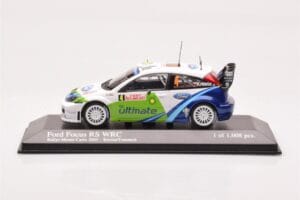
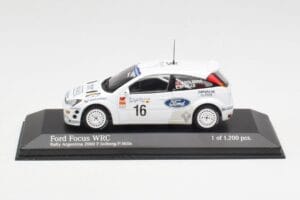
Ford Focus RS WRC #4 R. Kresta / J. Tomanek Rally Monte Carlo 2005 Minichamps 1:43
Only 2 left
Price:
103.00 €
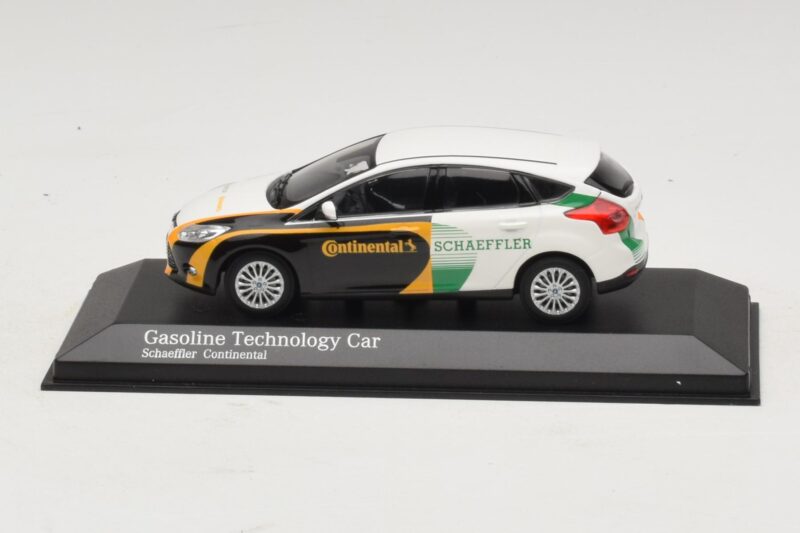
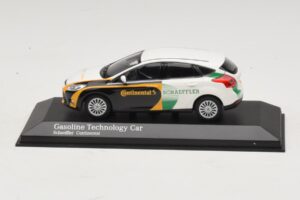
TL;DR: Minichamps' 1:43 Ford Focus Gasoline Technology Car reproduces the Continental and Schaeffler efficiency-research demonstrator built on a Focus hatchback, cast as a sealed zinc-alloy body carrying the project's partner livery. A niche technology-vehicle subject rather than a production replica, aimed at collectors interested in automotive engineering history.
Most diecast catalogs stick to production cars, which makes a genuine research demonstrator like this one worth a second look. The Gasoline Technology Car paired Ford's Focus platform with efficiency hardware from suppliers Continental and Schaeffler, and Minichamps preserves that partnership in sealed 1:43 diecast.
Technology demonstrators like this one exist to prove hardware works in a real chassis rather than to sell to the public, which means their liveries carry supplier branding instead of a manufacturer's showroom colors. Minichamps casts the Focus-based demonstrator as one sealed zinc-alloy shell, doors and hatch fixed rather than hinged, the standard approach for a 1:43 casting regardless of how unusual the subject is. That sealed construction keeps the hatchback's shut lines tight and consistent, which matters here because the real vehicle's body panels were likely modified less for style than for the underlying hardware the project tested, engine, transmission, and drivetrain efficiency components rather than aerodynamic addenda. The Continental and Schaeffler branding runs across the doors and hood in tampo-printed graphics, holding sharp edges the way project and sponsor liveries need to when they're meant to be read clearly in technical photography and trade-show settings rather than at highway speed. Wheel design follows a standard Focus fitment rather than anything exotic, appropriate for a demonstrator whose purpose was engine and drivetrain testing rather than a styling exercise, and the paint finish reads clean and factory-correct on the body panels that carry no project graphics. Glazing and trim details follow the production Focus hatchback closely, a reminder that these projects typically modify a mass-market platform rather than build a bespoke shell from scratch.
Automotive suppliers routinely build technology demonstrators to prove new hardware in a real, drivable vehicle before that hardware reaches production programs, and the Gasoline Technology Car project this model documents brought together Ford's Focus platform with efficiency-focused components from Continental and Schaeffler around the middle of the 2010s. The goal of that kind of collaboration is typically to show that optimized combustion technology can meet tightening emissions and fuel-economy targets without sacrificing the driving characteristics a mainstream customer expects, work that rarely reaches showroom floors directly but often filters into production models over the following product cycles. Suppliers like Continental and Schaeffler operate largely behind the scenes from a consumer's perspective, engineering the components inside a vehicle rather than the badge on its hood, so a demonstrator carrying their branding openly is a rare chance to put a name to that usually invisible engineering work. Programs like this typically run for a limited testing period before the hardware is either shelved or absorbed into a production platform, which means the demonstrator itself often exists in far smaller numbers than any production vehicle a manufacturer eventually sells.
At 1:43, this Focus-based demonstrator makes an unusual but welcome addition next to a shelf of production hatchbacks, standing out precisely because its livery and purpose differ from everything around it. Research and technology vehicles rarely get diecast treatment at all, so a subject like this one is worth securing specifically because a comparable casting is unlikely to turn up again from a different angle. It pairs naturally with other supplier-branded or concept-adjacent castings rather than with mainstream production Fords, forming a small but distinct corner of a broader collection focused on the engineering side of the industry.






You save 16.00 €
Lowest price in the 30 days before the reduction: 123.00 €