


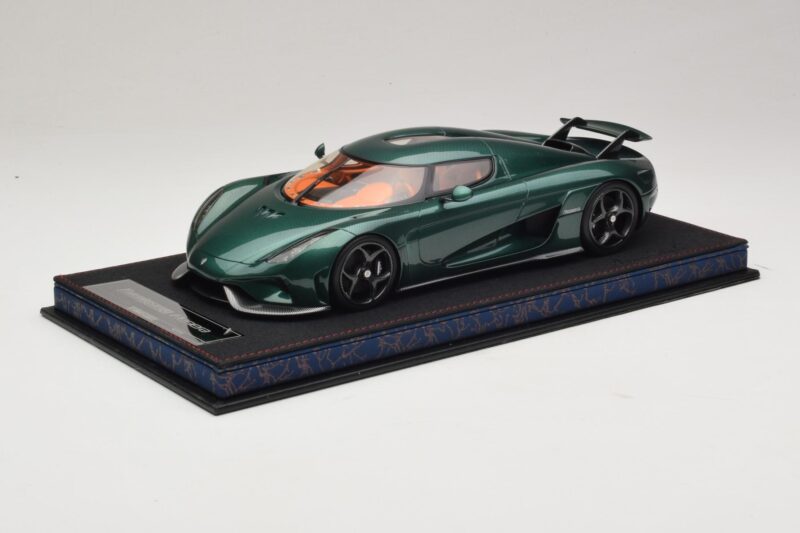
Koenigsegg Regera Green Tinted Carbon FrontiArt 1:18
1
/
7
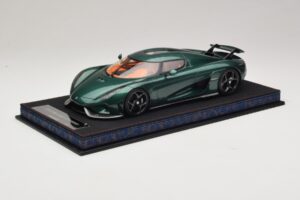
FrontiArt's 1:18 resin Koenigsegg Regera reproduces the hybrid hypercar's naked carbon bodywork under a green tint, cast as a sealed one-piece body with tightly held panel lines. Built from 2016, the Regera pairs a twin-turbo V8 with electric motors through Koenigsegg's transmission-free Direct Drive system, a limited-run engineering statement now rare on any shelf. A specialist resin pick for a modern hypercar collection.
1 / 7
[{"index":0,"id":"1681997","thumb":"https:\/\/models118.com\/wp-content\/uploads\/2026\/09\/koenigsegg-regera-green-tinted-carbon-frontiart-1-18-as010-110-1-1-300x200.jpg","medium":"https:\/\/models118.com\/wp-content\/uploads\/2026\/09\/koenigsegg-regera-green-tinted-carbon-frontiart-1-18-as010-110-1-1-800x533.jpg","full":"https:\/\/models118.com\/wp-content\/uploads\/2026\/09\/koenigsegg-regera-green-tinted-carbon-frontiart-1-18-as010-110-1-1.jpg","srcset":"https:\/\/models118.com\/wp-content\/uploads\/2026\/09\/koenigsegg-regera-green-tinted-carbon-frontiart-1-18-as010-110-1-1-800x533.jpg 800w, https:\/\/models118.com\/wp-content\/uploads\/2026\/09\/koenigsegg-regera-green-tinted-carbon-frontiart-1-18-as010-110-1-1-300x200.jpg 300w, https:\/\/models118.com\/wp-content\/uploads\/2026\/09\/koenigsegg-regera-green-tinted-carbon-frontiart-1-18-as010-110-1-1-64x43.jpg 64w, https:\/\/models118.com\/wp-content\/uploads\/2026\/09\/koenigsegg-regera-green-tinted-carbon-frontiart-1-18-as010-110-1-1.jpg 1800w","sizes":"(max-width: 1023px) 400px, 640px","srcsetAvif":"https:\/\/models118.com\/wp-content\/uploads\/2026\/09\/koenigsegg-regera-green-tinted-carbon-frontiart-1-18-as010-110-1-1-800x533.jpg.avif 800w, https:\/\/models118.com\/wp-content\/uploads\/2026\/09\/koenigsegg-regera-green-tinted-carbon-frontiart-1-18-as010-110-1-1-300x200.jpg.avif 300w, https:\/\/models118.com\/wp-content\/uploads\/2026\/09\/koenigsegg-regera-green-tinted-carbon-frontiart-1-18-as010-110-1-1-64x43.jpg.avif 64w, https:\/\/models118.com\/wp-content\/uploads\/2026\/09\/koenigsegg-regera-green-tinted-carbon-frontiart-1-18-as010-110-1-1.jpg.avif 1800w","srcsetWebp":"https:\/\/models118.com\/wp-content\/uploads\/2026\/09\/koenigsegg-regera-green-tinted-carbon-frontiart-1-18-as010-110-1-1-800x533.jpg.webp 800w, https:\/\/models118.com\/wp-content\/uploads\/2026\/09\/koenigsegg-regera-green-tinted-carbon-frontiart-1-18-as010-110-1-1-300x200.jpg.webp 300w, https:\/\/models118.com\/wp-content\/uploads\/2026\/09\/koenigsegg-regera-green-tinted-carbon-frontiart-1-18-as010-110-1-1-64x43.jpg.webp 64w, https:\/\/models118.com\/wp-content\/uploads\/2026\/09\/koenigsegg-regera-green-tinted-carbon-frontiart-1-18-as010-110-1-1.jpg.webp 1800w","alt":"Koenigsegg Regera Green Tinted Carbon FrontiArt 1:18 AS010-110 Resin"},{"index":1,"id":1682000,"thumb":"https:\/\/models118.com\/wp-content\/uploads\/2026\/09\/koenigsegg-regera-green-tinted-carbon-frontiart-1-18-as010-110-1-300x200.jpg","medium":"https:\/\/models118.com\/wp-content\/uploads\/2026\/09\/koenigsegg-regera-green-tinted-carbon-frontiart-1-18-as010-110-1-800x533.jpg","full":"https:\/\/models118.com\/wp-content\/uploads\/2026\/09\/koenigsegg-regera-green-tinted-carbon-frontiart-1-18-as010-110-1.jpg","srcset":"https:\/\/models118.com\/wp-content\/uploads\/2026\/09\/koenigsegg-regera-green-tinted-carbon-frontiart-1-18-as010-110-1-800x533.jpg 800w, https:\/\/models118.com\/wp-content\/uploads\/2026\/09\/koenigsegg-regera-green-tinted-carbon-frontiart-1-18-as010-110-1-300x200.jpg 300w, https:\/\/models118.com\/wp-content\/uploads\/2026\/09\/koenigsegg-regera-green-tinted-carbon-frontiart-1-18-as010-110-1-64x43.jpg 64w, https:\/\/models118.com\/wp-content\/uploads\/2026\/09\/koenigsegg-regera-green-tinted-carbon-frontiart-1-18-as010-110-1.jpg 1800w","sizes":"(max-width: 1023px) 400px, 640px","srcsetAvif":"https:\/\/models118.com\/wp-content\/uploads\/2026\/09\/koenigsegg-regera-green-tinted-carbon-frontiart-1-18-as010-110-1-800x533.jpg.avif 800w, https:\/\/models118.com\/wp-content\/uploads\/2026\/09\/koenigsegg-regera-green-tinted-carbon-frontiart-1-18-as010-110-1-300x200.jpg.avif 300w, https:\/\/models118.com\/wp-content\/uploads\/2026\/09\/koenigsegg-regera-green-tinted-carbon-frontiart-1-18-as010-110-1-64x43.jpg.avif 64w, https:\/\/models118.com\/wp-content\/uploads\/2026\/09\/koenigsegg-regera-green-tinted-carbon-frontiart-1-18-as010-110-1.jpg.avif 1800w","srcsetWebp":"https:\/\/models118.com\/wp-content\/uploads\/2026\/09\/koenigsegg-regera-green-tinted-carbon-frontiart-1-18-as010-110-1-800x533.jpg.webp 800w, https:\/\/models118.com\/wp-content\/uploads\/2026\/09\/koenigsegg-regera-green-tinted-carbon-frontiart-1-18-as010-110-1-300x200.jpg.webp 300w, https:\/\/models118.com\/wp-content\/uploads\/2026\/09\/koenigsegg-regera-green-tinted-carbon-frontiart-1-18-as010-110-1-64x43.jpg.webp 64w, https:\/\/models118.com\/wp-content\/uploads\/2026\/09\/koenigsegg-regera-green-tinted-carbon-frontiart-1-18-as010-110-1.jpg.webp 1800w","alt":"Koenigsegg Regera Green Tinted Carbon FrontiArt 1:18 AS010-110 Resin - image 2 of 7"},{"index":2,"id":1682002,"thumb":"https:\/\/models118.com\/wp-content\/uploads\/2026\/09\/koenigsegg-regera-green-tinted-carbon-frontiart-1-18-as010-110-2-300x200.jpg","medium":"https:\/\/models118.com\/wp-content\/uploads\/2026\/09\/koenigsegg-regera-green-tinted-carbon-frontiart-1-18-as010-110-2-800x533.jpg","full":"https:\/\/models118.com\/wp-content\/uploads\/2026\/09\/koenigsegg-regera-green-tinted-carbon-frontiart-1-18-as010-110-2.jpg","srcset":"https:\/\/models118.com\/wp-content\/uploads\/2026\/09\/koenigsegg-regera-green-tinted-carbon-frontiart-1-18-as010-110-2-800x533.jpg 800w, https:\/\/models118.com\/wp-content\/uploads\/2026\/09\/koenigsegg-regera-green-tinted-carbon-frontiart-1-18-as010-110-2-300x200.jpg 300w, https:\/\/models118.com\/wp-content\/uploads\/2026\/09\/koenigsegg-regera-green-tinted-carbon-frontiart-1-18-as010-110-2-64x43.jpg 64w, https:\/\/models118.com\/wp-content\/uploads\/2026\/09\/koenigsegg-regera-green-tinted-carbon-frontiart-1-18-as010-110-2.jpg 1800w","sizes":"(max-width: 1023px) 400px, 640px","srcsetAvif":"https:\/\/models118.com\/wp-content\/uploads\/2026\/09\/koenigsegg-regera-green-tinted-carbon-frontiart-1-18-as010-110-2-800x533.jpg.avif 800w, https:\/\/models118.com\/wp-content\/uploads\/2026\/09\/koenigsegg-regera-green-tinted-carbon-frontiart-1-18-as010-110-2-300x200.jpg.avif 300w, https:\/\/models118.com\/wp-content\/uploads\/2026\/09\/koenigsegg-regera-green-tinted-carbon-frontiart-1-18-as010-110-2-64x43.jpg.avif 64w, https:\/\/models118.com\/wp-content\/uploads\/2026\/09\/koenigsegg-regera-green-tinted-carbon-frontiart-1-18-as010-110-2.jpg.avif 1800w","srcsetWebp":"https:\/\/models118.com\/wp-content\/uploads\/2026\/09\/koenigsegg-regera-green-tinted-carbon-frontiart-1-18-as010-110-2-800x533.jpg.webp 800w, https:\/\/models118.com\/wp-content\/uploads\/2026\/09\/koenigsegg-regera-green-tinted-carbon-frontiart-1-18-as010-110-2-300x200.jpg.webp 300w, https:\/\/models118.com\/wp-content\/uploads\/2026\/09\/koenigsegg-regera-green-tinted-carbon-frontiart-1-18-as010-110-2-64x43.jpg.webp 64w, https:\/\/models118.com\/wp-content\/uploads\/2026\/09\/koenigsegg-regera-green-tinted-carbon-frontiart-1-18-as010-110-2.jpg.webp 1800w","alt":"Koenigsegg Regera Green Tinted Carbon FrontiArt 1:18 AS010-110 Resin - image 3 of 7"},{"index":3,"id":1682004,"thumb":"https:\/\/models118.com\/wp-content\/uploads\/2026\/09\/koenigsegg-regera-green-tinted-carbon-frontiart-1-18-as010-110-3-300x200.jpg","medium":"https:\/\/models118.com\/wp-content\/uploads\/2026\/09\/koenigsegg-regera-green-tinted-carbon-frontiart-1-18-as010-110-3-800x533.jpg","full":"https:\/\/models118.com\/wp-content\/uploads\/2026\/09\/koenigsegg-regera-green-tinted-carbon-frontiart-1-18-as010-110-3.jpg","srcset":"https:\/\/models118.com\/wp-content\/uploads\/2026\/09\/koenigsegg-regera-green-tinted-carbon-frontiart-1-18-as010-110-3-800x533.jpg 800w, https:\/\/models118.com\/wp-content\/uploads\/2026\/09\/koenigsegg-regera-green-tinted-carbon-frontiart-1-18-as010-110-3-300x200.jpg 300w, https:\/\/models118.com\/wp-content\/uploads\/2026\/09\/koenigsegg-regera-green-tinted-carbon-frontiart-1-18-as010-110-3-64x43.jpg 64w, https:\/\/models118.com\/wp-content\/uploads\/2026\/09\/koenigsegg-regera-green-tinted-carbon-frontiart-1-18-as010-110-3.jpg 1800w","sizes":"(max-width: 1023px) 400px, 640px","srcsetAvif":"https:\/\/models118.com\/wp-content\/uploads\/2026\/09\/koenigsegg-regera-green-tinted-carbon-frontiart-1-18-as010-110-3-800x533.jpg.avif 800w, https:\/\/models118.com\/wp-content\/uploads\/2026\/09\/koenigsegg-regera-green-tinted-carbon-frontiart-1-18-as010-110-3-300x200.jpg.avif 300w, https:\/\/models118.com\/wp-content\/uploads\/2026\/09\/koenigsegg-regera-green-tinted-carbon-frontiart-1-18-as010-110-3-64x43.jpg.avif 64w, https:\/\/models118.com\/wp-content\/uploads\/2026\/09\/koenigsegg-regera-green-tinted-carbon-frontiart-1-18-as010-110-3.jpg.avif 1800w","srcsetWebp":"https:\/\/models118.com\/wp-content\/uploads\/2026\/09\/koenigsegg-regera-green-tinted-carbon-frontiart-1-18-as010-110-3-800x533.jpg.webp 800w, https:\/\/models118.com\/wp-content\/uploads\/2026\/09\/koenigsegg-regera-green-tinted-carbon-frontiart-1-18-as010-110-3-300x200.jpg.webp 300w, https:\/\/models118.com\/wp-content\/uploads\/2026\/09\/koenigsegg-regera-green-tinted-carbon-frontiart-1-18-as010-110-3-64x43.jpg.webp 64w, https:\/\/models118.com\/wp-content\/uploads\/2026\/09\/koenigsegg-regera-green-tinted-carbon-frontiart-1-18-as010-110-3.jpg.webp 1800w","alt":"Koenigsegg Regera Green Tinted Carbon FrontiArt 1:18 AS010-110 Resin - image 4 of 7"},{"index":4,"id":1682005,"thumb":"https:\/\/models118.com\/wp-content\/uploads\/2026\/09\/koenigsegg-regera-green-tinted-carbon-frontiart-1-18-as010-110-4-300x200.jpg","medium":"https:\/\/models118.com\/wp-content\/uploads\/2026\/09\/koenigsegg-regera-green-tinted-carbon-frontiart-1-18-as010-110-4-800x533.jpg","full":"https:\/\/models118.com\/wp-content\/uploads\/2026\/09\/koenigsegg-regera-green-tinted-carbon-frontiart-1-18-as010-110-4.jpg","srcset":"https:\/\/models118.com\/wp-content\/uploads\/2026\/09\/koenigsegg-regera-green-tinted-carbon-frontiart-1-18-as010-110-4-800x533.jpg 800w, https:\/\/models118.com\/wp-content\/uploads\/2026\/09\/koenigsegg-regera-green-tinted-carbon-frontiart-1-18-as010-110-4-300x200.jpg 300w, https:\/\/models118.com\/wp-content\/uploads\/2026\/09\/koenigsegg-regera-green-tinted-carbon-frontiart-1-18-as010-110-4-64x43.jpg 64w, https:\/\/models118.com\/wp-content\/uploads\/2026\/09\/koenigsegg-regera-green-tinted-carbon-frontiart-1-18-as010-110-4.jpg 1800w","sizes":"(max-width: 1023px) 400px, 640px","srcsetAvif":"https:\/\/models118.com\/wp-content\/uploads\/2026\/09\/koenigsegg-regera-green-tinted-carbon-frontiart-1-18-as010-110-4-800x533.jpg.avif 800w, https:\/\/models118.com\/wp-content\/uploads\/2026\/09\/koenigsegg-regera-green-tinted-carbon-frontiart-1-18-as010-110-4-300x200.jpg.avif 300w, https:\/\/models118.com\/wp-content\/uploads\/2026\/09\/koenigsegg-regera-green-tinted-carbon-frontiart-1-18-as010-110-4-64x43.jpg.avif 64w, https:\/\/models118.com\/wp-content\/uploads\/2026\/09\/koenigsegg-regera-green-tinted-carbon-frontiart-1-18-as010-110-4.jpg.avif 1800w","srcsetWebp":"https:\/\/models118.com\/wp-content\/uploads\/2026\/09\/koenigsegg-regera-green-tinted-carbon-frontiart-1-18-as010-110-4-800x533.jpg.webp 800w, https:\/\/models118.com\/wp-content\/uploads\/2026\/09\/koenigsegg-regera-green-tinted-carbon-frontiart-1-18-as010-110-4-300x200.jpg.webp 300w, https:\/\/models118.com\/wp-content\/uploads\/2026\/09\/koenigsegg-regera-green-tinted-carbon-frontiart-1-18-as010-110-4-64x43.jpg.webp 64w, https:\/\/models118.com\/wp-content\/uploads\/2026\/09\/koenigsegg-regera-green-tinted-carbon-frontiart-1-18-as010-110-4.jpg.webp 1800w","alt":"Koenigsegg Regera Green Tinted Carbon FrontiArt 1:18 AS010-110 Resin - image 5 of 7"},{"index":5,"id":1682006,"thumb":"https:\/\/models118.com\/wp-content\/uploads\/2026\/09\/koenigsegg-regera-green-tinted-carbon-frontiart-1-18-as010-110-5-300x200.jpg","medium":"https:\/\/models118.com\/wp-content\/uploads\/2026\/09\/koenigsegg-regera-green-tinted-carbon-frontiart-1-18-as010-110-5-800x533.jpg","full":"https:\/\/models118.com\/wp-content\/uploads\/2026\/09\/koenigsegg-regera-green-tinted-carbon-frontiart-1-18-as010-110-5.jpg","srcset":"https:\/\/models118.com\/wp-content\/uploads\/2026\/09\/koenigsegg-regera-green-tinted-carbon-frontiart-1-18-as010-110-5-800x533.jpg 800w, https:\/\/models118.com\/wp-content\/uploads\/2026\/09\/koenigsegg-regera-green-tinted-carbon-frontiart-1-18-as010-110-5-300x200.jpg 300w, https:\/\/models118.com\/wp-content\/uploads\/2026\/09\/koenigsegg-regera-green-tinted-carbon-frontiart-1-18-as010-110-5-64x43.jpg 64w, https:\/\/models118.com\/wp-content\/uploads\/2026\/09\/koenigsegg-regera-green-tinted-carbon-frontiart-1-18-as010-110-5.jpg 1800w","sizes":"(max-width: 1023px) 400px, 640px","srcsetAvif":"https:\/\/models118.com\/wp-content\/uploads\/2026\/09\/koenigsegg-regera-green-tinted-carbon-frontiart-1-18-as010-110-5-800x533.jpg.avif 800w, https:\/\/models118.com\/wp-content\/uploads\/2026\/09\/koenigsegg-regera-green-tinted-carbon-frontiart-1-18-as010-110-5-300x200.jpg.avif 300w, https:\/\/models118.com\/wp-content\/uploads\/2026\/09\/koenigsegg-regera-green-tinted-carbon-frontiart-1-18-as010-110-5-64x43.jpg.avif 64w, https:\/\/models118.com\/wp-content\/uploads\/2026\/09\/koenigsegg-regera-green-tinted-carbon-frontiart-1-18-as010-110-5.jpg.avif 1800w","srcsetWebp":"https:\/\/models118.com\/wp-content\/uploads\/2026\/09\/koenigsegg-regera-green-tinted-carbon-frontiart-1-18-as010-110-5-800x533.jpg.webp 800w, https:\/\/models118.com\/wp-content\/uploads\/2026\/09\/koenigsegg-regera-green-tinted-carbon-frontiart-1-18-as010-110-5-300x200.jpg.webp 300w, https:\/\/models118.com\/wp-content\/uploads\/2026\/09\/koenigsegg-regera-green-tinted-carbon-frontiart-1-18-as010-110-5-64x43.jpg.webp 64w, https:\/\/models118.com\/wp-content\/uploads\/2026\/09\/koenigsegg-regera-green-tinted-carbon-frontiart-1-18-as010-110-5.jpg.webp 1800w","alt":"Koenigsegg Regera Green Tinted Carbon FrontiArt 1:18 AS010-110 Resin - image 6 of 7"},{"index":6,"id":1682007,"thumb":"https:\/\/models118.com\/wp-content\/uploads\/2026\/09\/koenigsegg-regera-green-tinted-carbon-frontiart-1-18-as010-110-6-300x200.jpg","medium":"https:\/\/models118.com\/wp-content\/uploads\/2026\/09\/koenigsegg-regera-green-tinted-carbon-frontiart-1-18-as010-110-6-800x533.jpg","full":"https:\/\/models118.com\/wp-content\/uploads\/2026\/09\/koenigsegg-regera-green-tinted-carbon-frontiart-1-18-as010-110-6.jpg","srcset":"https:\/\/models118.com\/wp-content\/uploads\/2026\/09\/koenigsegg-regera-green-tinted-carbon-frontiart-1-18-as010-110-6-800x533.jpg 800w, https:\/\/models118.com\/wp-content\/uploads\/2026\/09\/koenigsegg-regera-green-tinted-carbon-frontiart-1-18-as010-110-6-300x200.jpg 300w, https:\/\/models118.com\/wp-content\/uploads\/2026\/09\/koenigsegg-regera-green-tinted-carbon-frontiart-1-18-as010-110-6-64x43.jpg 64w, https:\/\/models118.com\/wp-content\/uploads\/2026\/09\/koenigsegg-regera-green-tinted-carbon-frontiart-1-18-as010-110-6.jpg 1800w","sizes":"(max-width: 1023px) 400px, 640px","srcsetAvif":"https:\/\/models118.com\/wp-content\/uploads\/2026\/09\/koenigsegg-regera-green-tinted-carbon-frontiart-1-18-as010-110-6-800x533.jpg.avif 800w, https:\/\/models118.com\/wp-content\/uploads\/2026\/09\/koenigsegg-regera-green-tinted-carbon-frontiart-1-18-as010-110-6-300x200.jpg.avif 300w, https:\/\/models118.com\/wp-content\/uploads\/2026\/09\/koenigsegg-regera-green-tinted-carbon-frontiart-1-18-as010-110-6-64x43.jpg.avif 64w, https:\/\/models118.com\/wp-content\/uploads\/2026\/09\/koenigsegg-regera-green-tinted-carbon-frontiart-1-18-as010-110-6.jpg.avif 1800w","srcsetWebp":"https:\/\/models118.com\/wp-content\/uploads\/2026\/09\/koenigsegg-regera-green-tinted-carbon-frontiart-1-18-as010-110-6-800x533.jpg.webp 800w, https:\/\/models118.com\/wp-content\/uploads\/2026\/09\/koenigsegg-regera-green-tinted-carbon-frontiart-1-18-as010-110-6-300x200.jpg.webp 300w, https:\/\/models118.com\/wp-content\/uploads\/2026\/09\/koenigsegg-regera-green-tinted-carbon-frontiart-1-18-as010-110-6-64x43.jpg.webp 64w, https:\/\/models118.com\/wp-content\/uploads\/2026\/09\/koenigsegg-regera-green-tinted-carbon-frontiart-1-18-as010-110-6.jpg.webp 1800w","alt":"Koenigsegg Regera Green Tinted Carbon FrontiArt 1:18 AS010-110 Resin - image 7 of 7"}]
Koenigsegg Regera Green Tinted Carbon FrontiArt 1:18
Current price:
474.00 €
Last one in stock
Estimated delivery: 02-07.10.2026
Shipping rates by country
10% discount on your first order — create a free account
Shipping to 78 countries
Worldwide delivery
Prices incl. 23% VAT
No hidden costs
Shipping rates by country
Tracked & insured
Pay in EUR €
Local currency
Specifications
- Brand
- Koenigsegg
- Manufacturer
- FrontiArt
- Scale
- 1:18
- Material
- Resin
- Model Condition
- Used Model
- SKU
- AS010-110
100% authentic
5-layer carton
Foam-filled interior
Easy returns
14 days, no questions asked
Secure payment
256-bit SSL encryption
About the Koenigsegg Regera Green Tinted Carbon FrontiArt 1:18
TL;DR: FrontiArt's 1:18 resin Koenigsegg Regera reproduces the hybrid hypercar's exposed carbon bodywork under a green tint, cast as a sealed one-piece body. Built from 2016, the Regera pairs a twin-turbo V8 with electric motors through Koenigsegg's transmission-free Direct Drive system.
Koenigsegg built its reputation on doing what larger manufacturers wouldn't, and the Regera pushed that further than any Koenigsegg before it by removing the gearbox entirely. FrontiArt's resin casting gives that engineering statement a shelf-scale presence few other manufacturers attempt.
FrontiArt's Koenigsegg Regera and Its Direct Drive Engineering
A Hypercar Without a Conventional Gearbox
Koenigsegg revealed the Regera at the 2015 Geneva Motor Show and moved it into production the following year, pairing a twin-turbocharged V8 with three electric motors in a hybrid layout built around the company's Direct Drive system. Rather than routing power through a multi-speed transmission, Direct Drive connects the engine to the rear wheels through hydraulic couplings, letting the electric motors handle the low-speed torque a gearbox would otherwise manage. Koenigsegg limited the Regera to a run of around eighty examples, a scarcity that keeps the car firmly in the realm most collectors will only ever encounter through a model like this one.
Exposed Carbon as a Design Signature
Leaving carbon fiber bodywork visible rather than painting over it has become one of Koenigsegg's recurring signatures, a way of letting the weave itself stand as the finish instead of hiding it beneath a solid color. The green tint on this example sits over that exposed weave as a clear coat, adding color without erasing the fiber pattern underneath, a finishing technique that shows off the carbon construction rather than disguising it. It is a distinctive choice that few other hypercar manufacturers commit to across an entire body. Koenigsegg's name itself, a Swedish verb meaning roughly to reign, fits a car built to demonstrate outright technical dominance rather than mere speed. That naming choice underlines how deliberately Koenigsegg frames each model as a statement rather than an incremental update.
FrontiArt's Resin Casting of a Carbon Bodywork
Why Resin Suits an Exposed-Weave Finish
Reproducing a visible carbon weave convincingly at 1:18 is exactly the kind of task resin handles better than pressure-cast metal. Cast resin holds tighter tolerances than a die allows, which lets FrontiArt capture the fine, repeating texture of the weave pattern and the compound curves of the Regera's body without the softened edges a metal casting would introduce at this scale. The sealed, one-piece body plays directly into that strength: with no shutlines cutting across the surface, the weave pattern and the tinted clear coat run continuously across the hood, doors, and rear deck exactly as they would on the real carbon panel.
Weight, Tint Depth, and Shelf Presence at 1:18
Lifted from its case, the model reads light for its size, the signature of a resin build rather than a die-cast one, and that lighter mass suits a hypercar whose entire engineering philosophy is built around shedding weight. The green tint carries real depth under a display lamp, shifting subtly as the angle of light changes across the carbon weave beneath it. At 1:18, the Regera's low, wide stance and aggressive aero surfaces get the space they need to read clearly, and because the body stays sealed, every bit of that craft lives on the outside where a collector can actually see it. That is the honest trade behind any sealed casting: less to touch, more to look at.
Placing a Koenigsegg Among Hypercar Resin
A Specialist Subject for a Specialist Segment
FrontiArt operates in the corner of the hobby built around hypercars that larger diecast manufacturers rarely tool, and a Regera in exposed carbon is a good example of why that niche exists. Displayed next to more mainstream 1:18 supercars, the Regera's naked-carbon finish and low stance immediately signal a different tier of the hobby, one built on scarcity and engineering rather than badge recognition alone. It is a considered purchase for a modern hypercar shelf, not an impulse add. Pair it with a Jesko or an Agera to trace how Koenigsegg's design language evolved, or let it stand alone as the one piece on the shelf that visitors always ask about first. Either way, it earns that attention on engineering alone. Few models carry that story so plainly.
From the same collection
Last one
Back in stock
Last one
Back in stock
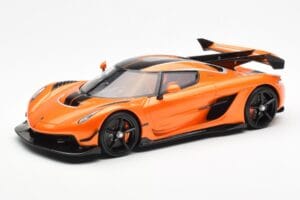
Koenigsegg Jesko Attack Tang Orange GT Spirit 1:18
Price:
119.00 €
Last one
Back in stock
Last one
Back in stock
Last one
Used
Last one
Used
Collectors also bought
Browse all 1:18
Last one
Used
Last one
Used
Last one
Used
Recently viewed
{"id":1678306,"name":"Koenigsegg Regera Green Tinted Carbon FrontiArt 1:18","price":"474.00 €<\/span><\/bdi><\/span>","image":"https:\/\/models118.com\/wp-content\/uploads\/2026\/09\/koenigsegg-regera-green-tinted-carbon-frontiart-1-18-as010-110-1-1-400x400.jpg","permalink":"https:\/\/models118.com\/koenigsegg-regera-green-tinted-carbon-frontiart-1-18-as010-110\/","brand":"Koenigsegg"}