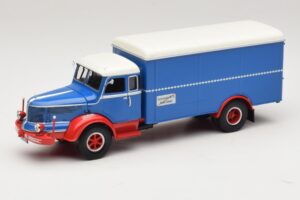
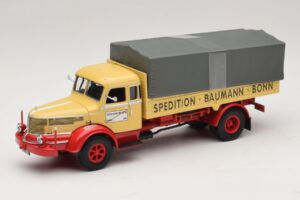
TL;DR: Krupp truck models in this collection are 1:43 diecast pieces from Minichamps, reproducing 1950s heavy-duty trucks built by Krupp's postwar commercial vehicle division. The scale keeps large trucks display-friendly, diecast construction holds cab and chassis detail, and the era reflects West Germany's reconstruction-boom demand for rugged hauling capacity.
Heavy commercial vehicles occupy a small but devoted corner of scale model collecting, and Krupp's trucks anchor a specific slice of that corner: postwar West German industrial engineering rendered at 1:43 scale. Krupp truck models bring the same cab-forward stance and load-bearing chassis that defined 1950s reconstruction-era trucking to a diecast shelf, built by Minichamps with the fit and finish the manufacturer is known for. This guide covers what the tier, material, and scale mean for collectors drawn to this niche.
Krupp Truck Models Within the 1:43 Diecast Landscape
Krupp truck models occupy a specific and narrow lane inside 1:43 diecast collecting: heavy commercial vehicles from a single German industrial manufacturer, reproduced by one specialist producer. That narrowness is not a weakness. Commercial vehicle collecting rewards precisely this kind of focus, where a shelf builds around a marque or a vehicle class rather than chasing every passenger car released in a given year.
At 1:43, a real Krupp heavy truck running eight or nine meters in length shrinks to a model roughly 18 to 21 centimeters long, still substantial enough to read as a truck rather than a toy, but compact enough that six or seven fit comfortably along a standard shelf. That footprint math matters more for trucks than for passenger cars, since the cab-forward proportions and the long load bed need enough length to register correctly. Minichamps, the manufacturer behind this collection's Krupp lineup, works at a mid-to-premium tier generally recognized across the diecast hobby for tight tolerances and considered finishing, which matters when a model's job is to convince the eye that a hauling truck, not a sports car, sits on the shelf.
Krupp's Postwar Heavy Truck Heritage
Krupp entered the postwar decades as one of Germany's most storied industrial names, a firm built on steel and heavy engineering long before it turned that expertise toward road transport. By the 1950s, the commercial vehicle side of the business was producing rugged trucks for a country rebuilding its roads, factories, and freight networks at speed. These were workhorse machines first: load capacity, engine durability, and simple maintenance mattered more than styling, and the trucks that resulted carried a plain, functional honesty that still reads clearly in scale.
That reconstruction-era context is worth knowing before evaluating any Krupp model, because it explains the design language the diecast replicates. Flat cab fronts, exposed running boards, and utilitarian grille work were engineering priorities rather than styling choices, and a well-made model preserves that plainness rather than smoothing it into something more contemporary. Krupp's truck-building chapter did not last into the modern commercial vehicle era, which is part of why collectors seek these models out. They document a specific industrial moment that surviving full-size trucks rarely represent outside a museum collection.
Minichamps Craftsmanship at 1:43 Scale
Minichamps built its reputation on 1:43 and 1:18 diecast work finished to a standard that collectors compare against, and the same construction habits carry into its commercial vehicle line. Judge any Krupp model in this collection by the signals a specialist checks first:
- Tampo-printed lettering and badge work: crisp edges rather than a soft blur.
- Cab glazing: sits flush against the body without gapping at the corners.
- Panel lines: a clean transition where the cab meets the chassis rails.
- Wheel and axle proportion: matched to the load the real truck carried.
A well-executed 1:43 truck holds separate mirrors and defined grille slats, details that a rushed casting tends to soften into a single blob of metal. The tier this collection sits in rewards that kind of scrutiny; it is not the cheapest end of the hobby, and it should not read as such on close inspection. Worth noting honestly: this collection's Krupp lineup currently comes from a single manufacturer, a focused presentation rather than a broad multi-brand comparison, so evaluating fit and finish on its own merits matters more here than cross-shopping between competing producers.
Diecast Construction and What It Means for Heavy Trucks
Diecast construction suits heavy trucks in ways it does not always suit smaller sports cars. The metal body brings genuine weight to a model with a long wheelbase and a boxy cab, so a Krupp truck settles into a shelf with a solid, planted feel rather than sitting light and hollow. That weight also holds paint well: the flat cab panels and straight chassis rails common to 1950s truck design show gloss and color depth clearly, since there are few complex curves to catch or lose the light.
The trade-off is the same one diecast carries at any scale. Casting tolerances run a touch wider than resin allows, so panel gaps at the cab doors or the load bed sides read as slightly broader lines rather than hairline seams. For a subject built around utilitarian, flat-paneled design, that trade-off costs less than it would on a curvier subject. Whether a specific Krupp model's doors, hood, or cab tilt open is a detail that varies piece by piece and belongs on the individual product listing rather than as a general rule for the whole diecast approach.
Building a Postwar Commercial Vehicle Display
A Krupp truck rarely stands alone on a serious commercial vehicle shelf. Collectors working this corner of the hobby typically build around an era or a vehicle class rather than a single marque, pairing 1950s heavy haulers with contemporary service vehicles, fire apparatus, or touring coaches from the same reconstruction decade. Grouping by decade tells a more complete story than grouping by brand alone, since it shows how German industry across steel, engines, and coachbuilding answered the same postwar demand for mobility and freight capacity.
Within that broader display, a single Krupp truck works best as a marker of heavy industry: the load-bearing, functional end of the era's vehicle spectrum, set against lighter passenger cars or more specialized emergency and municipal vehicles from the same period. Collectors who want depth rather than breadth in this specific marque have limited room to expand, since Krupp's truck-building years were relatively short and this collection's coverage reflects a single manufacturer's interpretation of that era. That reality favors a themed, era-based approach over an attempt to build a comprehensive Krupp-only fleet.
Caring for 1:43 Diecast Truck Models
Long, flat cab panels show dust more readily than curved bodywork, so a Krupp truck model benefits from the same care routine any diecast piece needs, applied a little more attentively. A soft brush or a burst of clean air lifts dust from grille slats and mirror stalks without dragging grit across the paint, which matters most on the model's flattest surfaces where scratches catch the light directly.
Keep the display out of direct sunlight. UV exposure fades paint and yellows clear plastic glazing faster than almost any other shelf hazard, and a truck cab's large windshield area has more glazing surface to protect than a typical passenger car. A closed cabinet slows dust accumulation considerably compared to open shelving, though it adds cost per display slot, a trade-off worth weighing against how much handling the piece will see. Original packaging deserves the same respect given to any diecast collectible, since foam inserts and boxed packaging protect a model during storage or a future move.
Frequently Asked Questions About Krupp Truck Models
What era do Krupp truck models in this collection represent?
This collection focuses on 1950s Krupp heavy trucks, built during West Germany's postwar reconstruction boom when demand for rugged hauling capacity outpaced almost every other vehicle category. The trucks reflect utilitarian, functional design priorities rather than styling trends, which shows clearly in their flat cabs and straightforward chassis lines.
Why is this collection limited to a single manufacturer?
Krupp's truck-building years were relatively brief within the wider commercial vehicle industry, and Minichamps currently produces the Krupp lineup carried here. A single, focused manufacturer presentation is common in narrow commercial vehicle niches, where the collector base is smaller and less likely to support several competing producers of the same marque.
How does diecast construction suit a boxy 1950s truck design?
Diecast's weight and hard shell hold paint well across flat cab panels and straight chassis rails, surfaces common to 1950s truck design. Casting tolerances run slightly wider than resin, so panel gaps read a touch broader, a trade-off that matters less on flat-paneled subjects than it would on a curved sports car body.
What should a new collector pair with a Krupp truck model?
Most collectors build era-based displays rather than marque-only ones, setting a 1950s Krupp truck alongside contemporary fire apparatus, touring coaches, or municipal vehicles from the same reconstruction decade. That grouping tells a fuller industrial story than a single marque can on its own, especially given Krupp's short truck-building chapter.