Last one
Used
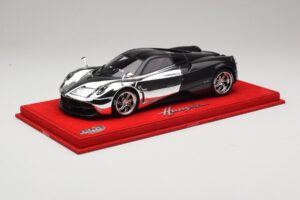
Pagani’s scale model catalog centers on the Zonda and Huayra, hypercars whose intricate carbon-fiber surfacing and exposed mechanical details demand a manufacturer landscape as specialized as the cars themselves. Coverage ranges from AUTOart’s precision diecast through hand-built resin specialists in 1:18, with a compact 1:64 line for broader display.
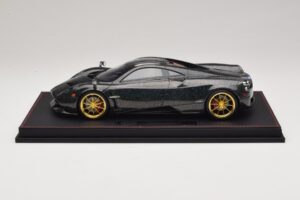

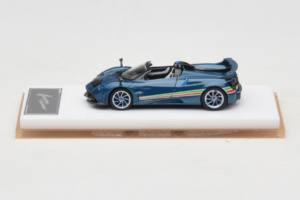
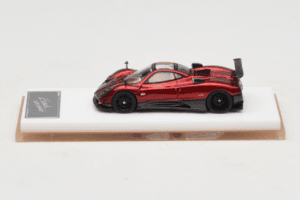


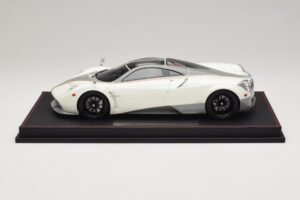

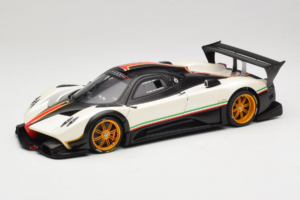
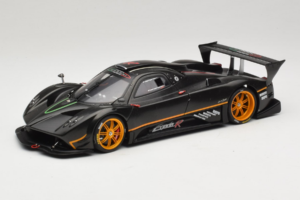
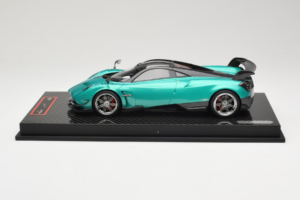
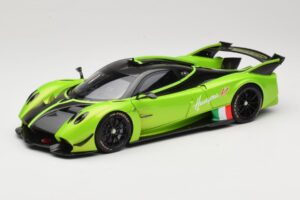
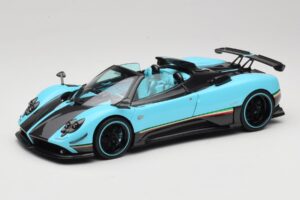


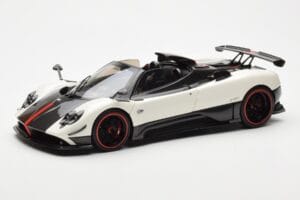
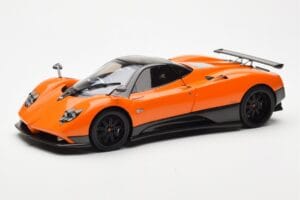
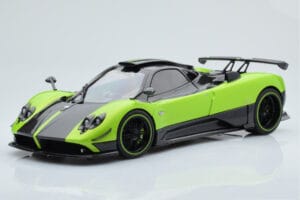
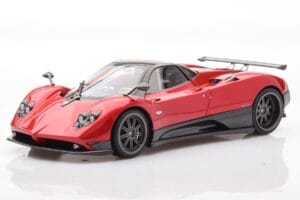



TL;DR: Pagani scale models cover the Zonda and Huayra hypercars, plus track-special variants, in 1:18 and 1:64 diecast and resin. AUTOart anchors the accessible diecast tier, while Almost Real, Henson & Heaven, and AB deliver hand-built resin precision on the marque's intricate surfacing.
Pagani builds cars around exposed carbon fiber, intricate quad-exhaust clusters, and surfacing that changes character depending on the angle of light, and reproducing that at scale is genuinely demanding. The manufacturer landscape covering Pagani reflects that difficulty, split clearly between accessible diecast and specialist hand-built resin.
AUTOart brings its established diecast precision to the Zonda and Huayra, delivering opening features and strong detail at a price well below the resin specialists. Almost Real, Henson & Heaven, and AB work in hand-built resin, chasing the exact carbon weave patterns and surfacing complexity that diecast tooling struggles to replicate, at investment-tier pricing. LCD's compact 1:64 line offers an accessible way to collect Pagani's most distinctive shapes without the display footprint or cost of 1:18.
The Zonda's flying-buttress rear pillars and the Huayra's gullwing doors and quad-pipe exhaust cluster are exactly the kind of intricate detail that separates hand-built resin from mass diecast tooling. A sealed resin body can hold panel lines and surface transitions that would blur or require compromise in a diecast mold, which is why the investment tier concentrates so heavily around this marque.
Many hypercar collectors reserve their Pagani spot for a single standout resin piece, letting the Zonda or Huayra anchor a shelf of accessible diecast supercars and track specials from other marques. Others chase both models across generations, tracking the shift from Zonda to Huayra as the brand's flagship design language evolved.
The Zonda and Huayra's intricate carbon-fiber surfacing and exposed exhaust detailing are difficult to reproduce accurately in diecast tooling. Hand-built resin specialists like Almost Real and AB can hold sharper surface transitions, which is why so much investment-tier attention concentrates on this marque.
Yes, AUTOart offers strong detail and opening features at a fraction of resin specialist pricing, making it a practical entry point before committing to an investment-tier piece. Many collectors start there and add a resin hero piece later.
LCD's 1:64 scale gives collectors an accessible, compact way to own Pagani's most distinctive shapes without the cost or shelf space that 1:18 demands, useful for a broader hypercar-themed display.
Both are worth pursuing since they represent different eras of the brand's design language, the Zonda's original flying-buttress silhouette and the Huayra's gullwing evolution. A shelf with one of each tells a more complete story than either alone.