On sale:
-23%
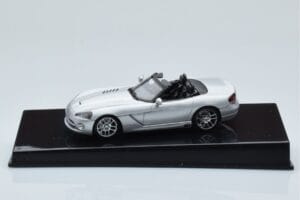
Dodge Viper SRT-10 Silver AUTOart 1:43
Sale ends in: 00d 00h 00m
Price:
was
26.00 €
20.00 €
You save 6.00 €
Lowest price in the 30 days before the reduction: 26.00 €
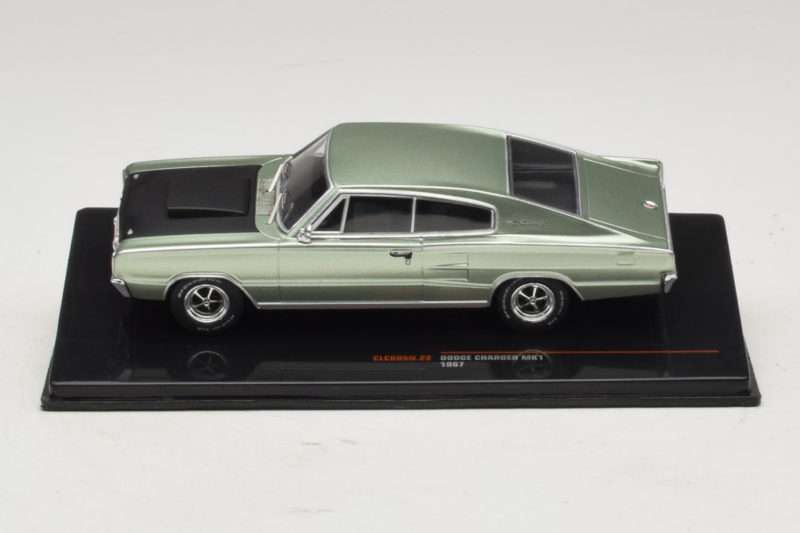
TL;DR: IXO's 1:43 diecast 1967 Dodge Charger in green metallic reproduces the first-generation model's fastback roofline, hidden headlights, and full-width taillight bar. Compact diecast scale keeps this early Charger easy to place alongside broader 1960s American muscle car collections without demanding much shelf space.
Dodge's first Charger arrived in 1966 with a distinctive fastback roofline and hidden headlights, styling cues that set it apart from the more familiar 1968 to 1970 second-generation cars most people picture. IXO reproduces the 1967 model at 1:43 in green metallic.
The original Charger's fastback roofline was a deliberate departure from Dodge's boxier sedans, giving it a sleeker, more performance-oriented silhouette even before considering what sat under the hood. Hidden headlights, tucked behind a full-width grille, were a signature design touch that disappeared from later Charger generations, making this first-generation car visually distinct to anyone familiar with Mopar's muscle car lineup. Built on the same platform as the Coronet, this first Charger was Dodge's answer to the personal performance-coupe trend Ford and Plymouth were already chasing with the Mustang and Barracuda. IXO's diecast build reproduces that grille treatment along with the full-width taillight bar across the rear, a Charger hallmark that persisted across several generations even as the rest of the body changed dramatically. Green metallic is a period-appropriate color choice for a 1960s muscle car, and at 1:43, the diecast construction gives the model enough heft to feel substantial without requiring the display space a larger scale would need.
Most muscle car collections lean toward the more famous 1968 to 1970 Charger or later Mopar icons, so a first-generation 1967 example fills in an earlier chapter of the story that many displays skip entirely. That platform-sharing context also explains why the first-generation Charger sometimes gets overlooked: it shared far more with an ordinary sedan than the purpose-built muscle cars that followed. At 1:43, it is easy to build a broader Dodge or Mopar lineup spanning multiple generations without the space commitment 1:18 would demand, letting this less-common early Charger sit naturally beside its better-known successors. For collectors who value the full arc of a nameplate's design history rather than just its most famous year, this piece rounds that story out.
You save 6.00 €
Lowest price in the 30 days before the reduction: 26.00 €