Last one
Used

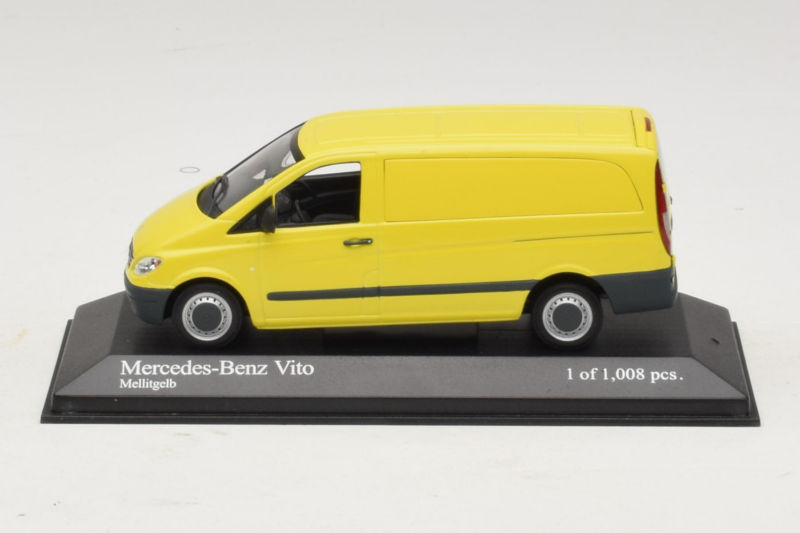
TL;DR: Minichamps' 1:43 diecast Mercedes Vito Kastenwagen in yellow reproduces the panel van version of Mercedes' commercial platform. A niche, work-vehicle subject that adds honest contrast to a Mercedes or light-commercial diecast display.
Panel vans built their reputation on function, not flair, and this Kastenwagen keeps that promise. Yellow paint on a blank-sided body has nowhere to hide a flaw, which makes it a fair test of finish quality.
A Kastenwagen, the closed-body cargo version of the Vito, has none of a passenger van's window glazing to break up its side panels, so the casting lives or dies on straight body lines and consistent paint. This model holds that line well: the yellow finish sits even across the long flat sides, the wheel arches and bumpers keep their proportions against the tall roof, and the overall stance reads as a working vehicle rather than a shrunken passenger car. Minichamps applies the same attention here that it brings to a racing livery, just in service of a far less glamorous subject.
Utility vehicles rarely get collector attention, which is part of the appeal for anyone building a Mercedes range that goes beyond sedans and SUVs. The Vito platform underpinned everything from courier vans to small fleet transport, and a Kastenwagen in a bold service-vehicle yellow makes that working history visible in a way a sedan never could. It sits best alongside other commercial or utility subjects rather than sports cars, where its honest, unglamorous shape can do the job it was always meant to do: represent the vehicles that actually kept European businesses running.











You save 16.00 €
Lowest price in the 30 days before the reduction: 123.00 €