Mercedes S-Class W220 S600 Limited Edition Norev 1:18
Price:
91.00 €
You save 5.00 €
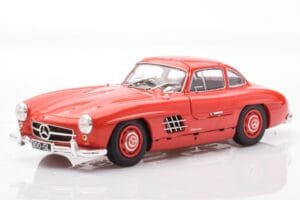
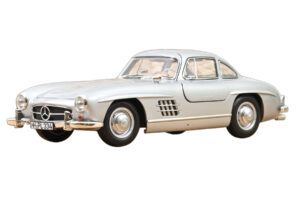
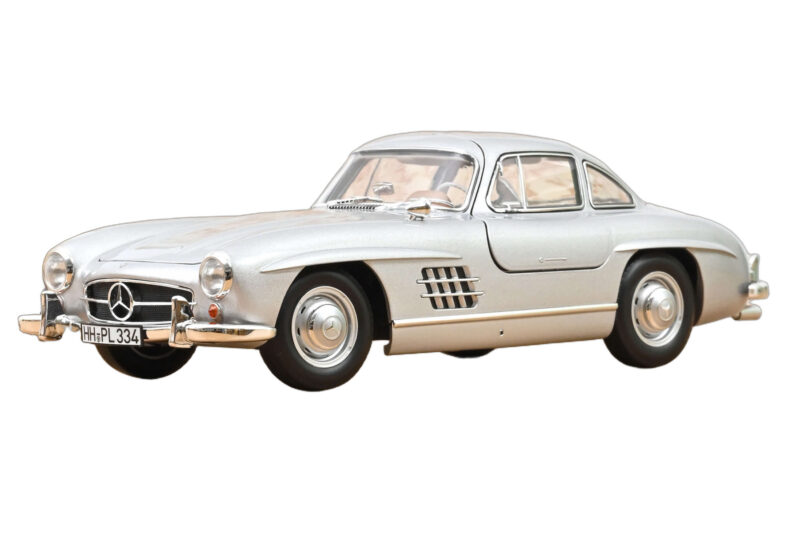
TL;DR: Norev's 1:18 Mercedes 300 SL Gullwing reproduces the 1954 W198 coupe in silver diecast, with the upward-swinging doors that gave the car its nickname. A tubular space frame forced that door design, and the model carries the weight and paint depth of a genuine mid-tier centerpiece. Doors and hood open on this casting.
Few production cars have a door design as instantly recognizable as the 300 SL's, and Norev's 1:18 diecast puts that engineering compromise on a shelf where it can be studied at leisure. This silver example represents the original 1954 Gullwing coupe, the car that made direct fuel injection and pure speed part of Mercedes' road-car story.
The 300 SL's deep tubular space frame, adapted from the W194 race car that won at Le Mans in 1952, left no room for conventional door sills along the chassis rails. Mercedes' engineers solved the packaging problem by hinging the doors from the roof instead, and the upward-swinging result became the car's defining feature almost by accident rather than by styling intent.
The 300 SL was the first production passenger car fitted with direct fuel injection, a Bosch mechanical system adapted from wartime aero-engine development, and its 3.0-liter inline-six was canted nearly fifty degrees in the bay to allow a lower hood line over such a tall engine. That combination made the Gullwing the fastest production car of 1954, a claim few road cars of the era could match.
Diecast at this scale carries real weight in the hand, and on a Gullwing that mass matters because the car's low, wide stance depends on looking planted rather than toylike. Norev's casting holds that stance well, with the roofline sweeping down to a low nose that mirrors the real car's proportions. The wider casting tolerances typical of series-produced metal are less visible here than on a smaller subject, since the Gullwing's body has few tight compound curves to expose them.
The doors on this model swing upward from the roofline rather than outward, reproducing the real car's most famous mechanical quirk, and the hood also opens to reveal the canted six-cylinder engine beneath. That functional detail is part of what makes a Gullwing diecast worth owning over a static equivalent: the door motion itself is the story, not just a feature bolted on for the sake of having one.
Silver was the color most 300 SLs left the factory in, and it remains the shade most associated with the model in period photography and museum collections. Norev's finish here carries a warm, slightly grey undertone rather than a bright modern metallic, consistent with how 1950s silver paint actually read against chrome trim. That chrome, plated rather than painted around the window surrounds and bumpers, catches light sharply against the coupe's low beltline. At 1:18, the Gullwing measures close to 25 centimeters, a size that gives its long hood and short cabin real presence without overwhelming a standard cabinet shelf.
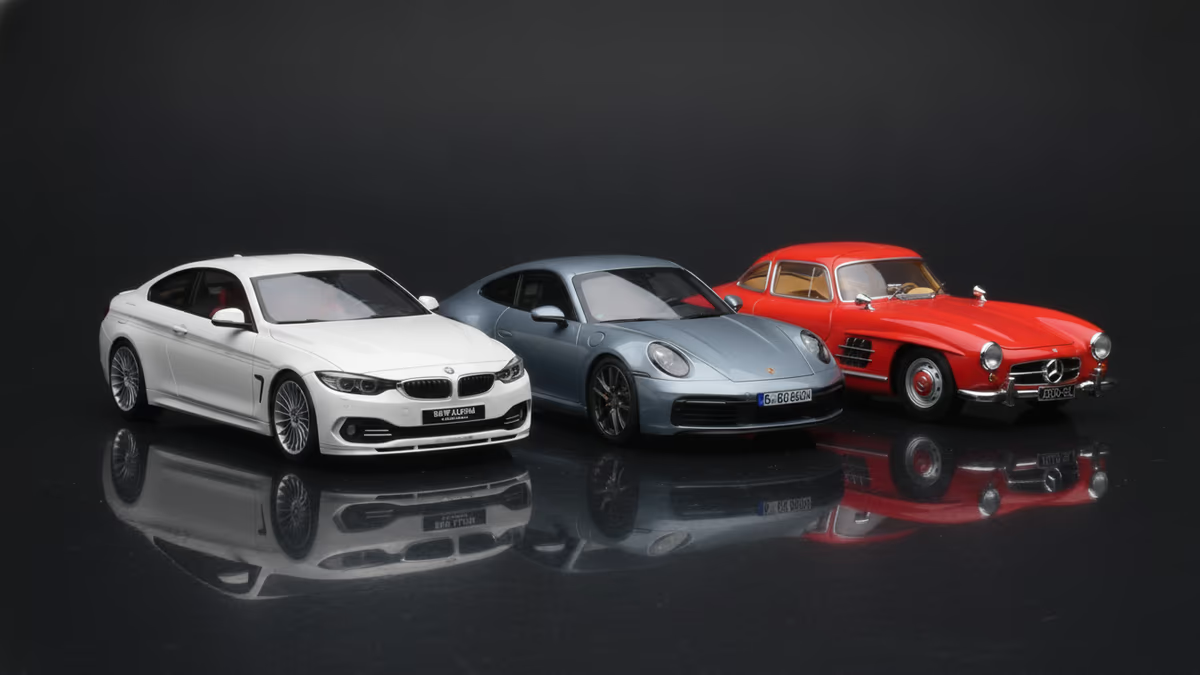
A silver Gullwing works as a natural anchor for any Mercedes sports car display, standing at the start of a lineage that runs through the later Roadster variant and on toward modern SL cars. Its combination of racing-derived engineering and genuine 1950s glamour gives it broader appeal than most vintage subjects, reaching collectors who care about design history as much as those focused purely on racing pedigree. Few pieces at this accessible tier carry as much documented engineering story behind the casting.


You save 38.00 €
Lowest price in the 30 days before the reduction: 189.00 €