


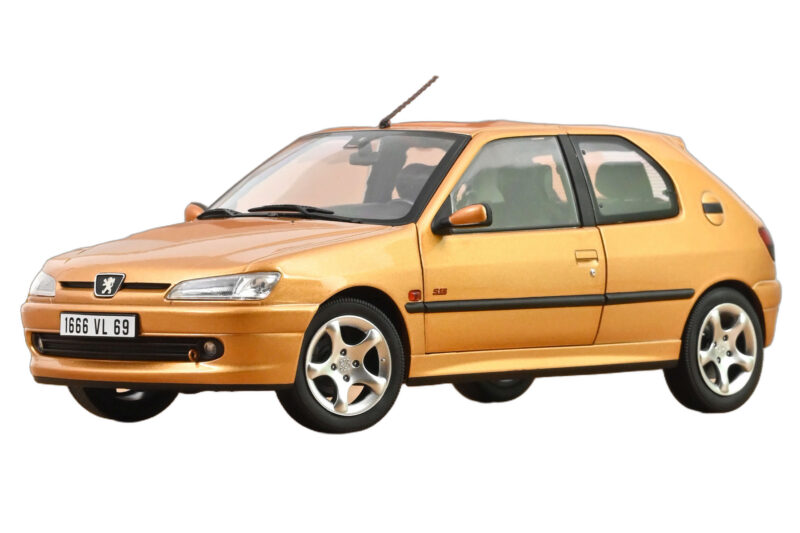
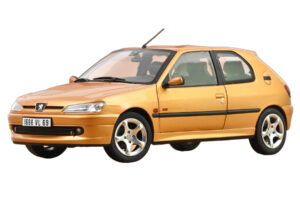
Peugeot 306 S16 Blaze Yellow Norev 1:18
-6%
Pre-order
1
/
3
Norev's 1:18 Peugeot 306 S16 reproduces the 1997 C-segment hot hatch in bold Blaze Yellow diecast, doors and hood opening over a detailed cabin housing the 2.0-liter 16-valve engine bay. As the larger sibling to the 106 S16, the 306 carried Peugeot's performance badge into a bigger, more grown-up hatchback that many enthusiasts consider a spiritual successor to the 205 GTI.
1 / 3
[{"index":0,"id":"1664489","thumb":"https:\/\/models118.com\/wp-content\/uploads\/2026\/09\/peugeot-306-s16-blaze-yellow-norev-1-18-184940-1-1-300x200.jpg","medium":"https:\/\/models118.com\/wp-content\/uploads\/2026\/09\/peugeot-306-s16-blaze-yellow-norev-1-18-184940-1-1-800x533.jpg","full":"https:\/\/models118.com\/wp-content\/uploads\/2026\/09\/peugeot-306-s16-blaze-yellow-norev-1-18-184940-1-1.jpg","srcset":"https:\/\/models118.com\/wp-content\/uploads\/2026\/09\/peugeot-306-s16-blaze-yellow-norev-1-18-184940-1-1-800x533.jpg 800w, https:\/\/models118.com\/wp-content\/uploads\/2026\/09\/peugeot-306-s16-blaze-yellow-norev-1-18-184940-1-1-300x200.jpg 300w, https:\/\/models118.com\/wp-content\/uploads\/2026\/09\/peugeot-306-s16-blaze-yellow-norev-1-18-184940-1-1-64x43.jpg 64w, https:\/\/models118.com\/wp-content\/uploads\/2026\/09\/peugeot-306-s16-blaze-yellow-norev-1-18-184940-1-1.jpg 1800w","sizes":"(max-width: 1023px) 400px, 640px","srcsetAvif":"https:\/\/models118.com\/wp-content\/uploads\/2026\/09\/peugeot-306-s16-blaze-yellow-norev-1-18-184940-1-1-800x533.jpg.avif 800w, https:\/\/models118.com\/wp-content\/uploads\/2026\/09\/peugeot-306-s16-blaze-yellow-norev-1-18-184940-1-1-300x200.jpg.avif 300w, https:\/\/models118.com\/wp-content\/uploads\/2026\/09\/peugeot-306-s16-blaze-yellow-norev-1-18-184940-1-1-64x43.jpg.avif 64w, https:\/\/models118.com\/wp-content\/uploads\/2026\/09\/peugeot-306-s16-blaze-yellow-norev-1-18-184940-1-1.jpg.avif 1800w","srcsetWebp":"https:\/\/models118.com\/wp-content\/uploads\/2026\/09\/peugeot-306-s16-blaze-yellow-norev-1-18-184940-1-1-800x533.jpg.webp 800w, https:\/\/models118.com\/wp-content\/uploads\/2026\/09\/peugeot-306-s16-blaze-yellow-norev-1-18-184940-1-1-300x200.jpg.webp 300w, https:\/\/models118.com\/wp-content\/uploads\/2026\/09\/peugeot-306-s16-blaze-yellow-norev-1-18-184940-1-1-64x43.jpg.webp 64w, https:\/\/models118.com\/wp-content\/uploads\/2026\/09\/peugeot-306-s16-blaze-yellow-norev-1-18-184940-1-1.jpg.webp 1800w","alt":"Peugeot 306 S16 Blaze Yellow Norev 1:18 184940 Diecast"},{"index":1,"id":1664491,"thumb":"https:\/\/models118.com\/wp-content\/uploads\/2026\/09\/peugeot-306-s16-blaze-yellow-norev-1-18-184940-1-300x200.jpg","medium":"https:\/\/models118.com\/wp-content\/uploads\/2026\/09\/peugeot-306-s16-blaze-yellow-norev-1-18-184940-1-800x533.jpg","full":"https:\/\/models118.com\/wp-content\/uploads\/2026\/09\/peugeot-306-s16-blaze-yellow-norev-1-18-184940-1.jpg","srcset":"https:\/\/models118.com\/wp-content\/uploads\/2026\/09\/peugeot-306-s16-blaze-yellow-norev-1-18-184940-1-800x533.jpg 800w, https:\/\/models118.com\/wp-content\/uploads\/2026\/09\/peugeot-306-s16-blaze-yellow-norev-1-18-184940-1-300x200.jpg 300w, https:\/\/models118.com\/wp-content\/uploads\/2026\/09\/peugeot-306-s16-blaze-yellow-norev-1-18-184940-1-64x43.jpg 64w, https:\/\/models118.com\/wp-content\/uploads\/2026\/09\/peugeot-306-s16-blaze-yellow-norev-1-18-184940-1.jpg 1800w","sizes":"(max-width: 1023px) 400px, 640px","srcsetAvif":"https:\/\/models118.com\/wp-content\/uploads\/2026\/09\/peugeot-306-s16-blaze-yellow-norev-1-18-184940-1-800x533.jpg.avif 800w, https:\/\/models118.com\/wp-content\/uploads\/2026\/09\/peugeot-306-s16-blaze-yellow-norev-1-18-184940-1-300x200.jpg.avif 300w, https:\/\/models118.com\/wp-content\/uploads\/2026\/09\/peugeot-306-s16-blaze-yellow-norev-1-18-184940-1-64x43.jpg.avif 64w, https:\/\/models118.com\/wp-content\/uploads\/2026\/09\/peugeot-306-s16-blaze-yellow-norev-1-18-184940-1.jpg.avif 1800w","srcsetWebp":"https:\/\/models118.com\/wp-content\/uploads\/2026\/09\/peugeot-306-s16-blaze-yellow-norev-1-18-184940-1-800x533.jpg.webp 800w, https:\/\/models118.com\/wp-content\/uploads\/2026\/09\/peugeot-306-s16-blaze-yellow-norev-1-18-184940-1-300x200.jpg.webp 300w, https:\/\/models118.com\/wp-content\/uploads\/2026\/09\/peugeot-306-s16-blaze-yellow-norev-1-18-184940-1-64x43.jpg.webp 64w, https:\/\/models118.com\/wp-content\/uploads\/2026\/09\/peugeot-306-s16-blaze-yellow-norev-1-18-184940-1.jpg.webp 1800w","alt":"Peugeot 306 S16 Blaze Yellow Norev 1:18 184940 Diecast - image 2 of 3"},{"index":2,"id":1664492,"thumb":"https:\/\/models118.com\/wp-content\/uploads\/2026\/09\/peugeot-306-s16-blaze-yellow-norev-1-18-184940-2-300x200.jpg","medium":"https:\/\/models118.com\/wp-content\/uploads\/2026\/09\/peugeot-306-s16-blaze-yellow-norev-1-18-184940-2-800x533.jpg","full":"https:\/\/models118.com\/wp-content\/uploads\/2026\/09\/peugeot-306-s16-blaze-yellow-norev-1-18-184940-2.jpg","srcset":"https:\/\/models118.com\/wp-content\/uploads\/2026\/09\/peugeot-306-s16-blaze-yellow-norev-1-18-184940-2-800x533.jpg 800w, https:\/\/models118.com\/wp-content\/uploads\/2026\/09\/peugeot-306-s16-blaze-yellow-norev-1-18-184940-2-300x200.jpg 300w, https:\/\/models118.com\/wp-content\/uploads\/2026\/09\/peugeot-306-s16-blaze-yellow-norev-1-18-184940-2-64x43.jpg 64w, https:\/\/models118.com\/wp-content\/uploads\/2026\/09\/peugeot-306-s16-blaze-yellow-norev-1-18-184940-2.jpg 1800w","sizes":"(max-width: 1023px) 400px, 640px","srcsetAvif":"https:\/\/models118.com\/wp-content\/uploads\/2026\/09\/peugeot-306-s16-blaze-yellow-norev-1-18-184940-2-800x533.jpg.avif 800w, https:\/\/models118.com\/wp-content\/uploads\/2026\/09\/peugeot-306-s16-blaze-yellow-norev-1-18-184940-2-300x200.jpg.avif 300w, https:\/\/models118.com\/wp-content\/uploads\/2026\/09\/peugeot-306-s16-blaze-yellow-norev-1-18-184940-2-64x43.jpg.avif 64w, https:\/\/models118.com\/wp-content\/uploads\/2026\/09\/peugeot-306-s16-blaze-yellow-norev-1-18-184940-2.jpg.avif 1800w","srcsetWebp":"https:\/\/models118.com\/wp-content\/uploads\/2026\/09\/peugeot-306-s16-blaze-yellow-norev-1-18-184940-2-800x533.jpg.webp 800w, https:\/\/models118.com\/wp-content\/uploads\/2026\/09\/peugeot-306-s16-blaze-yellow-norev-1-18-184940-2-300x200.jpg.webp 300w, https:\/\/models118.com\/wp-content\/uploads\/2026\/09\/peugeot-306-s16-blaze-yellow-norev-1-18-184940-2-64x43.jpg.webp 64w, https:\/\/models118.com\/wp-content\/uploads\/2026\/09\/peugeot-306-s16-blaze-yellow-norev-1-18-184940-2.jpg.webp 1800w","alt":"Peugeot 306 S16 Blaze Yellow Norev 1:18 184940 Diecast - image 3 of 3"}]
Peugeot 306 S16 Blaze Yellow Norev 1:18
Regular price:
65.00 €
Current price:
61.00 €
-6%
You save 4.00 €
Ships around 20-30.09.2026
Open for pre-order
Shipping from 21.50 €
10% discount on your first order — create a free account
Shipping to United States (US)
Worldwide delivery
Prices exclude VAT
No hidden costs
Shipping from 18.00 €
Tracked & insured
Pay in EUR €
Local currency
100% authentic
Direct from manufacturers
5-layer carton
Foam-filled interior
Easy returns
14 days, no questions asked
Secure payment
256-bit SSL encryption
About the Peugeot 306 S16 Blaze Yellow Norev 1:18
TL;DR: Norev's 1:18 Peugeot 306 S16 reproduces the 1997 C-segment hot hatch in Blaze Yellow diecast, with doors and hood that open over a detailed cabin and 2.0-liter engine bay. The S16 badge carried Peugeot's 16-valve performance formula from the smaller 106 into a bigger hatchback. A mid-tier piece for 1990s French hot hatch collectors.
Peugeot's S16 badge did not stop at the 106; it carried the same 16-valve performance philosophy into the larger 306 range, and this 1997 example in Blaze Yellow shows how that formula scaled up without losing its bite. For many enthusiasts, the 306 S16 is where Peugeot's hot hatch spirit found its most complete expression after the 205 GTI.
The Peugeot 306 S16 and a Bigger Hot Hatch
A 2.0-Liter Answer in a C-Segment Body
Where the 106 S16 worked with a 1.6-liter engine in a small B-segment body, the 306 S16 stepped up to a 2.0-liter 16-valve unit in Peugeot's larger, more practical C-segment hatchback. That extra displacement and the bigger platform's more sophisticated suspension gave the 306 a reputation for genuinely composed handling, one reason it is often mentioned in the same breath as the celebrated 205 GTI despite being a very different car underneath.
Following the 205 GTI's Reputation
The 205 GTI set a benchmark for French hot hatches in the 1980s that Peugeot spent years trying to recapture, and the 306 S16, alongside the related 306 Rallye, is widely regarded by enthusiasts as the closest the brand came to matching that reputation in the following decade. That context gives the 306 S16 real weight in any French performance hatch collection, not just as a badge but as a genuine chapter in the story.
Norev's Diecast Build and 306 S16 Details
A Larger Body, Held to the Same Standard
The 306's larger dimensions compared to the 106 give Norev's diecast body more surface area to work with, and the casting holds the hatchback's slightly more aggressive front bumper and side skirts without the panel lines looking soft. The wider tolerances typical of series-produced zinc alloy remain visible on close inspection, as they do across this price tier, but the overall stance reads correctly for a car that looked purposeful without being flashy.
Doors and Hood Over the 2.0-Liter Bay
The doors and hood open on this casting, revealing a cabin trimmed to match the S16's sportier specification and an engine bay sized for the larger 2.0-liter 16-valve unit. That larger engine bay is one of the clearer visual differences between this model and its smaller 106 S16 sibling when the two are compared side by side.
Blaze Yellow and Shutline Precision
Blaze Yellow is a bold, attention-grabbing color that few manufacturers choose for a subdued display piece, and Norev's finish carries strong, even saturation across the 306's larger panels without any visible fade toward the edges. Yellow is also a demanding test of shutline consistency, since the bright color makes any panel gap variation more obvious than a darker shade would. The gaps around the doors and hood here hold up reasonably well under that scrutiny, consistent with the accessible diecast tier this piece occupies. Badging and trim details on the grille and rear hatch are crisp enough to read clearly, reinforcing the sportier identity the S16 badge carries. At 1:18, the 306 measures close to 23 centimeters, noticeably larger than its 106 sibling.
Building a Peugeot S16 and Rallye Shelf
Set beside the 106 Rallye and 106 S16, this 306 S16 completes a small but coherent Peugeot hot hatch display spanning two body sizes and two distinct performance philosophies from the same decade. It is the piece that shows how far the S16 badge traveled, from a compact city car up to a genuinely capable C-segment hatchback still discussed among enthusiasts today.
From the same collection
Last one
Used

Peugeot 908 HDI FAP LMP1 #9 F. Montagny / R. Zonta / N. Kilen 3rd Place 24 Hours of Le Mans 2008 Minichamps 1:18
Only 1 left
Price:
81.00 €
Last one
Back in stock

Last one

Last one
Used

Collectors also bought
Browse all 1:18
Mercedes S-Class W220 S600 Limited Edition Norev 1:18
Price:
91.00 €

Mercedes 500 SL R129 Limited Edition Norev 1:18
Price:
91.00 €

Mercedes 190 E W201 Limited Edition Norev 1:18
Price:
93.00 €
Last one

Last one
Back in stock

BMW X6M F86 Red Norev 1:18
Price:
94.00 €
Recently viewed
{"id":1663385,"name":"Peugeot 306 S16 Blaze Yellow Norev 1:18","price":"65.00 €<\/span><\/bdi><\/span><\/del> Original price was: 65.00 €.<\/span>61.00 €<\/span><\/bdi><\/span><\/ins>Current price is: 61.00 €.<\/span>","image":"https:\/\/models118.com\/wp-content\/uploads\/2026\/09\/peugeot-306-s16-blaze-yellow-norev-1-18-184940-1-1-400x400.jpg","permalink":"https:\/\/models118.com\/peugeot-306-s16-blaze-yellow-norev-1-18-184940\/","brand":"Peugeot"}