Last one
Back in stock

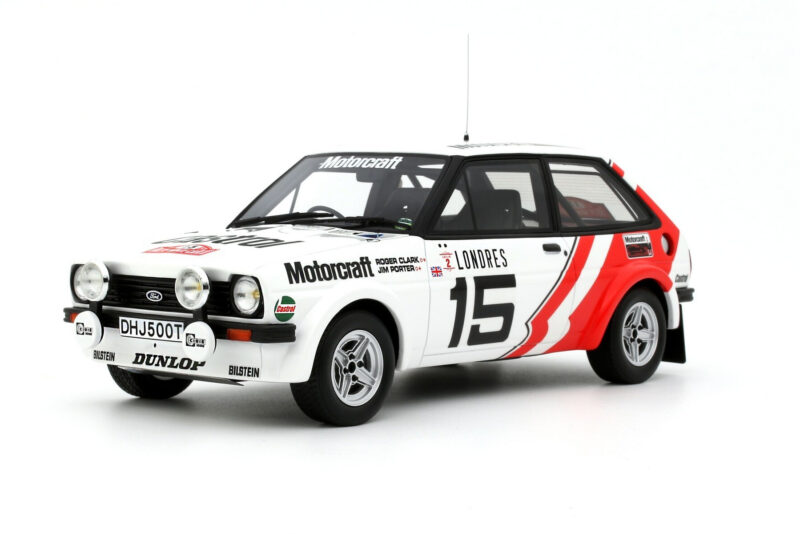
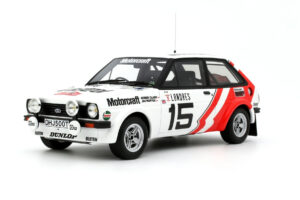
TL;DR: Otto's 1:18 resin Ford Fiesta 1600 Gr.2 reproduces the compact Mk1 hatchback's 1979 Monte Carlo Rally entry, built to Group 2 regulations that kept rally cars close to their production roots. The sealed one-piece body carries the period livery under tight, consistent shut lines, positioning this as a small but genuine piece of late-1970s WRC-era rallying.
The Ford Fiesta arrived in 1976 as a compact, front-wheel-drive newcomer, and it didn't take long for privateer and semi-works rally teams to see potential in its light weight and short wheelbase. Entered under Group 2 regulations, which required rally cars to stay close to their showroom specification, a Fiesta 1600 tackled the 1979 Monte Carlo Rally, one of the World Rally Championship's oldest and most demanding rounds.
Group 2 sat below the more heavily modified Group 4 category in FIA regulations of the era, permitting engine and suspension upgrades while requiring the car to retain its basic production bodyshell and mechanical layout. That constraint meant a Group 2 Fiesta couldn't chase the outright pace of purpose-built rally specials, but it kept costs down and made the category accessible to smaller teams without factory-scale budgets. For a car as new to the market as the Fiesta was in the late 1970s, Group 2 offered a realistic way onto a WRC-adjacent stage without the years of development a top-tier program would demand, and it's exactly the kind of grassroots-to-competitive story that gives a lesser-known rally entry genuine collector interest today.
The Monte Carlo Rally carries a mystique few other events in the sport can match, built on decades as a season-opening test of ice, snow, and sudden altitude changes through the French and Italian Alps. Competing there, even in a Group 2 class rather than the outright category, meant facing conditions that punished mechanical fragility and driver error in equal measure. A compact 1600cc Fiesta running that event in 1979 represents a specific, verifiable moment in the model's competition history, distinct from the countless generic rally liveries that never actually contested a real event.
Rally livery from this era relies heavily on sponsor decals and number panels applied over a relatively simple base color, and getting those graphics to register crisply matters as much as the paint underneath. Otto's sealed one-piece resin body gives the tampo-printed livery a smooth, uninterrupted surface to sit on, since there's no door or hood seam to break up a decal running across a panel line. That continuity is part of why a fixed body actually suits a livery-heavy rally subject better than one built with opening panels, where a seam running through a sponsor logo would look wrong immediately.
The Mk1 Fiesta's short overhangs and boxy hatchback profile were part of what made it viable as a nimble rally car in the first place, and Otto's casting keeps those proportions honest rather than stretching the model for visual drama. Panel gaps along the hatchback's rear and the crease running down the door stay tight and even, letting the rally graphics and the period wheel design carry the model's character instead of an exaggerated stance the real car never had.
This isn't a car built around fame; it's a piece built around specificity, a genuine 1979 Monte Carlo entry rather than a generic rally-liveried hatchback invented to look period-correct. That distinction matters most to collectors focused on rally history specifically, who value knowing exactly which event and category a livery represents over simply owning something that looks the part. Displayed alongside better-known works entries from Ford's Escort RS program of the same era, this Fiesta tells the smaller, often-overlooked side of the story, the privateer and semi-works efforts that filled out the entry lists behind the factory headliners. For someone assembling a Monte Carlo Rally theme across manufacturers and decades, a correctly identified Group 2 entry like this one adds real documentary value, distinct from the flashier Group 4 and Group B cars that usually dominate that shelf.
Group 2's production-based rules meant most of its competitors never became household names, which is exactly why a correctly documented entry like this Fiesta 1600 matters to a serious rally collection. Otto's resin execution handles the specifics well, from the tight, uninterrupted shutlines that let the period livery register cleanly to the honest, unexaggerated proportions of the Mk1 hatchback itself. It won't anchor a shelf the way a factory Escort RS or a Group B monster would, and it isn't meant to. Instead, it fills in the real depth of the Monte Carlo Rally's history, the smaller entries that made up most of the field.


You save 16.00 €
Lowest price in the 30 days before the reduction: 123.00 €


You save 13.00 €
Lowest price in the 30 days before the reduction: 66.00 €