Used
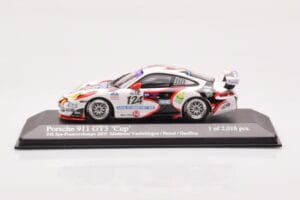
Porsche 911 997 GT3 Cup #124 Mattheus / Geoffroy / Vanbellingen / Fumal 24 Hours of Spa 2005 Minichamps 1:43
Only 3 left
Price:
33.00 €
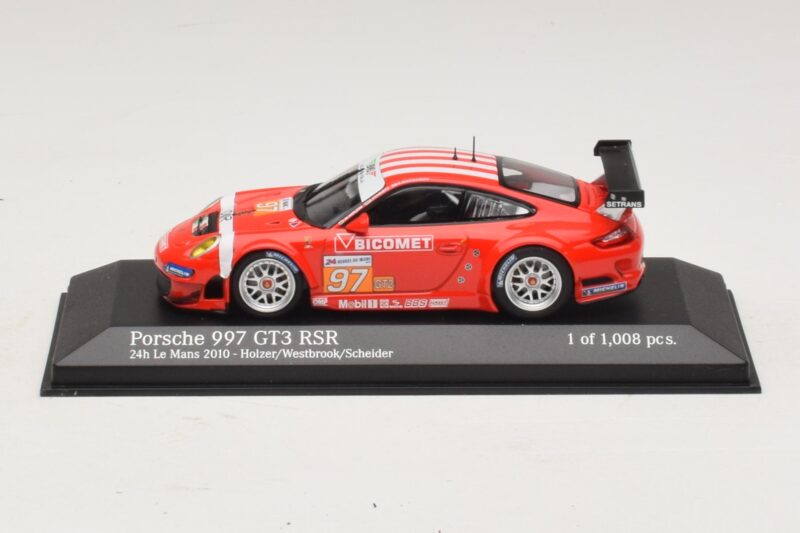
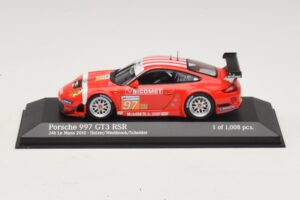
TL;DR: Minichamps' 1:43 diecast Porsche 911 997 GT3 RSR reproduces car #97, driven by M. Holzer and R. Westbrook at the 2010 24 Hours of Le Mans in the GT2 class. Sealed one-piece body, tampo-printed livery, a factory-built GT racer built from the 997-generation 911.
GT2 class racing at Le Mans has always been the proving ground for GT cars built closer to their road-going origins than the outright prototypes above them. The 997 GT3 RSR was Porsche's factory-built answer to that class through the late 2000s. Minichamps reproduces the Holzer and Westbrook entry, car number 97, at 1:43.
At 1:43, this GT3 RSR comes as a sealed one-piece diecast body, standard construction for a race-liveried model where livery accuracy carries more collector value than any opening panel would. The RSR's wide-body kit, with flared arches well beyond a standard 911's, its deep front splitter, and the tall fixed rear wing GT2-class aero rules demanded, are all molded directly into the casting rather than added as separate parts, which at this scale keeps the shape crisp without introducing seams a smaller casting can't hide. Tampo printing lays the number 97, sponsor graphics, and any class-specific markings directly onto the painted shell, a method that holds registration across the RSR's curved bodywork better than a waterslide transfer would at this size. Wheel design reflects the racing specification, wider and set further out than the roadgoing 997, with visible brake ducting worked into the front fascia. The stance sits low and wide, the visual signature of a GT2-class car built to look every bit as serious as the prototypes it shared the Le Mans grid with, even though the GT3 RSR's underlying platform started life as a production sports car. That production-car heritage, visible in the roofline and glasshouse even under all the aero addenda, is part of what makes GT-class Porsches such a distinctive category to collect.
Porsche built the GT3 RSR as its factory-backed answer to GT2-class endurance racing, developing the car from the roadgoing 997 GT3 into a purpose-built competitor for events like the 24 Hours of Le Mans, the American Le Mans Series, and other endurance championships through the second half of the 2000s and into the following decade. Unlike the outright Group C or LMP prototypes running in the same events, GT2 cars retained a recognizable connection to their production origins, a rulebook decision meant to keep GT racing tied to cars a buyer could theoretically drive on the road. Car number 97, driven by M. Holzer and R. Westbrook, competed in the GT2 class at the 2010 running of the 24 Hours of Le Mans, one of the deepest GT fields the race has assembled, with Porsche's factory and customer teams facing established rivals across multiple manufacturers. Endurance racing at Le Mans demands as much from a car's reliability as its outright pace, and the GT3 RSR's reputation rested on exactly that kind of dependability. That combination of pace and durability is what kept Porsche's GT-class program a fixture at Le Mans across multiple 911 generations.
At 1:43, a GT3 RSR pairs naturally with other GT2 and GT3-class entries from the same Le Mans era, letting a collector build a grid rather than a single standout piece. The sealed body and molded aero package are exactly what this subject calls for, prioritizing the wide-body silhouette and livery accuracy a race car needs over any interior detail a shelf display was never going to showcase. This entry works well as part of a broader 997-generation GT lineup or standing alone as a single representative of Porsche's factory GT2 program. It's a solid choice for anyone building an endurance-racing display around Le Mans class racing.



You save 16.00 €
Lowest price in the 30 days before the reduction: 123.00 €