Last one
Used
This model is currently sold out. Enter your email and we'll let you know when it's back in stock.
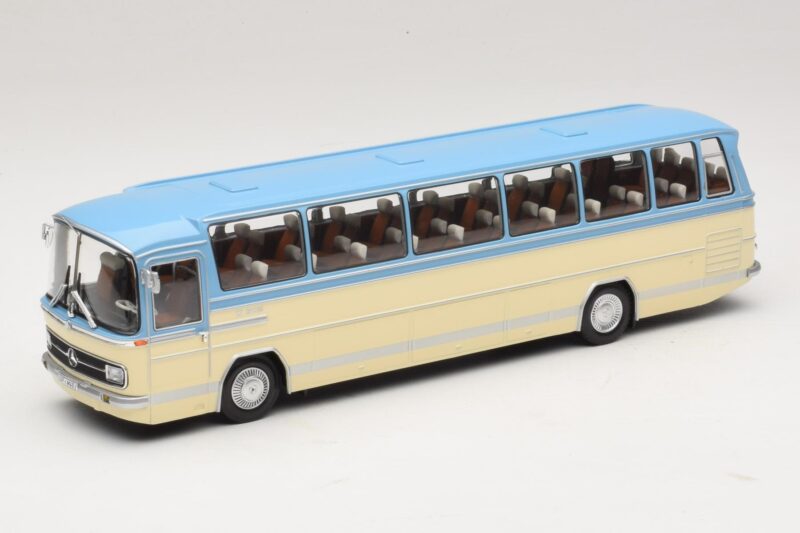
TL;DR: Minichamps' 1:43 Mercedes O302 is a zinc alloy diecast of the mid-1960s intercity touring coach in blue and cream, a rare bus subject among Mercedes truck liveries. The body is sealed with no opening doors, so glazing fit, roofline proportion, and paint finish carry the coach's presentation on the shelf.
Most of Mercedes' postwar commercial output went into trucks, but the O302 answered a different demand: moving people between cities on West Germany's expanding motorway network. Introduced in the mid-1960s, it became a familiar sight at bus stations and on long-distance routes across Europe throughout the following decade. Minichamps' rendering brings that everyday intercity workhorse to a 1:43 shelf.
The O302 carried Mercedes' bus division into a squarer, more modern body than the rounded coaches of the previous decade, with a flat windshield, deep side glazing, and a luggage bay built into the lower body rather than a separate trailer. It ran routes across West Germany and exported widely to other European operators through the late 1960s and into the 1970s, making it one of the more recognizable intercity coaches of its generation. Minichamps' 1:43 casting captures that squared-off profile accurately, from the roofline pitch to the depth of the side windows, which is the detail that separates a genuine O302 replica from a generic bus shape wearing a similar livery.
The two-tone scheme splits along the beltline, with cream running the full length of the lower body and blue capping the roof and upper glazing surround, a combination typical of period coach operators who wanted their fleet visible from a distance. Because the body is a single sealed casting with no opening doors, that color break has to be painted with a clean, unbroken line the entire length of the coach, and Minichamps holds it well from the front cap to the rear valance. The glazing sits flush rather than proud of the body, which keeps the roofline reading as one continuous surface rather than a stack of separate panels.
A coach lives or dies on its glazing, since the side windows make up more surface area than on almost any truck or car at the same scale. Minichamps keeps the window pillars thin and evenly spaced, avoiding the thick, toy-like mullions that cheaper bus castings often show. The roofline carries a gentle crown rather than a flat slab, which is a small detail but one that changes how light travels across the model on a shelf. The wheelbase and axle spacing are proportioned correctly for the O302's longer chassis, so the coach does not read as a stretched truck cab wearing bus glass.
Bus subjects are a smaller slice of the commercial-vehicle diecast market than trucks, simply because fewer manufacturers commission tooling for a body this large and glass-heavy. That scarcity is part of the appeal: a well-executed coach stands out on a shelf dominated by flatbeds and box trailers precisely because there are fewer of them to choose from. Minichamps treats the O302 with the same tampo-printed badge and paint standards it applies to its truck range, so the quality bar does not drop just because the subject is less common.
Placed next to flatbeds, tankers, and box trailers, this coach breaks up a shelf that could otherwise read as one long procession of similar cab shapes. It works particularly well for a collector organizing a display by decade rather than by body type, since the O302 shares its mid-1960s timeframe with several cab-over Mercedes trucks in the same catalog. American collectors accustomed to trucking-focused commercial diecast may find the bus format unfamiliar at first, but the same standards apply: correct proportion, clean glazing, and a livery painted with the same care given to any flatbed or trailer. At 1:43, it takes up little shelf space for the visual variety it adds, and it rewards close inspection of the glazing just as much as any hero sports car would.



You save 16.00 €
Lowest price in the 30 days before the reduction: 123.00 €