Used
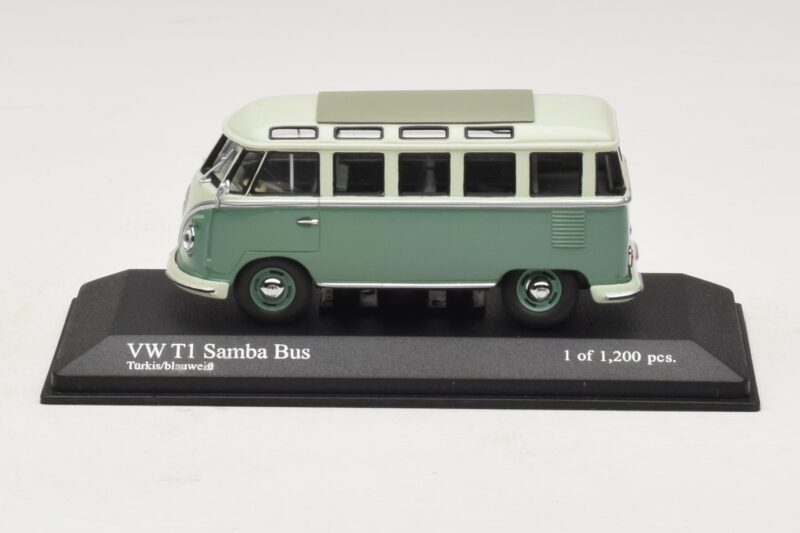
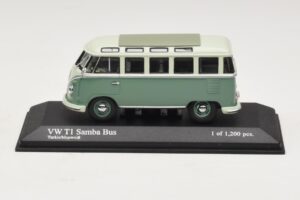
TL;DR: Minichamps' 1:43 Volkswagen T1 Samba Bus reproduces the deluxe early-1960s skylight microbus in a classic Turquoise Blue and White two-tone finish, cast as a sealed one-piece diecast body. Correct roofline and beltline paint split capture what made the Samba VW's top-tier bus trim, making this a natural centerpiece for a Volkswagen bus or classic van display.
Nearly every VW bus a collector encounters is a standard panel van or basic passenger model, which is exactly why the Samba's skylight windows and two-tone paint stand out on a shelf. Minichamps' 1:43 casting reproduces that deluxe trim faithfully, in the turquoise and white combination most associated with the model today.
The Samba's defining feature, its row of small skylight windows running along the edges of the roof, is molded directly into this casting's single sealed body rather than built as separate glazed inserts. That construction choice keeps the roofline's window openings crisp and evenly spaced, a detail that would be far harder to hold consistent across a body built from multiple pieces. Zinc alloy gives the model real weight for its boxy shape, and the casting holds the bus's tall, flat sides without the slight bowing a lighter material might show over years on a shelf. The result is a roofline that reads correctly from every angle, which is the whole point of a Samba model.
The turquoise and white split runs along the bus's beltline with a clean, straight edge, exactly the kind of finish work that separates a well-executed two-tone casting from one where the color break looks smudged or uneven. Chrome-effect trim around the split-windshield and headlights contrasts sharply against both paint colors, and the wheel design fills the arches at the correct stance for a bus this tall and upright. Getting a two-tone paint job this precise matters more on a Samba than on almost any other VW bus variant, since the color split is half of what makes the trim level recognizable at a glance.
Volkswagen positioned the Samba as the top trim level within its first-generation Type 2 bus lineup, adding the skylight windows, a fabric sunroof, and richer interior trim on top of the mechanicals shared with the standard panel van and basic passenger models. That trim strategy meant the same underlying vehicle could serve buyers ranging from commercial fleet operators to families wanting a more upscale people-carrier, a spread that few vehicles of the era managed as successfully. The Samba's additional glass and trim made it noticeably more expensive than a standard bus when new, and that same distinction is exactly what makes it the more desirable subject for a diecast model today.
The VW bus, and the Samba in particular, became closely associated with road-trip and beach culture well beyond its original role as practical family or fleet transport, a reputation that has only grown since the vehicle left production. That cultural weight gives a Samba model broader appeal than most commercial vans ever achieve, reaching collectors who are drawn to the shape and color scheme as much as to any specific ownership or motorsport history. Minichamps casting the Samba in this particular two-tone combination taps directly into that recognition.
A 1:43 Samba Bus works as a genuine centerpiece rather than a supporting piece in a Volkswagen-focused display, since its skylight roof and two-tone paint make it instantly distinct from the standard buses most collections already include. Placed beside a basic panel van or pickup variant, it demonstrates the full range Volkswagen built on the same underlying chassis during the T1's production run. Its compact scale keeps the bus's tall, boxy shape from overwhelming a shelf the way a larger casting might, useful for collectors running several bus variants side by side. Expect a well-finished sealed body and precise two-tone paint here rather than opening doors, a fair trade for a model built to get the roofline and color split exactly right.





You save 16.00 €
Lowest price in the 30 days before the reduction: 123.00 €