Last one
Used

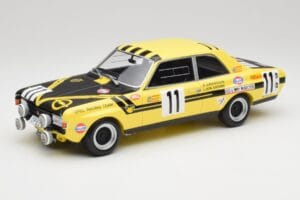
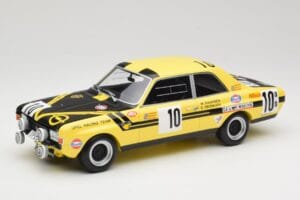
Opel Commodore A Steinmetz #11 E. von Bayern / Johansson 24 Hours of Spa 1970 Minichamps 1:18
Only 1 left
Price:
109.00 €
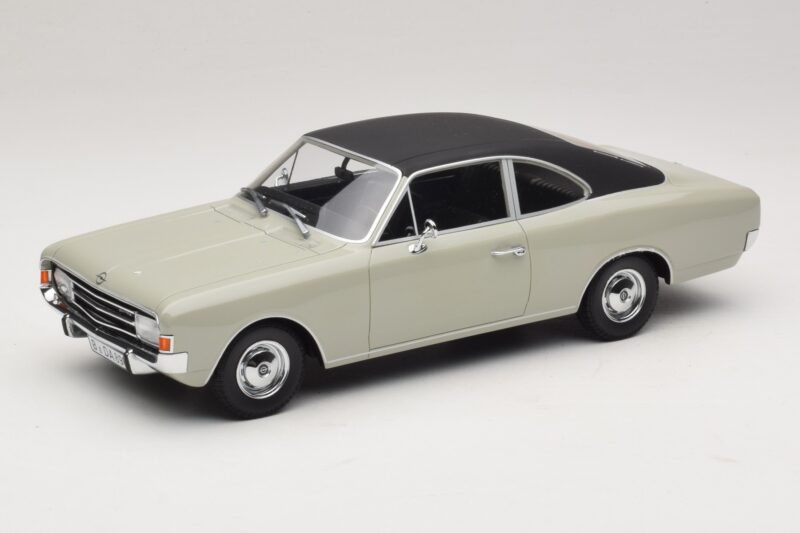
TL;DR: Minichamps' 1:18 resin Opel Rekord C Coupe reproduces the 1966 mid-size German coupe in grey, cast as a sealed one-piece body with crisp panel lines and no opening doors. Opel's Rekord line reached American driveways through Buick's captive-import program, giving this German coupe an overlooked US connection.
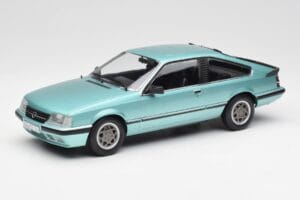
Opel's Rekord C never chased headlines the way a sports coupe might, but it quietly defined mid-size, mid-market German motoring through the late 1960s and found an unlikely path into the US via Buick showrooms. Minichamps' resin rendition captures the coupe body style specifically, the more sculpted variant of a car more commonly remembered as a practical sedan.
From the late 1950s into the mid-1970s, Buick dealers in the US sold Opels as an officially sanctioned, entry-level import line, giving American buyers access to German engineering at a price point well below anything Buick built domestically. The Rekord sat toward the upper end of that lineup, larger and more substantial than the Kadett most Americans associate with the badge, and the C generation's coupe body added a genuinely stylish option to what was largely a practical, family-oriented range. Most US buyers today have never heard of the arrangement, which makes a well-executed Rekord coupe a genuine discovery piece rather than a familiar nameplate revisited in miniature.
The Rekord C's coupe roofline carries the kind of compound curve that resin handles more convincingly than pressure-cast diecast tooling typically can. Cast resin holds tighter tolerances than metal, letting Minichamps reproduce the pillarless coupe's thin roof pillars and sweeping greenhouse without the slightly softened edges a metal die can leave on curved surfaces. The body here is a sealed one-piece casting with no opening doors, which is the norm for resin at this scale and tier rather than a shortfall, and it lets the full attention go into the shutlines, the panel gaps, and the way the roofline reads from a three-quarter angle, the view that actually sells a coupe's shape.
Grey is a color that rewards good casting and punishes bad casting equally, since it has none of a bright color's ability to mask a slightly uneven surface. On a resin body this size, the panel lines around the doors and trunk stay narrow and consistent because there's no hinge tolerance to build in, and the window surrounds and chrome trim separate cleanly against the grey body rather than blending into it. Glazing sits flush rather than proud, and the wheels carry period-correct styling that matches what a mid-1960s German coupe would have worn from the factory.
A fixed body isn't a compromise here so much as the correct choice for the price tier and scale. Interior access on a car this modest wouldn't add much: the Rekord's cabin was functional rather than lavish, and the real value of this piece lies entirely in getting the exterior shape, stance, and grey finish right, which resin is particularly well suited to doing. Collectors should judge it the way they would any sealed-body resin release, by shutline consistency, paint depth, and how convincingly the roofline reads from across the room, not by expecting opening doors a car this understated never really needed to showcase in the first place.
This Rekord C coupe works best alongside other vintage European classics rather than as a standalone purchase, particularly for US collectors building a display around the captive-import Opels that briefly bridged German and American car culture through Buick's dealer network. It's a quieter subject than the sports coupes and race cars that usually anchor a shelf, and that's precisely its value: a well-cast, honestly finished piece representing a genuinely overlooked chapter of automotive history. Resin at this tier delivers the sharper compound-curve detail this coupe's roofline needs, and the sealed body keeps the attention exactly where it belongs, on stance, paint, and shape rather than mechanical articulation a car this practical never called for.
You save 25.00 €
Lowest price in the 30 days before the reduction: 132.00 €
You save 25.00 €
Lowest price in the 30 days before the reduction: 132.00 €
You save 26.00 €
Lowest price in the 30 days before the reduction: 133.00 €



You save 16.00 €
Lowest price in the 30 days before the reduction: 123.00 €