Mercedes S-Class W220 S600 Limited Edition Norev 1:18
Price:
91.00 €
This model is currently sold out. Enter your email and we'll let you know when it's back in stock.
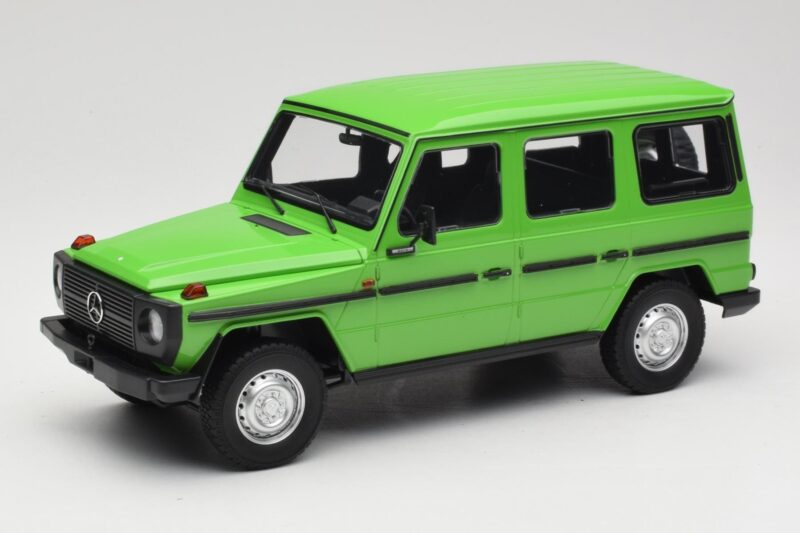
TL;DR: Minichamps' 1:18 diecast Mercedes G-Class W460 LWB in green reproduces the original 1980 G-Wagen, developed by Mercedes-Benz and Steyr-Daimler-Puch primarily for off-road durability. Diecast opening features and the model's boxy, function-first design suit a Vintage Classics shelf.
Green suits the G-Class's original utilitarian brief better than almost any color Mercedes has since applied to its luxury-era successors.
The flat-panel, boxy body and exposed hinges that have defined the G-Class since its debut are reproduced in weighted zinc-alloy diecast, with the long-wheelbase LWB proportions distinguishing this variant from the shorter standard-wheelbase model. Doors open onto a straightforward, function-first cabin, correct for a vehicle built primarily for durability rather than comfort, and the green finish reinforces the model's early military-adjacent identity.
Mercedes-Benz developed the G-Class with Steyr-Daimler-Puch specifically for military and heavy-duty civilian use, prioritizing off-road capability and mechanical simplicity over any luxury ambitions in this earliest generation. The 1980 W460 captures that original brief clearly, well before Mercedes began the gradual repositioning that eventually turned the same silhouette into one of the most recognizable luxury SUVs on the road.
Placed beside a current G-Class or an olive-toned modern example, this green original underscores just how far the model traveled from its utilitarian starting point without ever changing its basic shape.







You save 16.00 €
Lowest price in the 30 days before the reduction: 123.00 €