New arrival
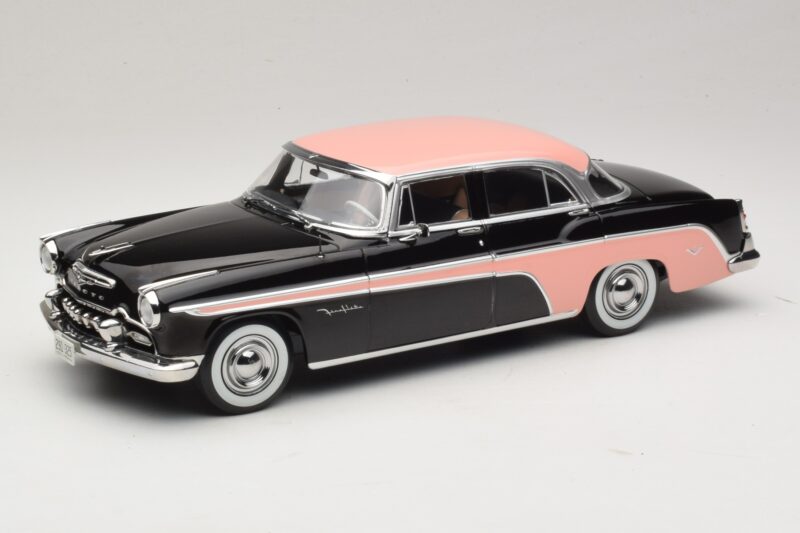
TL;DR: KK-Scale's 1:18 diecast DeSoto Fireflite pairs black and pink on the 1955 flagship sedan, a two-tone combination true to the period's boldest pastel trends on a brand Chrysler retired by 1961. The sealed one-piece body carries that paint split, chrome, and tailfin detail rather than any opening panel.
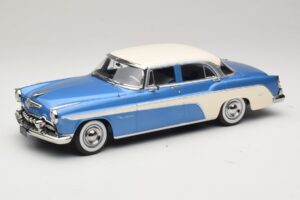
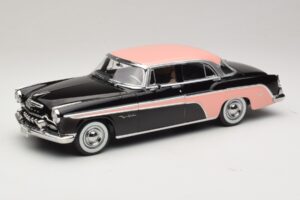
Pink paired with black was one of the boldest color statements a 1950s buyer could make, and DeSoto's top-trim Fireflite wore it as confidently as any senior-series American sedan of the era. KK-Scale's version revives that specific combination at 1:18, a louder companion to the more common two-tone pairings most collections already have.
The mid-1950s saw American manufacturers chase increasingly bold two-tone combinations, and pink paired with a darker accent color became one of the decade's defining looks, showing up across multiple brands as a way to signal a car's top-trim status. DeSoto applied the treatment to its senior Fireflite line, giving the brand's flagship sedan a color statement that matched its position at the top of the lineup. This particular black-and-pink split puts the lighter color on the upper body and roof, a common period layout that let the paint job read clearly from a distance rather than getting lost in shadow. KK-Scale's choice to reproduce this specific pairing rather than a more conservative color gives the model genuine period character.
Underneath the color, this is the same 1955 Fireflite built on Virgil Exner's Forward Look redesign, with the lower, longer proportions and wraparound windshield that Chrysler rolled out across its brands that season. The Hemi V8 that powered the real car gave DeSoto genuine performance credibility for the first time, a detail that matters to anyone tracking the brand's engineering history rather than just its paint schemes. DeSoto wouldn't survive the decade, folding as a brand in 1961, which makes any well-preserved Fireflite color scheme, especially an unusual one like this, a small window into a marque that effectively doesn't exist anymore.
The zinc alloy casting carries real heft leaving its packaging, and the body is molded as a single sealed shell, so there's nothing here to open, a standard construction choice at this price point that keeps the shut lines along the doors and trunk reading as tight, even grooves. The modest tailfins that mark 1955 as a transitional year between rounded early-decade shapes and the sharper fins to come carry enough edge definition to photograph well, and the chrome grille and bumper trim separate cleanly against both the black and pink sections of the body, and the window surrounds hold their chrome edge without bleeding into either paint color.
DeSoto's story ended quietly rather than dramatically, a slow sales decline that gave Chrysler reason to fold the brand rather than invest further, and that history gives this Fireflite a different kind of collecting appeal than a Chevrolet or Ford of the same vintage would carry. Badge work on the trunk and front fenders stays legible at this scale, confirming the tooling treated a relatively obscure subject with the same care a more famous badge would get. For a collector chasing orphan brands specifically, the color choice here is almost secondary to the fact that a DeSoto exists in this lineup at all, let alone in a color combination this distinctive.
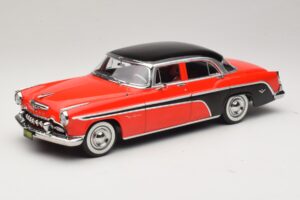
A collection built around tasteful dark two-tones tells only part of the 1950s story, and this black-and-pink Fireflite fills in the louder, more exuberant side of the decade's styling, the kind of color choice that actually sold cars at the time even if it reads as daring now. It makes an interesting companion piece to the red-and-black Fireflite from the same KK-Scale release, letting a collector show two distinct approaches to the same body and trim level side by side. At 1:18, both versions hold the same roughly 25-centimeter footprint, so they display consistently on the same shelf. For a buyer who wants period color variety rather than another conservative sedan, this is the one that stands out in a room.