Last one
Used

This model is currently sold out. Enter your email and we'll let you know when it's back in stock.
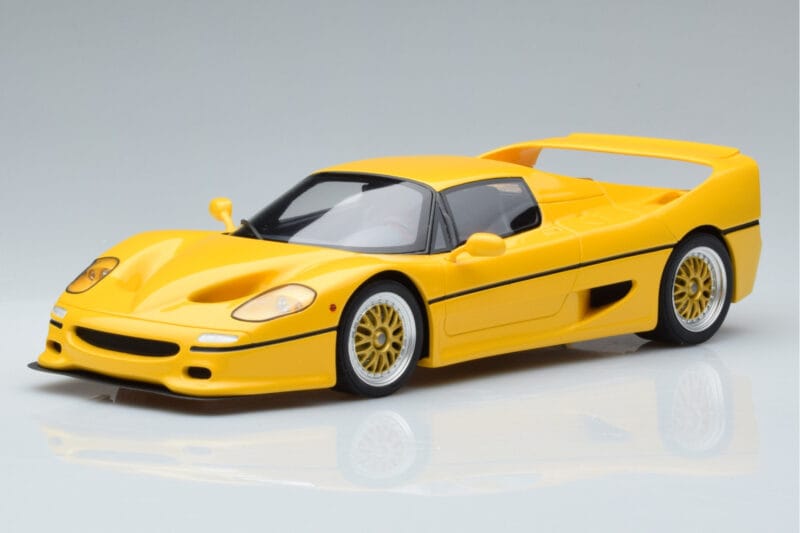
TL;DR: GT Spirit's 1:18 resin Ferrari F50 Twin Turbo reproduces Koenig Specials' 1990s conversion of Maranello's naturally-aspirated supercar into a twin-turbocharged, widebody machine. The body is a sealed resin casting. A niche subject for collectors following the era's aftermarket tuning scene rather than factory Ferraris alone.
Koenig Specials built a reputation in the 1980s and 1990s for taking Ferraris that Maranello considered finished and pushing them further, and the F50 Twin Turbo conversion is one of the boldest examples of that philosophy.
The F50's wedge-shaped, low-slung profile already demands precise casting to get right, and a tuner conversion that adds width and aerodynamic addenda raises the bar further, since flared arches and extended sills need to blend seamlessly into the original bodywork rather than reading as separate pieces. This casting is sealed, so the entire quality read happens on the exterior: how convincingly the widened arches integrate with the stock F50 silhouette, how deep the paint sits across the sculpted rear haunches, and how tightly the shut lines track where doors and the rear clamshell would normally separate. GT Spirit builds this kind of tuner subject in small-batch resin runs, and the material's ability to hold sharp, compound curves is exactly what a widebody supercar conversion rewards, capturing vent and duct detailing that a die-cast tool would struggle to replicate at this scale.
This F50 works best in a display specifically built around 1990s tuner culture or aftermarket Ferrari conversions, since it departs meaningfully from the factory-original replicas most Ferrari collections center on. Placed beside a stock F50 or F40, the widened stance and Koenig badging make an interesting contrast piece, illustrating how far tuners of that era were willing to push Maranello's designs. The sealed body keeps handling straightforward, with no hinges to inspect, just surfaces to check for consistent paint and gap alignment. At around 22cm, it sits comfortably in a standard supercar row. For a collector interested in the tuning-house side of Ferrari's story rather than its factory catalog alone, this piece is a distinctive find.