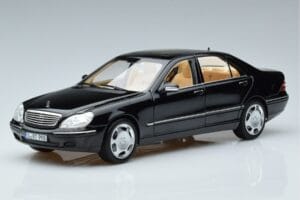
Mercedes S-Class W220 S600 Limited Edition Norev 1:18
Price:
91.00 €
This model is currently sold out. Enter your email and we'll let you know when it's back in stock.
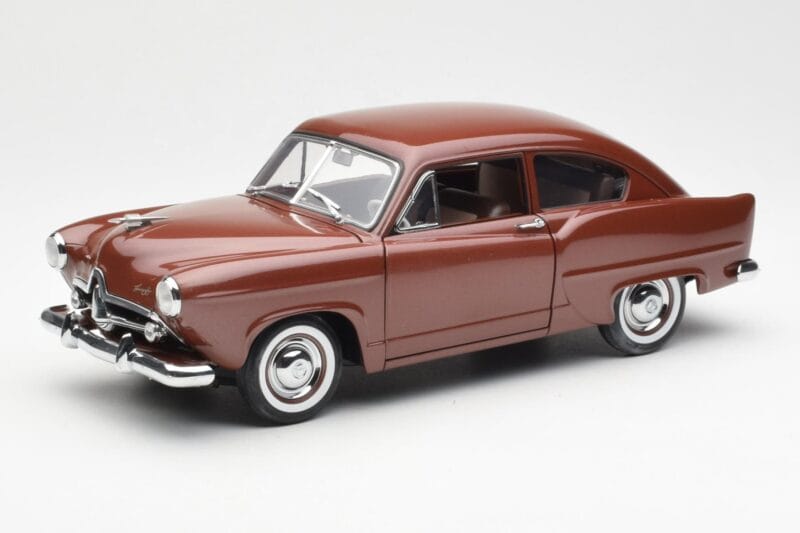
TL;DR: Sun Star's 1:18 diecast Kaiser Henry J reproduces the early-1950s American economy sedan in Caribbean Coral Metallic with opening doors. This is a used example; the box shows storage marks while the model itself is unaffected. A distinctive postwar subject uncommon among mainstream vintage classics.
The Kaiser Henry J was America's postwar attempt at an affordable compact sedan, a brand that vanished from the market not long after this car's launch. Sun Star's diecast keeps that footnote alive at 1:18.
Zinc alloy construction gives this Henry J real substance in the hand, appropriate for a full-metal-bodied sedan design from an era before plastic trim proliferated. The opening doors reveal a simple, no-frills cabin true to the car's economy-minded brief, and the hinges hold position cleanly, a small mechanical detail that matters on a subject where the interior tells much of the story about its budget origins. Caribbean Coral Metallic is an unusual color choice that catches light with genuine warmth under a display lamp, standing out against the more common postwar palette of blacks, whites, and muted pastels.
Kaiser-Frazer's postwar ambitions largely faded by the mid-1950s, making any Kaiser product a relative rarity in scale model form compared to the Big Three brands that dominate most vintage American collections. This used example carries storage marks on its box while the casting itself remains sound, an honest tradeoff for a subject this uncommon. At 1:18 the Henry J's compact, slightly awkward proportions reflect genuine economy-car design intent from the period, offering a useful contrast to the longer, more chrome-laden sedans typically found on a 1950s American shelf. Its rarity as a brand and subject, more than any single design flourish, is what makes it worth a spot in a postwar Americana display.