Last one
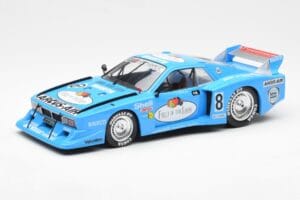
Lancia Beta Montecarlo Gr.5 #8 S. Muller Jr. DRM Nurburgring 1981 MCG 1:18
Only 1 left
Price:
66.00 €
This model is currently sold out. Enter your email and we'll let you know when it's back in stock.
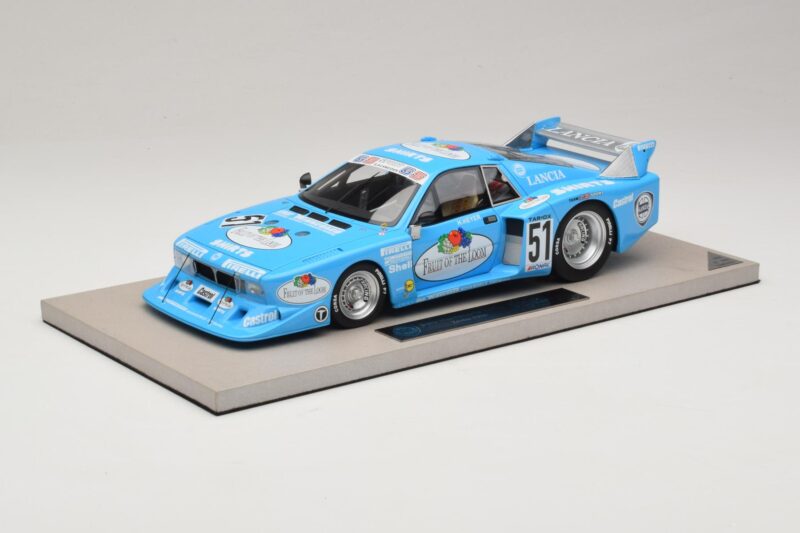
TL;DR: Top Marques' 1:18 resin Lancia Beta Montecarlo Turbo reproduces Harald Heyer's #51 entry at the 1980 DRM round at Zolder. The sealed one-piece body carries the Group 5 silhouette racer's dramatic box-arch bodywork, a category that prized aerodynamic effect over any resemblance to the road car underneath.
Group 5 silhouette racing turned road cars into something closer to sculpture, and the Beta Montecarlo Turbo pushed that transformation about as far as it could go. Top Marques' resin casting keeps every exaggerated arch and vent from Heyer's Zolder entry intact.
Group 5 regulations of the late 1970s and early 1980s allowed manufacturers enormous freedom to modify a road car's bodywork for aerodynamic purposes, as long as the basic silhouette remained recognizable, and the results were often barely related to the showroom car beyond the name on the badge. Lancia's Beta Montecarlo Turbo took full advantage of that freedom, wearing boxed-out wheel arches and turbo-fed bodywork that transformed the mid-engine road car into a purpose-built aerodynamic weapon for the German DRM series and other European touring car championships. Harald Heyer was a recognized name in German touring car racing of the period, and the Zolder round, held at the demanding Belgian circuit, was a regular fixture on the DRM calendar.
This model has no opening doors or hood; it is a sealed one-piece resin body. The Beta Montecarlo's boxed arches and turbo bodywork create sharp, angular surfaces that resin's tighter casting tolerances capture with cleaner edges than a die typically achieves, particularly around the arch transitions where the flared bodywork meets the original road car's roofline. The livery's sponsor graphics and number panel need precise registration across those angular surfaces, and Top Marques' resin construction holds that detail without the softening a heavier casting process might introduce.
Group 5 silhouette racers occupy a specific and passionate corner of motorsport collecting, valued for their theatrical bodywork as much as their competition history, and a documented named-driver entry like Heyer's Zolder car carries more specific appeal than a generic livery applied for visual variety. At 1:18 scale the Beta Montecarlo's boxed-arch body likely measures around 22 to 23 centimeters, its exaggerated width making it read distinctly wider than the road car of the same name at the same scale. Displayed alongside period Ford Capri or BMW 3.0 CSL Group 5 rivals, this Lancia adds genuine variety to a silhouette-racing shelf.
Inspect the arch flare transitions and turbo intake detail first, since these exaggerated features are where lesser castings of silhouette racers often lose crispness. Resin's lighter weight suits the exaggerated bodywork well, avoiding the added stress a heavier material might place on the widened arch sections. Named-driver Group 5 liveries like this one typically sit at a specialist price tier above generic touring car diecast, reflecting both the documentation required and the complexity of reproducing such heavily modified bodywork accurately.
No. The body is a sealed one-piece resin casting, with the boxed arches and turbo bodywork cast as fixed exterior detail.
Regulations allowed manufacturers extensive freedom to modify bodywork for aerodynamic purposes, producing cars that often looked barely related to the road cars they were nominally based on.
The boxed arch extensions make this racing version read noticeably wider than the standard road car at the same 1:18 scale, even with similar overall length.
Yes, it pairs well with period Ford Capri or BMW 3.0 CSL Group 5 rivals to show the category's dramatic aerodynamic diversity across different manufacturers.