Last one
Used
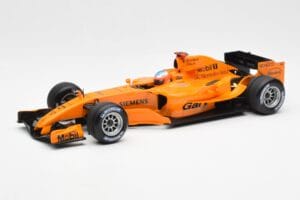
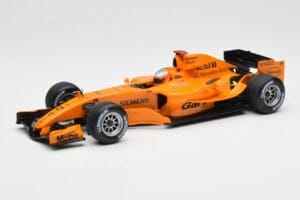
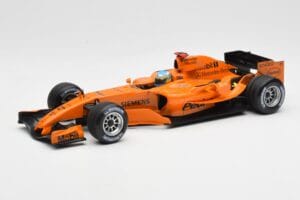
McLaren MP4-20 Mercedes G. Paffett Interim Test Car 2006 Minichamps 1:18
Only 1 left
Price:
161.00 €
This model is currently sold out. Enter your email and we'll let you know when it's back in stock.
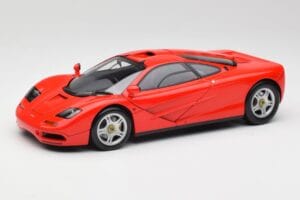
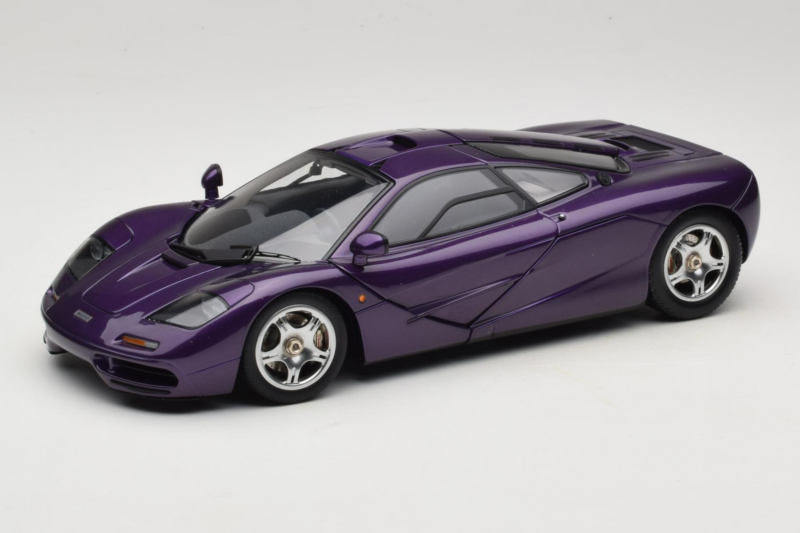
TL;DR: LCD's 1:18 diecast McLaren F1 in Purple reproduces Gordon Murray's central-driving-position hypercar, the design that seats the driver in the middle flanked by two passengers. Diecast construction captures the F1's low, teardrop-shaped proportions, a hero piece for collectors assembling an early-1990s supercar or hypercar shelf.
Gordon Murray didn't design the F1 around convention. He designed it around a driving position no other production car had tried before or has fully repeated since.
The F1 seats its driver dead center, with two passenger seats staggered slightly behind on either side, a layout Murray chose because it put the driver exactly where visibility and car placement felt most natural, rather than offset to one side as in every conventional road car. Power came from a BMW-built V12, and the engine bay famously used gold foil as heat-reflective lining, a detail chosen purely for thermal management rather than show. In 1998 a modified F1 reached 240.1 mph, a production car speed record that stood for years before anything else caught up, a result that came from Murray's obsessive focus on weight and aerodynamics rather than sheer horsepower alone. That combination is what separates the F1 from supercars that simply look dramatic without backing it up on a stopwatch.
McLaren built the F1 in famously small numbers, and original cars now sit among the most sought-after road cars of their era, which makes a well-executed diecast the only realistic way most collectors will ever study the shape up close. LCD's model captures the F1's low, teardrop nose and dramatically raked windshield in diecast, with Purple standing out as one of the more distinctive finishes McLaren offered across the car's bespoke color program. This is the kind of subject that anchors a hypercar or supercar shelf rather than filling a gap in it, and it pairs naturally with other early-1990s performance icons for a collector building a chronology of the decade's fastest road cars.