Last one

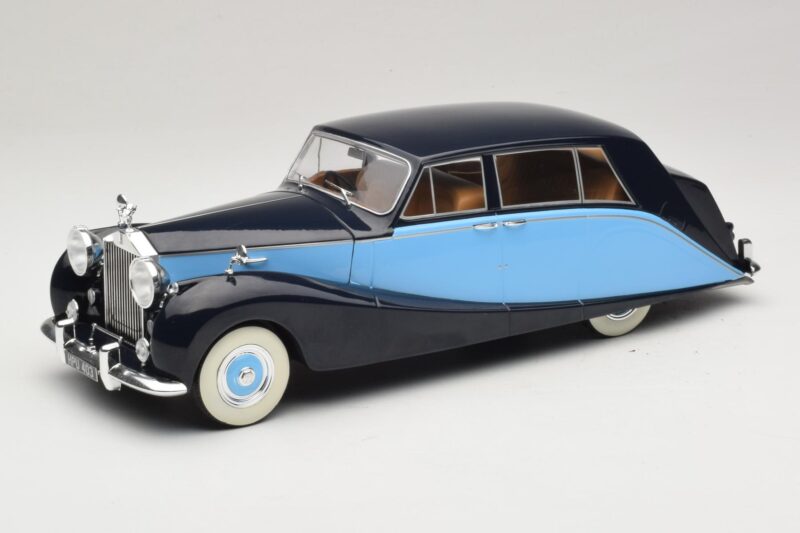
TL;DR: MCG's 1:18 diecast Rolls-Royce Silver Wraith reproduces the Empress line body by coachbuilder Hooper, finished in black and dark blue. The 1956 chassis carries a sealed one-piece body with no opening panels, its formal saloon proportions built for shelf display, at a mid-tier diecast price point.
A Silver Wraith's identity came almost entirely from whichever coachbuilder a buyer commissioned, since Rolls-Royce supplied only the chassis and running gear underneath. MCG's 1:18 diecast reproduces a Hooper-bodied Empress line saloon in black and dark blue, a formal color pairing that suited the coachbuilder's more traditional commissions on this chassis.
Hooper competed for Silver Wraith commissions against other established British coachbuilders of the period, each offering its own design language on the same underlying chassis. That competition pushed coachbuilders to develop recognizable house styles, since a buyer commissioning a body was, in effect, choosing a design philosophy as much as a manufacturer, and repeat clients often returned to the same firm across multiple chassis generations.
Among today's collectors of coachbuilt British luxury cars, a Hooper body carries recognition that a lesser-known coachbuilder's work does not, a reputation built on decades of royal patronage and a design department known for restrained, well-proportioned formal work. That name recognition matters for a diecast reproduction too, since it signals a specific, well-documented design rather than a generic period saloon shape.
The Empress line's window graphics, the shape and rake of the glass area running front to rear, set it apart from more upright, boxier Silver Wraith bodies from rival coachbuilders. That distinctive glasshouse gave the car a more modern read without abandoning the formal, chauffeur-appropriate proportions the chassis and its typical buyers demanded.
Reproducing that window-graphic accuracy in diecast means matching pillar thickness and glass rake as much as overall body length, since a Silver Wraith reproduction lives or dies on those proportions rather than on any single flashy detail. MCG's casting, built as a sealed one-piece shell with consistent shut lines throughout, keeps the design's identity intact rather than smoothing it into a more generic luxury sedan shape.
Black paired with dark blue reflects the more conservative end of Hooper's palette options, a combination favored by buyers commissioning a car for formal or chauffeur-driven use rather than for personal display. Diecast metal takes a dark, glossy finish particularly well, and the subtle two-tone split between black and dark blue gives the casting visual depth that a single flat black body would lack entirely. Chrome detailing along the grille, headlamp surrounds, and door handles reads sharply against both dark tones, providing the contrast points that carry the eye across an otherwise restrained color scheme. Because the body is sealed, with no door or hood built to open, that exterior finish is the entire presentation, and MCG's paintwork has to hold up under close inspection with nothing else to fall back on. On a subject this formal, restraint executed well is the whole point, and this livery delivers it.
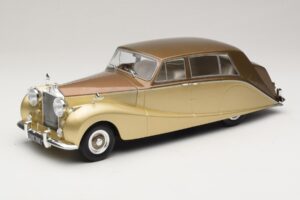
MCG offers this same Hooper-bodied Empress line Silver Wraith in a brown and gold livery as well, and the two color schemes displayed together tell a fuller story of the range a single coachbuilder could offer buyers commissioning the same chassis. At roughly 28 to 30 centimeters in 1:18, either casting commands real shelf presence, and the pair together makes a striking anchor point for a formal British luxury display. Both share the same sealed-body construction, so neither needs different handling or care, and the weight of the diecast keeps each one planted regardless of which sits toward the front of a shelf. For a collector drawn to the coachbuilding side of automotive history rather than to performance or racing subjects, owning both liveries is a natural way to round out a Silver Wraith display without repeating the exact same look twice.