Mercedes S-Class W220 S600 Limited Edition Norev 1:18
Price:
91.00 €
This model is currently sold out. Enter your email and we'll let you know when it's back in stock.
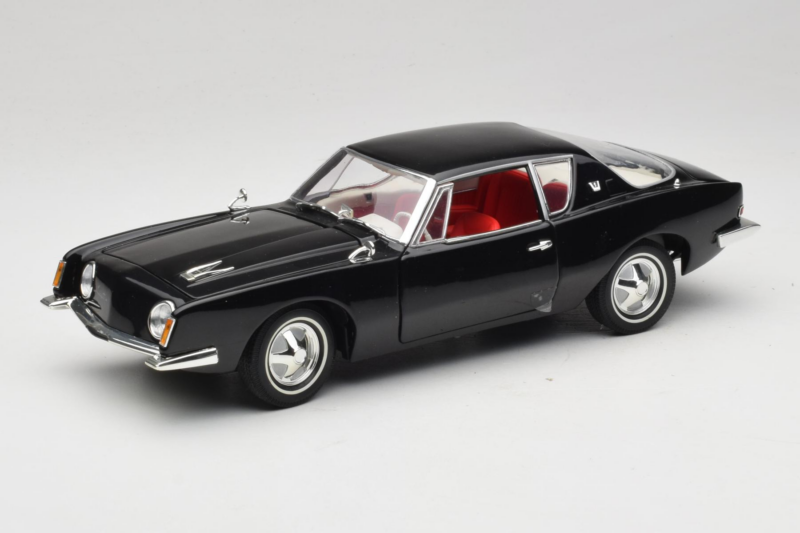
TL;DR: Signature Models' 1:18 diecast reproduces the 1963 Studebaker Avanti in black, the fiberglass-bodied coupe designed by Raymond Loewy as Studebaker's final major styling statement before the company's decline. Entry-tier diecast pricing makes an unusual American classic easy to add to a collection.
Most collectors know Studebaker as a company that failed, if they know it at all, which makes the Avanti's actual design ambition an easy story to miss.
The Avanti's wedge-shaped nose, wraparound rear window, and minimal grille opening broke sharply from the chrome-heavy American design language of its era, and Signature Models' diecast body reproduces that low, forward-leaning stance clearly in black, a color that suits the car's sculpted surfaces without competing with them. At entry-tier diecast pricing, detailing is straightforward rather than exhaustive, but the Avanti's appeal has always been about that distinctive silhouette rather than intricate trim work, so the model gets the part that matters most right. This is a car whose shape alone carries the collecting interest, and the model delivers on that specific strength.
Studebaker commissioned Raymond Loewy, the designer behind some of the era's most influential industrial work, to create a halo car that might save the struggling company, and the Avanti's fiberglass body and future-facing styling were genuinely ahead of anything else on American roads in 1963. The gamble did not save Studebaker, which ceased American production only a few years later, but the Avanti's design reputation has only grown since, admired today as one of the more daring shapes to come out of Detroit-era American manufacturing. For a vintage classics collection, it offers a story of ambition and design risk that most mainstream 1960s American cars simply do not carry.