Used

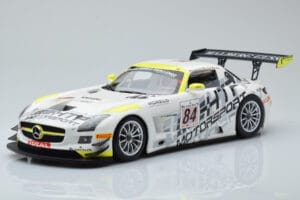
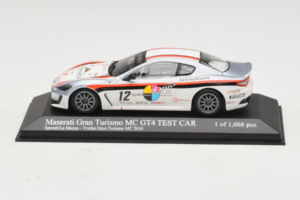
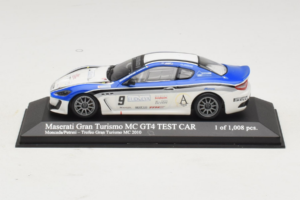
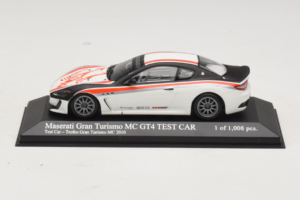
Maserati GranTurismo MC GT4 #6 Goldstein / Sumberg Trofeo GranTurismo 2010 Minichamps 1:43
Only 2 left
Price:
37.00 €
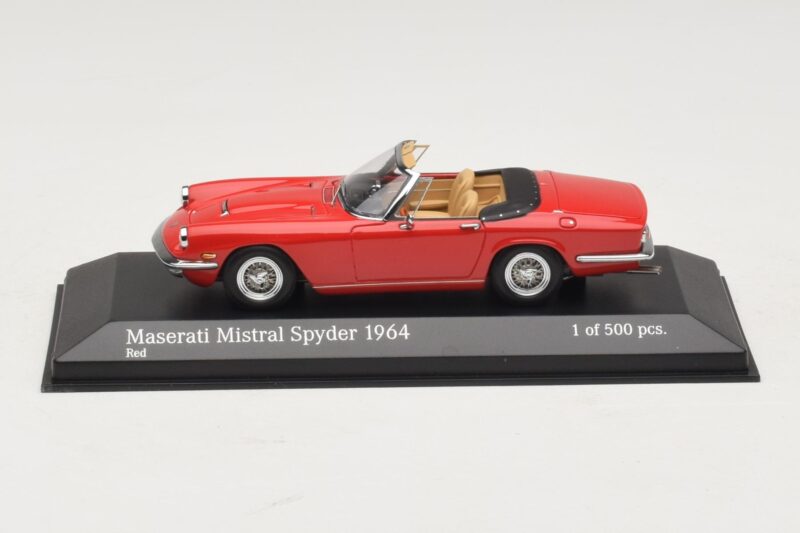
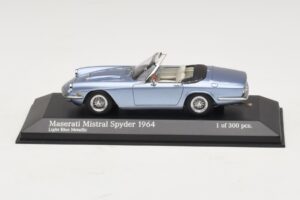
TL;DR: Minichamps' 1:43 Maserati Mistral Spyder in red reproduces Pietro Frua's open-top version of the 1960s Mistral, cast in diecast with a sealed one-piece body and the convertible top rendered fixed and raised. Rarer than the coupe it shares its platform with, this Spyder completes a Frua design story that spans both closed and open Maserati grand tourers.
Frua designed the Mistral as a coupe first, and the Spyder that followed asked his rounded surfacing to work without a fixed roofline holding the proportions together. Minichamps' red casting renders that open-top silhouette with the fabric top modeled up and closed, since the sealed diecast body has no working panels to leave it down.
Maserati offered the Mistral as both a coupe and a Spyder throughout its production run in the 1960s, with the open-top version built in noticeably smaller numbers than the closed car, a common pattern for GT convertibles of the era where the coupe typically outsold its topless sibling by a wide margin. Both versions shared Frua's basic design language and the same straight-six engine that made the Mistral the last inline-six Maserati road car, so the Spyder's rarity comes down to body style rather than any meaningful mechanical difference from the coupe covered elsewhere in this range. That scarcity is part of what makes a faithfully cast Spyder more interesting to a serious Maserati collector than the more commonly encountered coupe.
Removing a fixed roofline from Frua's design meant reworking the car's structural rigidity and its visual balance simultaneously, since the coupe's greenhouse had been doing real work holding the silhouette together, both mechanically and aesthetically. The Spyder's beltline and windshield rake had to compensate for the roof's absence, giving the open car a slightly different visual rhythm than the coupe even with the top raised, as this casting depicts it. Frua managed that conversion without abandoning the rounded, restrained surfacing that defined the coupe, keeping the Spyder recognizably part of the same design family rather than a compromised afterthought.
Because this casting has no working parts, the convertible top is modeled in its raised, closed position rather than left down or built as a separate removable piece, a common and practical approach for diecast convertibles at this scale. That fixed treatment lets Minichamps hold the top's shape precisely, with clean seams where the fabric section meets the body, something a genuinely folding top mechanism would struggle to reproduce convincingly in miniature. The sealed one-piece body also means the windshield surround and the top's leading edge sit flush against each other with no gap, preserving the clean transition Frua's design depends on between the glass and the fabric roof section.
Red suits the Spyder's open-top silhouette with a warmth that plays well against the fabric top's typically darker, textured finish, creating a two-tone contrast the coupe's all-metal roof does not offer in the same way. Because the body beneath that top is a single sealed casting, the red paint runs continuously across the hood, doors, and rear deck with no seam to interrupt Frua's rounded lines, the same structural benefit that carries through the coupe version cast from related tooling. Under direct light, the finish shows enough depth to distinguish the painted bodywork clearly from the modeled fabric top's different texture.
At 1:43, the Mistral Spyder shares roughly the same footprint as the coupe from the same range, close to ten centimeters, making the two easy to display together as a study in how Frua's design reads with and without a fixed roofline. The Spyder's open-top silhouette, even modeled with the top raised, gives it a visually lighter presence than the coupe's more solid greenhouse, a contrast that becomes obvious the moment the two sit side by side on a shelf. Detail resolution at this scale renders the modeled top's fabric texture as fine surface relief rather than a fully separate material, a reasonable trade-off for a convertible top at 1:43 that a design this restrained absorbs without losing character. Collectors building a complete picture of a single Maserati generation, coupe and Spyder together, get more value from pairing this open-top casting with its closed sibling than from either piece alone, since the comparison itself is part of what makes both interesting, and the top's raised profile is the first detail worth checking against reference photos when judging how faithfully this casting captures the real Spyder's proportions.
This red Spyder earns its place as the rarer half of a Mistral pair, the open-top counterpart to the more commonly found coupe covered elsewhere in this range, and together the two demonstrate how thoroughly Frua's rounded design language survived the transition from a fixed roof to an open one. Red gives this particular casting a warm, classic presence that suits a convertible's more relaxed character better than a cooler tone might. Building the coupe-and-Spyder pair at 1:43 in diecast costs far less than chasing both body styles in 1:18 or, certainly, in the genuine full-size cars, making that complete Mistral story an achievable goal for a patient collector rather than an expensive aspiration reserved for the most dedicated Maserati specialists, a small, satisfying kind of shelf completeness that rewards knowing the model's history rather than just its silhouette.
You save 38.00 €
Lowest price in the 30 days before the reduction: 189.00 €




You save 16.00 €
Lowest price in the 30 days before the reduction: 123.00 €