Used

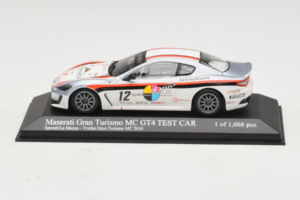
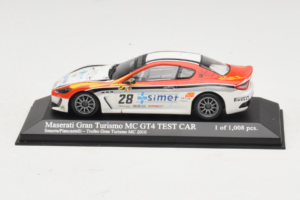
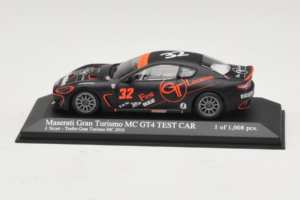
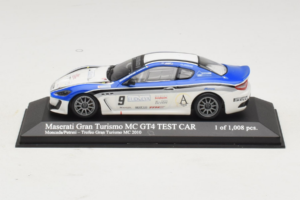
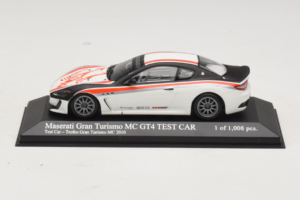
Maserati GranTurismo MC GT4 #6 Goldstein / Sumberg Trofeo GranTurismo 2010 Minichamps 1:43
Only 2 left
Price:
37.00 €
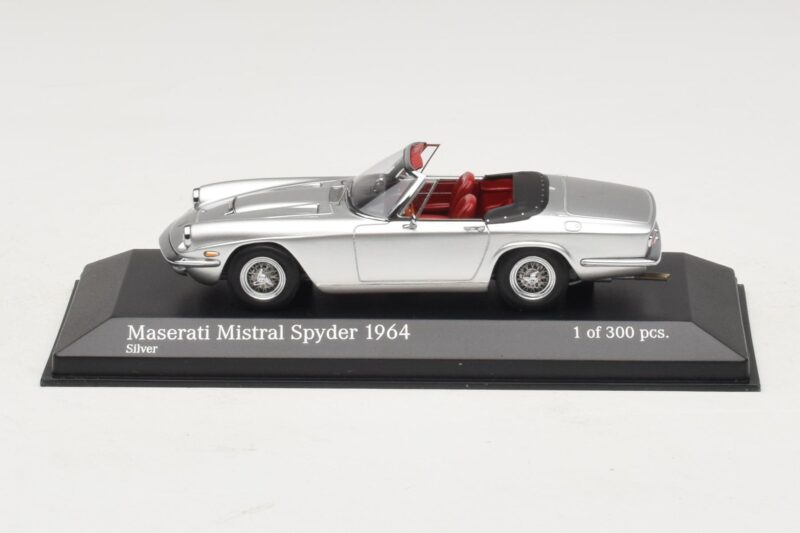
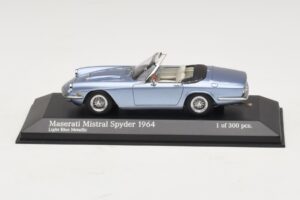
TL;DR: Minichamps' 1:43 diecast Maserati Mistral Spyder in silver reproduces the 1964 Frua-designed convertible, the first Maserati named after a wind, a naming tradition later continued by the Ghibli and Bora. Cast as a sealed zinc-alloy shell with no opening panels, it favors tight shut lines and even silver paint over interior access.
The Mistral started something. Before it, Maserati named cars after racetracks or engineering codes; after it, the marque named its grand tourers for winds, a tradition the Ghibli and Bora would both follow. Pietro Frua drew the low, tapered body, and Minichamps renders the open Spyder version in silver, a finish that lets Frua's flank line read clean from nose to tail.
Maserati named the Mistral after the cold, dry wind that sweeps down France's Rhone valley toward the Mediterranean, a choice that broke from the marque's earlier habit of naming cars after racetracks and internal project codes. The convention stuck. Within a few years Maserati introduced the Ghibli, named for a Saharan wind, and later the Bora and the Khamsin followed the same pattern, each named for a distinct wind from a different part of the world. The Mistral is where that tradition began, which gives it a historical weight beyond its own specification sheet, a car that quietly set the naming language for an entire generation of Maserati grand tourers that followed it.
Pietro Frua, working independently rather than through a larger coachbuilding house, drew the Mistral's body with a low nose, a tapering greenhouse, and flanks that curved inward toward the tail in a way few contemporary GTs attempted. The result looked lower and more purposeful than many rivals of the same era, even though the Mistral used a straight-six engine rather than the V8 that powered Maserati's larger grand tourers. That six-cylinder choice kept the nose slimmer and the weight distribution more balanced, a mechanical decision that shows directly in the proportions Frua was able to draw.
This 1:43 casting carries the density that zinc alloy always brings to small-scale diecast, noticeably heavier in the hand than a resin piece of the same footprint. Minichamps builds the Spyder as a single sealed body, with no door or trunk panel that opens, which suits an open-top subject well since the cabin is already visible from above without any need to lift a panel. Removing hinge tolerances from the design lets the shut lines run tight along the doors and rear deck, tracing Frua's tapering flank as one continuous groove rather than a series of interrupted seams.
Silver is a color that shows off sculptural bodywork honestly, since it has nowhere to hide an uneven line the way a darker shade might. Minichamps holds a consistent metallic grain across the Mistral's low hood and curved flanks, and because the body carries no opening seams, that finish reads as one unbroken surface from the nose to the tapered tail. Under a directed shelf light, the reflection travels cleanly along Frua's curves, exactly the kind of surface a coachbuilt design like this one was drawn to show off in the first place.
At 1:43, the Mistral Spyder comes out to a little under 10 centimeters, compact enough to sit in a themed row of 1960s open-top grand tourers without needing its own dedicated shelf space. The open cockpit is the display argument for choosing the Spyder over the coupe: since the real car has no roof, the cabin stays visible on any faithful reproduction, rewarding a shelf viewed from slightly above rather than one tucked behind glass at eye level. Judging fidelity on a coachbuilt subject like this one starts with the proportions Frua actually drew: does the nose sit as low as the original, does the greenhouse taper correctly toward the tail, do the wheels carry the right diameter and offset for a car this light. Minichamps has built a strong reputation across its classic Maserati range for getting exactly these proportional details right, and the Mistral rewards that same scrutiny. A sealed body suits an open subject perfectly, since the interior the model needs to show is already on full display without any panel needing to move.
Building a themed shelf around Maserati's wind-named grand tourers starts naturally with the Mistral, since every later Ghibli, Bora, or Khamsin in the lineup owes its naming convention to this car. The Spyder version in silver adds a genuine rarity angle too, since open-top variants were always built in smaller numbers than the coupe across this generation of Maserati GTs. Minichamps' 1:43 diecast puts that history within reach without asking a collector to commit hero-piece money, while still holding the proportional accuracy that a Frua design demands. For anyone assembling a Maserati chronology by theme rather than strictly by decade, the Mistral Spyder is the natural starting point for a wind-named row that only grows more interesting from here.

You save 38.00 €
Lowest price in the 30 days before the reduction: 189.00 €




You save 16.00 €
Lowest price in the 30 days before the reduction: 123.00 €