


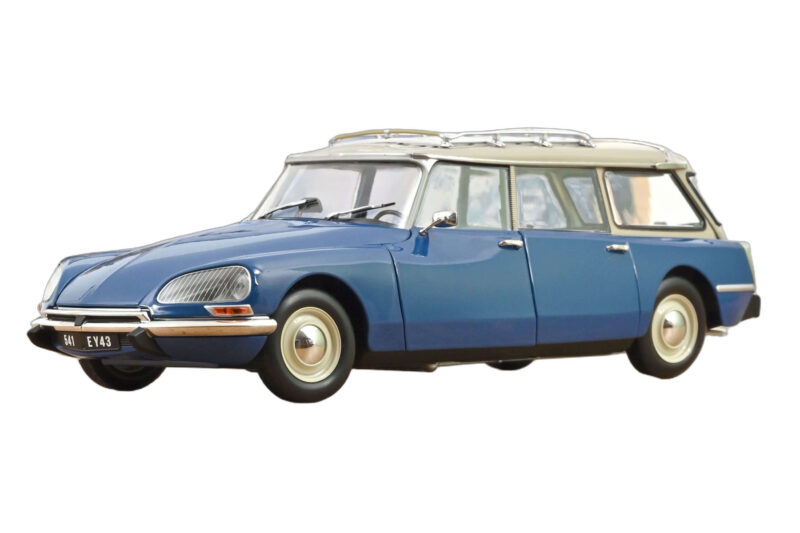
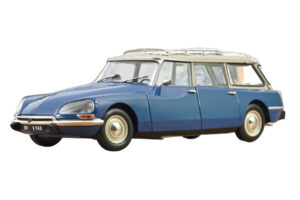
Citroen DS 21 Break Danube Blue Norev 1:18
-5%
Pre-order
1
/
4
Norev's 1:18 diecast Citroen DS 21 Break reproduces the 1970 hydropneumatic estate in Danube Blue, the load-hauling wagon variant of Bertoni's revolutionary DS. The model opens at the doors, hood, and tailgate, showing the DS's distinctive dashboard and the self-leveling suspension that let the original carry heavy loads without sagging. Zinc alloy construction gives the piece genuine heft, with panel gaps that stay consistent across every opening point.
1 / 4
[{"index":0,"id":"1664501","thumb":"https:\/\/models118.com\/wp-content\/uploads\/2026\/09\/citroen-ds-21-break-danube-blue-norev-1-18-181772-1-1-300x200.jpg","medium":"https:\/\/models118.com\/wp-content\/uploads\/2026\/09\/citroen-ds-21-break-danube-blue-norev-1-18-181772-1-1-800x533.jpg","full":"https:\/\/models118.com\/wp-content\/uploads\/2026\/09\/citroen-ds-21-break-danube-blue-norev-1-18-181772-1-1.jpg","srcset":"https:\/\/models118.com\/wp-content\/uploads\/2026\/09\/citroen-ds-21-break-danube-blue-norev-1-18-181772-1-1-800x533.jpg 800w, https:\/\/models118.com\/wp-content\/uploads\/2026\/09\/citroen-ds-21-break-danube-blue-norev-1-18-181772-1-1-300x200.jpg 300w, https:\/\/models118.com\/wp-content\/uploads\/2026\/09\/citroen-ds-21-break-danube-blue-norev-1-18-181772-1-1-64x43.jpg 64w, https:\/\/models118.com\/wp-content\/uploads\/2026\/09\/citroen-ds-21-break-danube-blue-norev-1-18-181772-1-1.jpg 1800w","sizes":"(max-width: 1023px) 400px, 640px","srcsetAvif":"https:\/\/models118.com\/wp-content\/uploads\/2026\/09\/citroen-ds-21-break-danube-blue-norev-1-18-181772-1-1-800x533.jpg.avif 800w, https:\/\/models118.com\/wp-content\/uploads\/2026\/09\/citroen-ds-21-break-danube-blue-norev-1-18-181772-1-1-300x200.jpg.avif 300w, https:\/\/models118.com\/wp-content\/uploads\/2026\/09\/citroen-ds-21-break-danube-blue-norev-1-18-181772-1-1-64x43.jpg.avif 64w, https:\/\/models118.com\/wp-content\/uploads\/2026\/09\/citroen-ds-21-break-danube-blue-norev-1-18-181772-1-1.jpg.avif 1800w","srcsetWebp":"https:\/\/models118.com\/wp-content\/uploads\/2026\/09\/citroen-ds-21-break-danube-blue-norev-1-18-181772-1-1-800x533.jpg.webp 800w, https:\/\/models118.com\/wp-content\/uploads\/2026\/09\/citroen-ds-21-break-danube-blue-norev-1-18-181772-1-1-300x200.jpg.webp 300w, https:\/\/models118.com\/wp-content\/uploads\/2026\/09\/citroen-ds-21-break-danube-blue-norev-1-18-181772-1-1-64x43.jpg.webp 64w, https:\/\/models118.com\/wp-content\/uploads\/2026\/09\/citroen-ds-21-break-danube-blue-norev-1-18-181772-1-1.jpg.webp 1800w","alt":"Citroen DS 21 Break Danube Blue Norev 1:18 181772 Diecast"},{"index":1,"id":1664503,"thumb":"https:\/\/models118.com\/wp-content\/uploads\/2026\/09\/citroen-ds-21-break-danube-blue-norev-1-18-181772-1-300x200.jpg","medium":"https:\/\/models118.com\/wp-content\/uploads\/2026\/09\/citroen-ds-21-break-danube-blue-norev-1-18-181772-1-800x533.jpg","full":"https:\/\/models118.com\/wp-content\/uploads\/2026\/09\/citroen-ds-21-break-danube-blue-norev-1-18-181772-1.jpg","srcset":"https:\/\/models118.com\/wp-content\/uploads\/2026\/09\/citroen-ds-21-break-danube-blue-norev-1-18-181772-1-800x533.jpg 800w, https:\/\/models118.com\/wp-content\/uploads\/2026\/09\/citroen-ds-21-break-danube-blue-norev-1-18-181772-1-300x200.jpg 300w, https:\/\/models118.com\/wp-content\/uploads\/2026\/09\/citroen-ds-21-break-danube-blue-norev-1-18-181772-1-64x43.jpg 64w, https:\/\/models118.com\/wp-content\/uploads\/2026\/09\/citroen-ds-21-break-danube-blue-norev-1-18-181772-1.jpg 1800w","sizes":"(max-width: 1023px) 400px, 640px","srcsetAvif":"https:\/\/models118.com\/wp-content\/uploads\/2026\/09\/citroen-ds-21-break-danube-blue-norev-1-18-181772-1-800x533.jpg.avif 800w, https:\/\/models118.com\/wp-content\/uploads\/2026\/09\/citroen-ds-21-break-danube-blue-norev-1-18-181772-1-300x200.jpg.avif 300w, https:\/\/models118.com\/wp-content\/uploads\/2026\/09\/citroen-ds-21-break-danube-blue-norev-1-18-181772-1-64x43.jpg.avif 64w, https:\/\/models118.com\/wp-content\/uploads\/2026\/09\/citroen-ds-21-break-danube-blue-norev-1-18-181772-1.jpg.avif 1800w","srcsetWebp":"https:\/\/models118.com\/wp-content\/uploads\/2026\/09\/citroen-ds-21-break-danube-blue-norev-1-18-181772-1-800x533.jpg.webp 800w, https:\/\/models118.com\/wp-content\/uploads\/2026\/09\/citroen-ds-21-break-danube-blue-norev-1-18-181772-1-300x200.jpg.webp 300w, https:\/\/models118.com\/wp-content\/uploads\/2026\/09\/citroen-ds-21-break-danube-blue-norev-1-18-181772-1-64x43.jpg.webp 64w, https:\/\/models118.com\/wp-content\/uploads\/2026\/09\/citroen-ds-21-break-danube-blue-norev-1-18-181772-1.jpg.webp 1800w","alt":"Citroen DS 21 Break Danube Blue Norev 1:18 181772 Diecast - image 2 of 4"},{"index":2,"id":1664505,"thumb":"https:\/\/models118.com\/wp-content\/uploads\/2026\/09\/citroen-ds-21-break-danube-blue-norev-1-18-181772-2-300x200.jpg","medium":"https:\/\/models118.com\/wp-content\/uploads\/2026\/09\/citroen-ds-21-break-danube-blue-norev-1-18-181772-2-800x533.jpg","full":"https:\/\/models118.com\/wp-content\/uploads\/2026\/09\/citroen-ds-21-break-danube-blue-norev-1-18-181772-2.jpg","srcset":"https:\/\/models118.com\/wp-content\/uploads\/2026\/09\/citroen-ds-21-break-danube-blue-norev-1-18-181772-2-800x533.jpg 800w, https:\/\/models118.com\/wp-content\/uploads\/2026\/09\/citroen-ds-21-break-danube-blue-norev-1-18-181772-2-300x200.jpg 300w, https:\/\/models118.com\/wp-content\/uploads\/2026\/09\/citroen-ds-21-break-danube-blue-norev-1-18-181772-2-64x43.jpg 64w, https:\/\/models118.com\/wp-content\/uploads\/2026\/09\/citroen-ds-21-break-danube-blue-norev-1-18-181772-2.jpg 1800w","sizes":"(max-width: 1023px) 400px, 640px","srcsetAvif":"https:\/\/models118.com\/wp-content\/uploads\/2026\/09\/citroen-ds-21-break-danube-blue-norev-1-18-181772-2-800x533.jpg.avif 800w, https:\/\/models118.com\/wp-content\/uploads\/2026\/09\/citroen-ds-21-break-danube-blue-norev-1-18-181772-2-300x200.jpg.avif 300w, https:\/\/models118.com\/wp-content\/uploads\/2026\/09\/citroen-ds-21-break-danube-blue-norev-1-18-181772-2-64x43.jpg.avif 64w, https:\/\/models118.com\/wp-content\/uploads\/2026\/09\/citroen-ds-21-break-danube-blue-norev-1-18-181772-2.jpg.avif 1800w","srcsetWebp":"https:\/\/models118.com\/wp-content\/uploads\/2026\/09\/citroen-ds-21-break-danube-blue-norev-1-18-181772-2-800x533.jpg.webp 800w, https:\/\/models118.com\/wp-content\/uploads\/2026\/09\/citroen-ds-21-break-danube-blue-norev-1-18-181772-2-300x200.jpg.webp 300w, https:\/\/models118.com\/wp-content\/uploads\/2026\/09\/citroen-ds-21-break-danube-blue-norev-1-18-181772-2-64x43.jpg.webp 64w, https:\/\/models118.com\/wp-content\/uploads\/2026\/09\/citroen-ds-21-break-danube-blue-norev-1-18-181772-2.jpg.webp 1800w","alt":"Citroen DS 21 Break Danube Blue Norev 1:18 181772 Diecast - image 3 of 4"},{"index":3,"id":1664507,"thumb":"https:\/\/models118.com\/wp-content\/uploads\/2026\/09\/citroen-ds-21-break-danube-blue-norev-1-18-181772-3-300x200.jpg","medium":"https:\/\/models118.com\/wp-content\/uploads\/2026\/09\/citroen-ds-21-break-danube-blue-norev-1-18-181772-3-800x533.jpg","full":"https:\/\/models118.com\/wp-content\/uploads\/2026\/09\/citroen-ds-21-break-danube-blue-norev-1-18-181772-3.jpg","srcset":"https:\/\/models118.com\/wp-content\/uploads\/2026\/09\/citroen-ds-21-break-danube-blue-norev-1-18-181772-3-800x533.jpg 800w, https:\/\/models118.com\/wp-content\/uploads\/2026\/09\/citroen-ds-21-break-danube-blue-norev-1-18-181772-3-300x200.jpg 300w, https:\/\/models118.com\/wp-content\/uploads\/2026\/09\/citroen-ds-21-break-danube-blue-norev-1-18-181772-3-64x43.jpg 64w, https:\/\/models118.com\/wp-content\/uploads\/2026\/09\/citroen-ds-21-break-danube-blue-norev-1-18-181772-3.jpg 1800w","sizes":"(max-width: 1023px) 400px, 640px","srcsetAvif":"https:\/\/models118.com\/wp-content\/uploads\/2026\/09\/citroen-ds-21-break-danube-blue-norev-1-18-181772-3-800x533.jpg.avif 800w, https:\/\/models118.com\/wp-content\/uploads\/2026\/09\/citroen-ds-21-break-danube-blue-norev-1-18-181772-3-300x200.jpg.avif 300w, https:\/\/models118.com\/wp-content\/uploads\/2026\/09\/citroen-ds-21-break-danube-blue-norev-1-18-181772-3-64x43.jpg.avif 64w, https:\/\/models118.com\/wp-content\/uploads\/2026\/09\/citroen-ds-21-break-danube-blue-norev-1-18-181772-3.jpg.avif 1800w","srcsetWebp":"https:\/\/models118.com\/wp-content\/uploads\/2026\/09\/citroen-ds-21-break-danube-blue-norev-1-18-181772-3-800x533.jpg.webp 800w, https:\/\/models118.com\/wp-content\/uploads\/2026\/09\/citroen-ds-21-break-danube-blue-norev-1-18-181772-3-300x200.jpg.webp 300w, https:\/\/models118.com\/wp-content\/uploads\/2026\/09\/citroen-ds-21-break-danube-blue-norev-1-18-181772-3-64x43.jpg.webp 64w, https:\/\/models118.com\/wp-content\/uploads\/2026\/09\/citroen-ds-21-break-danube-blue-norev-1-18-181772-3.jpg.webp 1800w","alt":"Citroen DS 21 Break Danube Blue Norev 1:18 181772 Diecast - image 4 of 4"}]
Citroen DS 21 Break Danube Blue Norev 1:18
Regular price:
80.00 €
Current price:
76.00 €
-5%
You save 4.00 €
Ships around 20-30.09.2026
Open for pre-order
Shipping from 21.50 €
10% discount on your first order — create a free account
Shipping to United States (US)
Worldwide delivery
Prices exclude VAT
No hidden costs
Shipping from 18.00 €
Tracked & insured
Pay in EUR €
Local currency
Specifications
- Year
- 1970
- Era
- 1970s
- Body Type
- Estate & Wagon
- Vehicle Class
- Vintage Classics
- Openable Parts
- Yes
- Packaging Condition
- New
- Model Type
- Street Models
- EAN / GTIN
- 3551091817727
100% authentic
Direct from manufacturers
5-layer carton
Foam-filled interior
Easy returns
14 days, no questions asked
Secure payment
256-bit SSL encryption
About the Citroen DS 21 Break Danube Blue Norev 1:18
TL;DR: Norev's 1:18 diecast Citroen DS 21 Break in Danube Blue reproduces the 1970 estate version of Flaminio Bertoni's hydropneumatic DS, the load-hauling variant of one of the most technically radical cars of its era. Doors, hood, and tailgate all open on this zinc alloy build, revealing the dashboard and cargo floor beneath.
The DS Break carried furniture, luggage, and entire families across Europe on a suspension system most cars of its era could not begin to match. Self-leveling hydropneumatic springs meant the load bay stayed level even fully packed, a genuinely radical trick for 1970. Norev's 1:18 diecast opens at the doors, hood, and tailgate, letting a collector explore that cargo-hauling cabin directly rather than only admiring it from outside.
Bertoni's Hydropneumatic DS Adapted for Cargo
Self-Leveling Suspension and the DS 21's Larger Engine
Flaminio Bertoni's DS shocked the industry in 1955 with a shape that looked a decade ahead of anything else on the road, but the real engineering leap sat underneath: a hydropneumatic suspension system that kept the car level regardless of load, using pressurized fluid rather than conventional springs at each corner. By the time the DS 21 arrived, Citroen had grown the engine to 2.1 liters, giving the range more usable power without touching the suspension design that made the car's reputation. That system mattered even more on the Break than on the sedan, since a wagon's whole purpose is carrying weight the suspension has to absorb without sagging or losing ride height.
Why the Break Mattered Beyond the Standard Sedan
The Break variant turned Bertoni's futuristic design into genuine family and commercial transportation, a role the elegant sedan was never quite built for. Citroen offered it with a flat load floor and, depending on configuration, extra folding seats in the cargo area, making it useful for everything from family holidays to light commercial duty. That practicality gave the DS a reach into households and businesses that the standard sedan's more sculptural image never fully captured, and it is a large part of why the Break remains a distinct and collectible variant rather than simply a less glamorous version of the same car.
Norev's Opening Diecast and the Danube Blue Finish
Doors, Hood, and Tailgate That Actually Open
Norev builds this DS 21 Break with doors, hood, and tailgate that genuinely open, a meaningful step up from a sealed display casting for a subject whose whole story is about interior space and load capacity. Opening the doors reveals the DS's distinctive dashboard, a single-spoke steering wheel and dial layout that looked as futuristic as the exterior when new. Lift the tailgate and the flat cargo floor is visible, the practical heart of what made this variant useful rather than just striking to look at. Each panel settles cleanly when closed, with panel gaps that stay consistent rather than gapping unevenly at one corner.
Weight, Paint, and the Cargo Floor Beneath
The zinc alloy body gives this 1:18 piece real substance in the hand, denser than a resin casting of comparable size and clearly built to tolerate repeated opening and closing of its panels over years of handling. Danube Blue sits on the body with a deep, even gloss characteristic of paint applied to a hard metal shell, and the shade reads as a period-appropriate mid-tone rather than a modern oversaturated blue. Under a directed light, the DS's long, low roofline and the Break's extended rear catch the color evenly across every opened and closed panel alike.
Scale, Interior Detail, and Judging a DS Wagon
At 1:18, the DS 21 Break comes out to roughly 26 centimeters long, a genuinely substantial footprint given the wagon's extended rear overhang compared to the standard sedan, and it commands real presence on a shelf rather than blending into a row of smaller-scale classics. That size matters here specifically because the model opens: a larger scale lets Norev fit a properly detailed dashboard, door cards, and cargo floor into the interior rather than a simplified approximation, and those details only pay off on a model built to actually show them. Judging fidelity on a subject like this one means checking whether the dash layout matches period photographs, whether the door panel opens on a hinge with a defined stop rather than flopping loose, and whether the cargo floor and rear seat folding mechanism, where fitted, look plausibly functional rather than just molded flat. Norev has built a strong reputation for exactly this kind of opening detail across its French classic-car range, and the DS 21 Break rewards the same close inspection that its opening doors and tailgate invite in the first place.
A Practical DS for a Themed French Classic Shelf
Where a standard DS sedan photographs beautifully closed, the Break earns its place by being handled, opened, and explored, a model built around the same practical appeal that made the real wagon useful to families and small businesses across 1970s Europe. Displayed beside a sedan DS from the same era, the Break tells the fuller story of Bertoni's design, proving the hydropneumatic system worked as well hauling cargo as it did cruising a boulevard. Norev's 1:18 diecast in Danube Blue gives that story genuine interactive presence rather than static display alone, and for a collector building a French classic-car shelf around real engineering substance rather than just striking shapes, this Break is the piece that adds depth the sedan alone cannot provide.
From the same collection
Last one

Back in stock

Back in stock
Back in stock

Last one
Used

Collectors also bought
Browse all 1:18
Mercedes S-Class W220 S600 Limited Edition Norev 1:18
Price:
91.00 €

Mercedes 500 SL R129 Limited Edition Norev 1:18
Price:
91.00 €

Mercedes 190 E W201 Limited Edition Norev 1:18
Price:
93.00 €
Last one

Last one
Back in stock

BMW X6M F86 Red Norev 1:18
Price:
94.00 €
Recently viewed
{"id":1663382,"name":"Citroen DS 21 Break Danube Blue Norev 1:18","price":"80.00 €<\/span><\/bdi><\/span><\/del> Original price was: 80.00 €.<\/span>76.00 €<\/span><\/bdi><\/span><\/ins>Current price is: 76.00 €.<\/span>","image":"https:\/\/models118.com\/wp-content\/uploads\/2026\/09\/citroen-ds-21-break-danube-blue-norev-1-18-181772-1-1-400x400.jpg","permalink":"https:\/\/models118.com\/citroen-ds-21-break-danube-blue-norev-1-18-181772\/","brand":"Citroen"}