Last one
Used

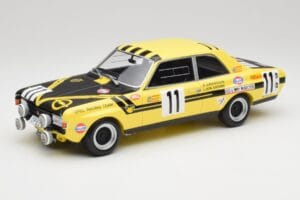
Opel Commodore A Steinmetz #11 E. von Bayern / Johansson 24 Hours of Spa 1970 Minichamps 1:18
Only 1 left
Price:
109.00 €
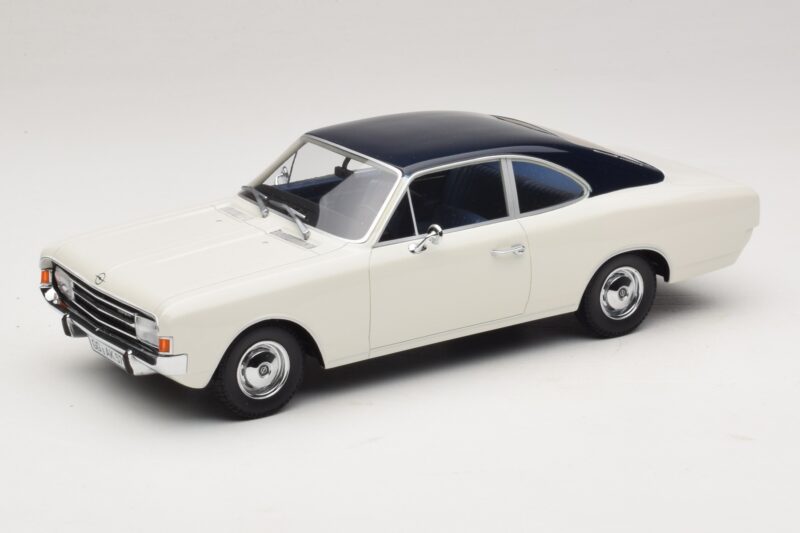
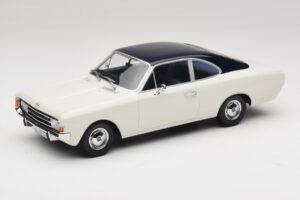
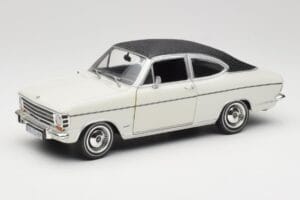
TL;DR: Minichamps' 1:18 resin Opel Rekord C Coupe reproduces the 1966 German family coupe in a white-and-blue two-tone finish. Cast as a sealed one-piece body, it holds sharp roofline curves and tight shut lines that a mainstream diecast run of this niche subject would be unlikely to justify.
The Rekord C was Opel's mainstream family car, not a halo model, which makes a resin coupe version an unusual choice rather than an obvious one. Minichamps' decision to cast this subject in resin rather than diecast says something about how thin the demand curve gets once you leave Germany's own collecting base.
Resin is usually reserved for either premium halo cars or niche subjects too thin in demand to justify diecast tooling, and this Rekord C Coupe falls squarely into the second category. Cast resin takes tighter tolerances than pressure-cast zinc alloy, which lets Minichamps hold sharper compound curves on the coupe's tapering roofline than a die would comfortably produce at this production volume. The body arrives as a sealed, one-piece casting, light in the hand relative to its size, the density that distinguishes resin from diecast immediately on lifting it from its packaging. There is no mechanism to lose to wear here; the whole account of quality plays out across the surface.
The white-and-blue two-tone scheme was a common period choice for European family cars of this generation, and getting the color break clean along the character line is the real test of a two-tone paint job in miniature. This casting holds that separation crisply, with no bleed where the blue lower panel meets the white upper body, and the shut lines along the doors and trunk read as single, even grooves rather than uneven gaps. Chrome window surrounds and bumpers are picked out distinctly against both paint colors, and the coupe's lower, more raked roofline compared with the sedan version is captured correctly rather than reused from a four-door tool.
Opel introduced the Rekord C in 1966 as the successor to the Rekord B, offered across sedan, wagon, and this two-door coupe body style on a shared mainstream platform. It was one of the best-selling cars in West Germany through the late 1960s, a genuine family car rather than a performance or luxury model, and the coupe variant traded some practicality for a sportier roofline aimed at buyers who wanted a bit more style without leaving Opel's mainstream range. That everyday origin is exactly what makes a well-executed miniature interesting: it documents ordinary German motoring rather than a headline car.
Outside Germany, the Rekord C is a genuinely obscure subject, overshadowed internationally by contemporaries from Volkswagen, BMW, and Mercedes that built stronger export reputations. That obscurity is precisely why resin makes commercial sense here: a manufacturer can serve German-market collectors and Opel specialists in small batches without committing to diecast tooling that would need far higher sales volume to justify. For an American buyer, this model rewards curiosity about European family-car history more than nostalgia, since the Rekord C never had a meaningful US presence.
This Rekord C suits a specific kind of collector, someone building a shelf around Opel specifically, around German family cars of the 1960s, or around resin subjects chosen for rarity rather than fame. It will not anchor a general sports-car display the way a Porsche or BMW might, and that is fine; not every worthwhile model needs to. At 1:18, the coupe's proportions give it real shelf presence despite its modest subject matter, and the sealed resin body means there is nothing to maintain beyond normal dusting and careful handling. Buyers should approach it expecting a faithfully reproduced, ordinary car rather than a landmark one, and judge it on exactly the terms Minichamps built it for: proportion, paint, and honest German motoring history in miniature.
You save 25.00 €
Lowest price in the 30 days before the reduction: 132.00 €
You save 25.00 €
Lowest price in the 30 days before the reduction: 132.00 €
You save 26.00 €
Lowest price in the 30 days before the reduction: 133.00 €



You save 16.00 €
Lowest price in the 30 days before the reduction: 123.00 €