Used

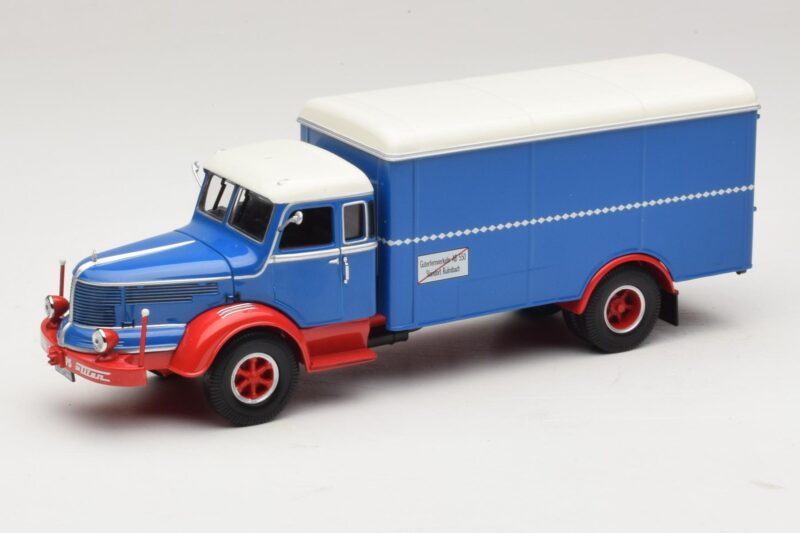
TL;DR: Minichamps' 1:43 diecast Krupp Titan box truck in blue and red reproduces the early-1950s heavy hauler from Krupp's short-lived postwar truck division, cast as a sealed one-piece body with crisp panel lines. A niche find for collectors building a commercial-vehicle or German industrial-heritage shelf.
Krupp is remembered for steel and heavy industry long before trucks, but the company ran its own commercial vehicle division through the postwar years until selling that business to Daimler-Benz in 1953. The Titan sits in that narrow window, a heavy-duty hauler built by a name most collectors associate with something else entirely.
Krupp's truck-building operation never approached the scale of its steel and armaments business, but the division built a genuine range of commercial vehicles through the late 1940s and into the early 1950s before Daimler-Benz absorbed the operation in 1953. That short production window is part of what makes a Krupp truck an unusual subject for a collector used to the marques that dominate this segment today. The Titan represented the heavier end of that lineup, built for the kind of hauling work postwar German reconstruction demanded in real volume, moving goods on roads and rail links still being rebuilt from the war years.
This casting reproduces the Titan in its box-body configuration, the enclosed cargo body bolted behind the cab rather than a flatbed or tanker fitment, the setup a delivery or freight operator of the period would have specified for goods that needed protection from weather. The proportions are boxy and upright by design, a cab-forward layout with a tall, flat-sided load area that prioritized cargo volume over any aerodynamic concern nobody was worrying about in 1951. That utilitarian shape is honest to the vehicle's job, and Minichamps keeps the panel proportions square rather than softening them for visual appeal.
The blue cab and red box-body split gives this Titan a two-tone scheme typical of period commercial liveries, the kind of practical color-coding a delivery fleet used to separate cab from cargo at a glance. Minichamps holds the color break clean along the body's structural lines rather than letting it wander, and the flat panels typical of a box truck put real pressure on paint evenness since there is little sculpting to distract from an inconsistent finish. Zinc alloy gives the casting genuine heft, appropriate for a subject built to look and feel substantial rather than delicate.
Minichamps casts this Titan as a sealed one-piece body, cab and box body fixed together rather than built with an opening door or cargo hatch. For a commercial vehicle whose appeal rests on its overall proportions and livery rather than any cab interior, that fixed-shell approach keeps the shut lines between cab and box running clean and consistent, without a hinge tolerance to widen the gap. It is the same practical logic that governs most truck castings at this scale, and it suits a subject bought for its silhouette on a shelf rather than for opening anything.
A Krupp Titan will not slot neatly beside a shelf of Ferraris or muscle cars, and that is exactly its appeal for a collector chasing something genuinely different. It belongs with other commercial and industrial-heritage subjects, a category where postwar European trucks tell a story passenger cars rarely do, one of reconstruction, freight, and the industrial names that briefly diversified before settling back into their core businesses. At 1:43, it occupies modest shelf space for a vehicle this large in real life, making it an easy addition to a themed commercial-vehicle case without demanding a case of its own.


You save 16.00 €
Lowest price in the 30 days before the reduction: 123.00 €