Bentley Azure Blue Minichamps 1:43
Sold out
1
/
4
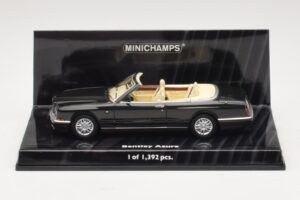
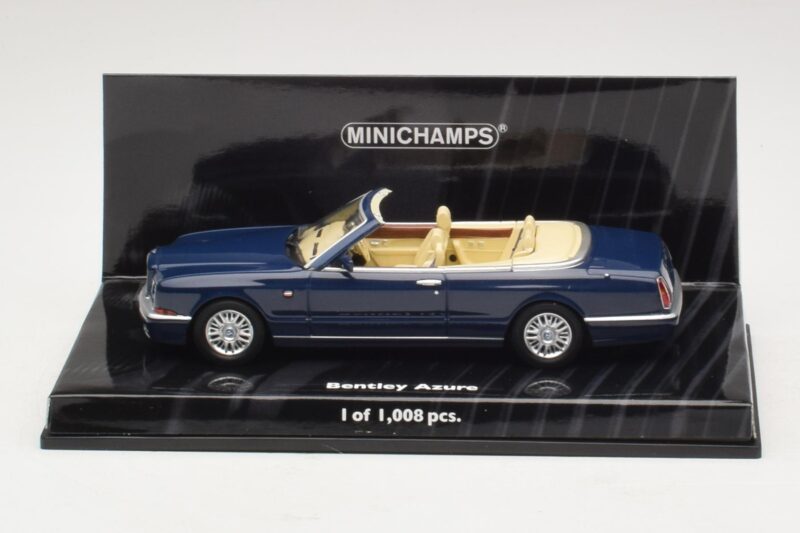
Minichamps' 1:43 Bentley Azure reproduces the 1996 flagship convertible in sealed diecast with deep blue paint, a sculpted soft-top profile, and chrome waterfall grille detail. Built on the Continental R platform, the Azure sits as Bentley's grand-touring flagship of the decade, a fitting anchor for a British luxury shelf. The fixed body holds tight panel lines and even paint coverage, judged from the outside rather than through opening doors.
1 / 4
[{"index":0,"id":"1682284","thumb":"https:\/\/models118.com\/wp-content\/uploads\/2026\/09\/bentley-azure-blue-minichamps-1-43-436139931-1-1-300x200.jpg","medium":"https:\/\/models118.com\/wp-content\/uploads\/2026\/09\/bentley-azure-blue-minichamps-1-43-436139931-1-1-800x533.jpg","full":"https:\/\/models118.com\/wp-content\/uploads\/2026\/09\/bentley-azure-blue-minichamps-1-43-436139931-1-1.jpg","srcset":"https:\/\/models118.com\/wp-content\/uploads\/2026\/09\/bentley-azure-blue-minichamps-1-43-436139931-1-1-800x533.jpg 800w, https:\/\/models118.com\/wp-content\/uploads\/2026\/09\/bentley-azure-blue-minichamps-1-43-436139931-1-1-300x200.jpg 300w, https:\/\/models118.com\/wp-content\/uploads\/2026\/09\/bentley-azure-blue-minichamps-1-43-436139931-1-1-64x43.jpg 64w, https:\/\/models118.com\/wp-content\/uploads\/2026\/09\/bentley-azure-blue-minichamps-1-43-436139931-1-1-480x320.jpg 480w, https:\/\/models118.com\/wp-content\/uploads\/2026\/09\/bentley-azure-blue-minichamps-1-43-436139931-1-1.jpg 1800w","sizes":"(max-width: 1023px) 400px, 640px","srcsetAvif":"https:\/\/models118.com\/wp-content\/uploads\/2026\/09\/bentley-azure-blue-minichamps-1-43-436139931-1-1-800x533.jpg.avif 800w, https:\/\/models118.com\/wp-content\/uploads\/2026\/09\/bentley-azure-blue-minichamps-1-43-436139931-1-1-300x200.jpg.avif 300w, https:\/\/models118.com\/wp-content\/uploads\/2026\/09\/bentley-azure-blue-minichamps-1-43-436139931-1-1-64x43.jpg.avif 64w, https:\/\/models118.com\/wp-content\/uploads\/2026\/09\/bentley-azure-blue-minichamps-1-43-436139931-1-1-480x320.jpg.avif 480w, https:\/\/models118.com\/wp-content\/uploads\/2026\/09\/bentley-azure-blue-minichamps-1-43-436139931-1-1.jpg.avif 1800w","srcsetWebp":"https:\/\/models118.com\/wp-content\/uploads\/2026\/09\/bentley-azure-blue-minichamps-1-43-436139931-1-1-800x533.jpg.webp 800w, https:\/\/models118.com\/wp-content\/uploads\/2026\/09\/bentley-azure-blue-minichamps-1-43-436139931-1-1-300x200.jpg.webp 300w, https:\/\/models118.com\/wp-content\/uploads\/2026\/09\/bentley-azure-blue-minichamps-1-43-436139931-1-1-64x43.jpg.webp 64w, https:\/\/models118.com\/wp-content\/uploads\/2026\/09\/bentley-azure-blue-minichamps-1-43-436139931-1-1-480x320.jpg.webp 480w, https:\/\/models118.com\/wp-content\/uploads\/2026\/09\/bentley-azure-blue-minichamps-1-43-436139931-1-1.jpg.webp 1800w","alt":"Bentley Azure Blue Minichamps 1:43 436139931 Diecast"},{"index":1,"id":1682285,"thumb":"https:\/\/models118.com\/wp-content\/uploads\/2026\/09\/bentley-azure-blue-minichamps-1-43-436139931-1-300x200.jpg","medium":"https:\/\/models118.com\/wp-content\/uploads\/2026\/09\/bentley-azure-blue-minichamps-1-43-436139931-1-800x533.jpg","full":"https:\/\/models118.com\/wp-content\/uploads\/2026\/09\/bentley-azure-blue-minichamps-1-43-436139931-1.jpg","srcset":"https:\/\/models118.com\/wp-content\/uploads\/2026\/09\/bentley-azure-blue-minichamps-1-43-436139931-1-800x533.jpg 800w, https:\/\/models118.com\/wp-content\/uploads\/2026\/09\/bentley-azure-blue-minichamps-1-43-436139931-1-300x200.jpg 300w, https:\/\/models118.com\/wp-content\/uploads\/2026\/09\/bentley-azure-blue-minichamps-1-43-436139931-1-64x43.jpg 64w, https:\/\/models118.com\/wp-content\/uploads\/2026\/09\/bentley-azure-blue-minichamps-1-43-436139931-1.jpg 1800w","sizes":"(max-width: 1023px) 400px, 640px","srcsetAvif":"https:\/\/models118.com\/wp-content\/uploads\/2026\/09\/bentley-azure-blue-minichamps-1-43-436139931-1-800x533.jpg.avif 800w, https:\/\/models118.com\/wp-content\/uploads\/2026\/09\/bentley-azure-blue-minichamps-1-43-436139931-1-300x200.jpg.avif 300w, https:\/\/models118.com\/wp-content\/uploads\/2026\/09\/bentley-azure-blue-minichamps-1-43-436139931-1-64x43.jpg.avif 64w, https:\/\/models118.com\/wp-content\/uploads\/2026\/09\/bentley-azure-blue-minichamps-1-43-436139931-1.jpg.avif 1800w","srcsetWebp":"https:\/\/models118.com\/wp-content\/uploads\/2026\/09\/bentley-azure-blue-minichamps-1-43-436139931-1-800x533.jpg.webp 800w, https:\/\/models118.com\/wp-content\/uploads\/2026\/09\/bentley-azure-blue-minichamps-1-43-436139931-1-300x200.jpg.webp 300w, https:\/\/models118.com\/wp-content\/uploads\/2026\/09\/bentley-azure-blue-minichamps-1-43-436139931-1-64x43.jpg.webp 64w, https:\/\/models118.com\/wp-content\/uploads\/2026\/09\/bentley-azure-blue-minichamps-1-43-436139931-1.jpg.webp 1800w","alt":"Bentley Azure Blue Minichamps 1:43 436139931 Diecast - image 2 of 4"},{"index":2,"id":1682286,"thumb":"https:\/\/models118.com\/wp-content\/uploads\/2026\/09\/bentley-azure-blue-minichamps-1-43-436139931-2-300x200.jpg","medium":"https:\/\/models118.com\/wp-content\/uploads\/2026\/09\/bentley-azure-blue-minichamps-1-43-436139931-2-800x533.jpg","full":"https:\/\/models118.com\/wp-content\/uploads\/2026\/09\/bentley-azure-blue-minichamps-1-43-436139931-2.jpg","srcset":"https:\/\/models118.com\/wp-content\/uploads\/2026\/09\/bentley-azure-blue-minichamps-1-43-436139931-2-800x533.jpg 800w, https:\/\/models118.com\/wp-content\/uploads\/2026\/09\/bentley-azure-blue-minichamps-1-43-436139931-2-300x200.jpg 300w, https:\/\/models118.com\/wp-content\/uploads\/2026\/09\/bentley-azure-blue-minichamps-1-43-436139931-2-64x43.jpg 64w, https:\/\/models118.com\/wp-content\/uploads\/2026\/09\/bentley-azure-blue-minichamps-1-43-436139931-2.jpg 1800w","sizes":"(max-width: 1023px) 400px, 640px","srcsetAvif":"https:\/\/models118.com\/wp-content\/uploads\/2026\/09\/bentley-azure-blue-minichamps-1-43-436139931-2-800x533.jpg.avif 800w, https:\/\/models118.com\/wp-content\/uploads\/2026\/09\/bentley-azure-blue-minichamps-1-43-436139931-2-300x200.jpg.avif 300w, https:\/\/models118.com\/wp-content\/uploads\/2026\/09\/bentley-azure-blue-minichamps-1-43-436139931-2-64x43.jpg.avif 64w, https:\/\/models118.com\/wp-content\/uploads\/2026\/09\/bentley-azure-blue-minichamps-1-43-436139931-2.jpg.avif 1800w","srcsetWebp":"https:\/\/models118.com\/wp-content\/uploads\/2026\/09\/bentley-azure-blue-minichamps-1-43-436139931-2-800x533.jpg.webp 800w, https:\/\/models118.com\/wp-content\/uploads\/2026\/09\/bentley-azure-blue-minichamps-1-43-436139931-2-300x200.jpg.webp 300w, https:\/\/models118.com\/wp-content\/uploads\/2026\/09\/bentley-azure-blue-minichamps-1-43-436139931-2-64x43.jpg.webp 64w, https:\/\/models118.com\/wp-content\/uploads\/2026\/09\/bentley-azure-blue-minichamps-1-43-436139931-2.jpg.webp 1800w","alt":"Bentley Azure Blue Minichamps 1:43 436139931 Diecast - image 3 of 4"},{"index":3,"id":1682287,"thumb":"https:\/\/models118.com\/wp-content\/uploads\/2026\/09\/bentley-azure-blue-minichamps-1-43-436139931-3-300x200.jpg","medium":"https:\/\/models118.com\/wp-content\/uploads\/2026\/09\/bentley-azure-blue-minichamps-1-43-436139931-3-800x533.jpg","full":"https:\/\/models118.com\/wp-content\/uploads\/2026\/09\/bentley-azure-blue-minichamps-1-43-436139931-3.jpg","srcset":"https:\/\/models118.com\/wp-content\/uploads\/2026\/09\/bentley-azure-blue-minichamps-1-43-436139931-3-800x533.jpg 800w, https:\/\/models118.com\/wp-content\/uploads\/2026\/09\/bentley-azure-blue-minichamps-1-43-436139931-3-300x200.jpg 300w, https:\/\/models118.com\/wp-content\/uploads\/2026\/09\/bentley-azure-blue-minichamps-1-43-436139931-3-64x43.jpg 64w, https:\/\/models118.com\/wp-content\/uploads\/2026\/09\/bentley-azure-blue-minichamps-1-43-436139931-3.jpg 1800w","sizes":"(max-width: 1023px) 400px, 640px","srcsetAvif":"https:\/\/models118.com\/wp-content\/uploads\/2026\/09\/bentley-azure-blue-minichamps-1-43-436139931-3-800x533.jpg.avif 800w, https:\/\/models118.com\/wp-content\/uploads\/2026\/09\/bentley-azure-blue-minichamps-1-43-436139931-3-300x200.jpg.avif 300w, https:\/\/models118.com\/wp-content\/uploads\/2026\/09\/bentley-azure-blue-minichamps-1-43-436139931-3-64x43.jpg.avif 64w, https:\/\/models118.com\/wp-content\/uploads\/2026\/09\/bentley-azure-blue-minichamps-1-43-436139931-3.jpg.avif 1800w","srcsetWebp":"https:\/\/models118.com\/wp-content\/uploads\/2026\/09\/bentley-azure-blue-minichamps-1-43-436139931-3-800x533.jpg.webp 800w, https:\/\/models118.com\/wp-content\/uploads\/2026\/09\/bentley-azure-blue-minichamps-1-43-436139931-3-300x200.jpg.webp 300w, https:\/\/models118.com\/wp-content\/uploads\/2026\/09\/bentley-azure-blue-minichamps-1-43-436139931-3-64x43.jpg.webp 64w, https:\/\/models118.com\/wp-content\/uploads\/2026\/09\/bentley-azure-blue-minichamps-1-43-436139931-3.jpg.webp 1800w","alt":"Bentley Azure Blue Minichamps 1:43 436139931 Diecast - image 4 of 4"}]
Bentley Azure Blue Minichamps 1:43
Current price:
94.00 €
Sold out
This model is currently sold out. Enter your email and we'll let you know when it's back in stock.
Shipping to 79 countries
Worldwide delivery
Prices incl. 23% VAT
No hidden costs
Shipping rates by country
Tracked & insured
Pay in EUR €
Local currency
Specifications
- Brand
- Bentley
- Manufacturer
- Minichamps
- Scale
- 1:43
- Material
- Diecast
- Model Condition
- New Model
- SKU
- 436139931
- Year
- 1996
- Era
- 1990s
- Body Type
- Open-Top
- Vehicle Class
- GT Convertibles
- Openable Parts
- No
- Packaging Condition
- New
- Model Type
- Street Models
- EAN / GTIN
- 4012138115507
100% authentic
Direct from manufacturers
5-layer carton
Foam-filled interior
Easy returns
14 days, no questions asked
Secure payment
256-bit SSL encryption
About the Bentley Azure Blue Minichamps 1:43
TL;DR: Minichamps' 1:43 Bentley Azure reproduces the 1996 flagship convertible in sealed diecast: deep blue paint over a zinc alloy body, a sculpted soft-top silhouette, and crisp chrome grille detail. A compact anchor piece for a British luxury GT shelf, built as one fixed body rather than an opening one.
Bentley's Azure arrived in 1995 as the marque's flagship convertible, a coachbuilt four-seater riding on the Continental R platform with a power-folding soft top and the turbocharged 6.75-litre V8 that defined Crewe's cars through the decade. Minichamps renders it at 1:43, a scale built for collectors tracking British luxury lineage across a full shelf rather than a single hero piece.
Minichamps' 1:43 Bentley Azure in Sealed Diecast
A Fixed Body Built for Stance and Paint
At 1:43, Minichamps builds the Azure as a single sealed casting rather than an opening one, and that construction choice suits a convertible whose main visual interest sits on the outside anyway. Zinc alloy gives the model real heft for its size, weight that a soft-top toy in lighter material cannot match. The stance sits low and wide, matching the wheelbase-heavy proportions of a car built on Bentley's largest platform of the era. Panel lines along the doors and boot run as single, consistent grooves, the kind of tight tolerance a fixed body holds that an articulated shell has to compromise to accommodate hinges.
Soft-Top Sculpting and Chrome Detail
The soft-top itself is cast in its raised or lowered profile rather than left as a flat deck, and Minichamps captures the folding hood's characteristic humped silhouette behind the rear seats. The waterfall grille up front, one of Bentley's most recognizable design signatures, is picked out in separate chrome tooling rather than painted silver, and the badge sits crisp enough to read under a loupe. Wheel detail follows the same standard: multi-spoke alloys with defined depth rather than a flat stamped disc. Blue paint carries even coverage across the long bonnet and doors, with no orange-peel texture visible at normal viewing distance.
Bentley's Flagship Convertible of the 1990s
The Continental R Platform and Crewe Craftsmanship
Bentley launched the Azure in 1995 as its flagship convertible, built on the Continental R platform and hand-finished at the Crewe works with the kind of coachbuilt attention that put the car well above ordinary production sedans. Under the long bonnet sat the turbocharged 6.75-litre V8 that powered most Bentleys of the period, delivering effortless torque rather than outright sports-car urgency, in keeping with the car's grand-touring brief. The power-operated soft top was a genuine engineering feature at the time, a mechanized roof on a car built before electric folding hardtops became common.
Positioning Against the Rolls-Royce Corniche
Bentley positioned the Azure directly against the Rolls-Royce Corniche, the two marques' flagship convertibles competing for the same wealthy clientele through most of the decade before Bentley and Rolls-Royce split under separate ownership. That rivalry gives the Azure genuine standing in British luxury car history, not just badge prestige. For a collector building a shelf around 1990s British GTs, the Azure sits at the top end of the road-going range, distinct from the harder-edged Continental coupes and closer in spirit to a formal, chauffeur-driven idiom than a driver's car.
Where the Azure Sits on a Luxury GT Shelf
The Azure works best as an anchor piece in a British luxury theme, paired naturally with Bentley Continental coupes or a Rolls-Royce Corniche from the same period rather than displayed alongside sports models it was never built to compete with. At 1:43, the footprint stays modest, so a full run of 1990s Crewe convertibles fits comfortably on one shelf without crowding faster cars out of the display. Judge the casting the way any sealed-body diecast at this scale should be judged: stance first, then panel consistency, then paint depth under a display lamp. On those terms the Azure holds up as a faithful, honestly built miniature of a car that was never meant to be loud.
From the same collection
Last one
Used
Used
Last one
Last one
Last one
Collectors also bought
Browse all 1:43
Used

Last one
Used
Used
Last one
Used
Back in stock
Used

Ford Fiesta RS WRC Ford Abu Dhabi #3 M. Hirvonen / J. Lehtinen Winner Rally Australia 2011 Minichamps 1:18
Only 2 left
Price:
123.00 €
Last one
Used
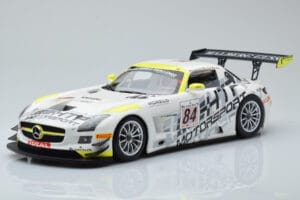
Mercedes SLS AMG GT3 HTP Motorsport Persson #84 B. Schneider / M. Buhk / M. Gotz Winners 24 Hours of Spa-Francorchamps 2013 Minichamps 1:18
Only 1 left
Price:
110.00 €
Last one
Back in stock
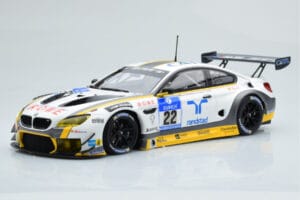
BMW M6 GT3 Rowe Racing #98 A. Graf / R. Westbrook / N. Catsburg / N. Paltalla 24 Hours of Nurburgring 2016 Minichamps 1:18
Only 1 left
Price:
169.00 €
Last one
Back in stock
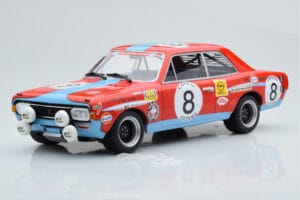
Opel Commodore A Steinmetz #8 Tuerlinx / T. Pilette 24 Hours of Spa 1972 Minichamps 1:18
Only 1 left
Price:
128.00 €
Recently viewed
{"id":1672787,"name":"Bentley Azure Blue Minichamps 1:43","price":"94.00 €<\/span><\/bdi><\/span>","image":"https:\/\/models118.com\/wp-content\/uploads\/2026\/09\/bentley-azure-blue-minichamps-1-43-436139931-1-1-400x400.jpg","permalink":"https:\/\/models118.com\/bentley-azure-blue-minichamps-1-43-436139931\/","brand":"Bentley"}