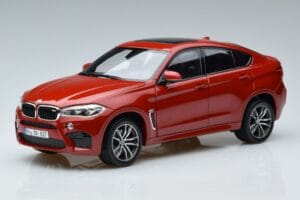
BMW X6M F86 Red Norev 1:18
Price:
94.00 €
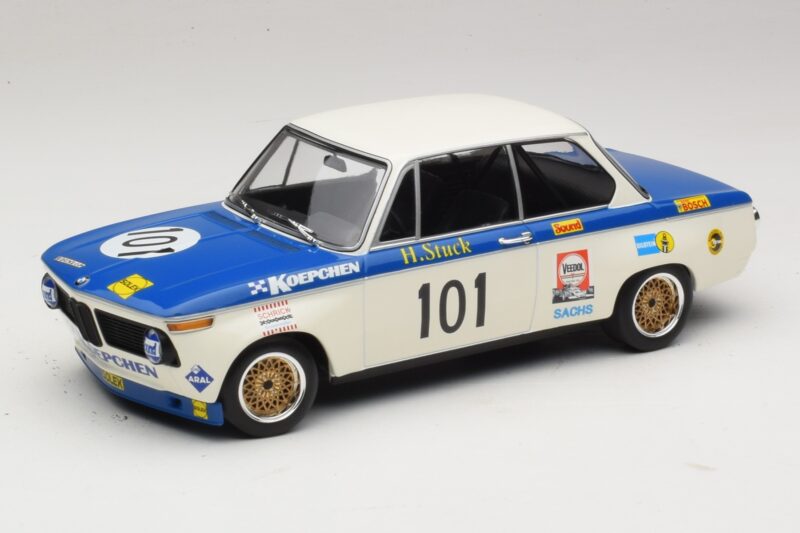
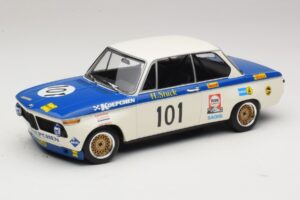
TL;DR: The Minichamps BMW 2002 #101 Koepchen is a 1:18 diecast model of H-J. Stuck's entry at the 1971 ADAC 500km Eifelpokalrennen. The body is a sealed one-piece casting, so the slim-pillared shape, flared arches and period graphics carry the detail. A mid-tier historic touring-car piece.
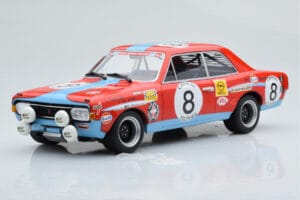
Before he became a Le Mans winner, Hans-Joachim Stuck was a young driver in a BMW 2002, and this model captures that early chapter. Minichamps casts the Koepchen car in 1:18 diecast, a small, boxy touring car with period graphics and a number 101 that tells the story of German circuit racing at the start of the 1970s.
The 2002 is a compact two-door saloon from the late 1960s with an upright cabin, thin pillars and large glass areas. In race trim, the arches are flared to cover wider wheels and the stance drops. A sealed one-piece casting suits the shape: nothing opens, so the slim pillars and window frames stay clean and the eye reads the proportions. At 1:18, the car is about 23 cm long. Check that the glazing sits flush, that the roofline looks light rather than heavy and that the wheels fill the arches evenly.
Early-1970s touring cars carried simple, bold graphics: a large number on the doors and bonnet, a sponsor name and a few stripes. Simplicity makes accuracy easier to judge. Number panels should be square and crisp, edges should be free of silvering, and colour should sit evenly on the hard metal shell. Zinc alloy gives the model weight for its small size, and the gloss should read even under a lamp. Fine period details are where a mid-tier finish earns its keep.
Stuck was born in 1951, so he was barely out of his teens in 1971. The Eifelpokalrennen was run at the Nürburgring, and the Koepchen name on the car refers to the team that prepared it. Stuck went on to win Le Mans with Porsche, which gives his early touring-car drives a retrospective weight. This model is a specific moment in a long career, not a generic racing 2002.
The 2002's light weight and compact size made it a favourite for club and international touring-car racing, and it laid the groundwork for BMW's reputation for compact, driver-focused cars. Collectors often see a straight line from the 2002 through the E30 M3 to the modern M2. A race-trim 2002 on a shelf adds the roots of that story, and its simple shape makes details like wheels, arches and graphics easy to appreciate in 1:18.
The most natural pairing is a modern compact BMW such as the M2, which shows the lineage across five decades. For historic racing, place it among other early-1970s touring cars. Keep the model in a dust-free case and out of direct sun, which can fade period graphics over time. For anyone looking to buy a compact historic touring car with a clear driver and event attached, the Koepchen livery gives the model a specific identity.