BMW X6M F86 Red Norev 1:18
Price:
94.00 €
This model is currently sold out. Enter your email and we'll let you know when it's back in stock.
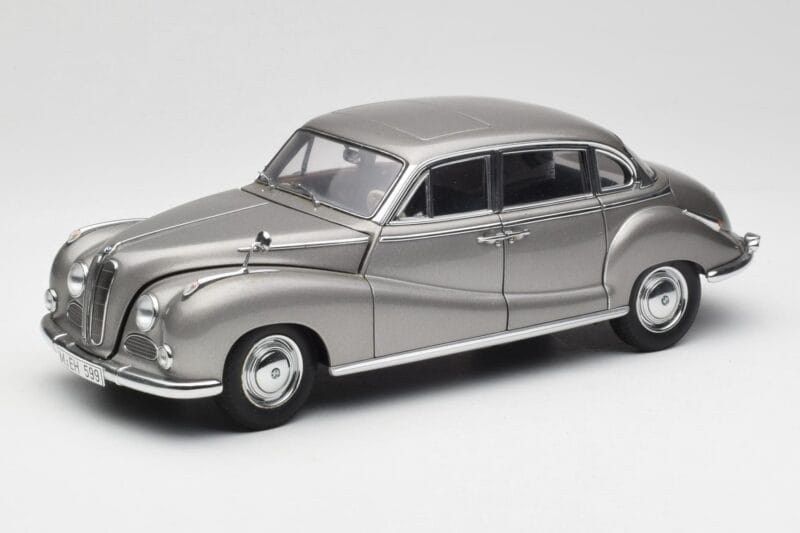
TL;DR: AUTOart's 1:18 diecast BMW 502 2.6 Luxus in Silver Beige Metallic reproduces the postwar luxury sedan nicknamed the Baroque Angel, powered by one of the first V8 engines built in Germany after the war. A detail-oriented diecast covering a genuinely significant, understated BMW.
BMW built its postwar reputation quietly with a car nobody nicknamed for speed. They nicknamed it for its curves instead.
The BMW 502, launched in 1954, earned the nickname "Barockengel," or Baroque Angel, for its flowing, rounded bodywork, a styling language that felt deliberately ornate against the more austere cars of the immediate postwar years. Under the hood sat an aluminum V8, one of the first V8 engines any German manufacturer built after the war, giving the 502 genuine mechanical substance behind its luxury positioning. It represented BMW rebuilding its identity as a maker of serious, well-engineered cars rather than the motorcycle-and-microcar survival mode the company had briefly fallen into. The 2.6 Luxus designation marks a specific engine and trim tier within that lineup, and Silver Beige Metallic suits the car's formal, restrained styling.
AUTOart has built its reputation on detail-focused diecast work, and a subject like the 502 rewards that approach: the flowing fender lines and formal grille need careful surfacing to read correctly, and the interior's period-appropriate upholstery detailing benefits from the finishing AUTOart typically applies. This isn't a car built to shout, and the model doesn't either; it's a precise, quietly confident piece for a vintage German shelf, sitting comfortably alongside the more famous 1950s Mercedes and Porsche classics it actually predates in engineering ambition.