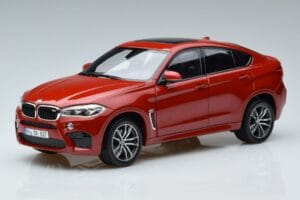
BMW X6M F86 Red Norev 1:18
Price:
94.00 €
This model is currently sold out. Enter your email and we'll let you know when it's back in stock.
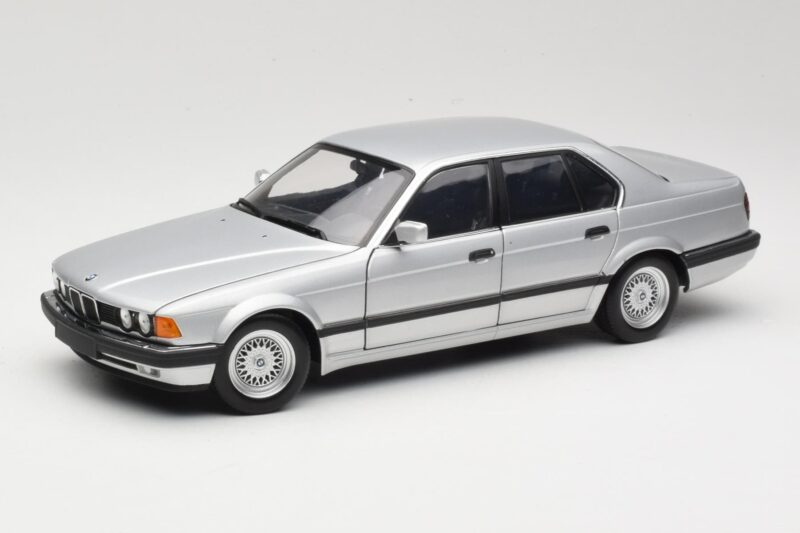
TL;DR: Minichamps' 1:18 diecast BMW 730i E32 reproduces BMW's second-generation 7 Series flagship in silver metallic, powered originally by a 3.0-liter inline-six ahead of the range's V12 flagship. Zinc alloy construction and opening panels place this 1987 executive sedan at mid-tier pricing for collectors building 1980s German flagship displays.
The 730i never got the glamour of its V12 sibling, but it carried the E32's flagship presence just as convincingly, and Minichamps treats the junior model with the same attention as the range-topper it once stood beside on the showroom floor.
Lift this 730i from its packaging and the zinc alloy body announces itself immediately, the density that separates die-cast construction from lighter plastic toys. The silver metallic paint carries a fine flake that catches light differently than a flat silver would, running smoothly over the E32's long doors and low beltline without pooling at the character lines. Chrome-effect trim on the grille, bumpers, and window surrounds sits crisp against the paint, the detail that reads correctly on a car whose designers used brightwork sparingly compared to its Mercedes rival. After years on a dust-free shelf, a properly clear-coated silver metallic finish like this one should show no yellowing, a good check of finish quality against the cheaper single-stage paints found on entry-level diecast.
Doors, hood, and trunk open on metal hinges that hold their position rather than drifting shut, letting the model display with the long doors swung wide the way period photography usually shows the car. Inside, Minichamps maps the dashboard's horizontal layout and the seat upholstery pattern rather than leaving a single molded color, a mid-tier touch that rewards a closer look through the door opening. The wheel design and hubcap detail match the 1987 specification, a small but checkable point for anyone comparing this diecast against reference photos of the actual sedan. The trunk lid opens wide enough to show the spare wheel well, a detail easy to skip on a sedan model but present here.
Before judging the paint or the panels, it helps to place the 730i within BMW's own flagship lineage.
BMW launched the E32 in 1986 as a clean-sheet replacement for the E23, and the 730i's 3.0-liter inline-six was the workhorse engine beneath a lineup that would soon add the 750i, the first postwar German production V12. That V12 grabbed the headlines, but the six-cylinder 730i was the volume flagship most European executives actually drove, smooth rather than dramatic, built for motorway distance rather than boasting rights. Six-cylinder 730i production actually outnumbered the V12 cars through most of the E32's run, which makes this the variant most buyers of the era actually chose. Minichamps' choice to reproduce this variant rather than only the halo V12 gives a collector the more representative side of the E32 story.
The E32 arrived into direct competition with Mercedes' W126 S-Class, and the rivalry defined the executive sedan segment for most of the late 1980s. Where the Mercedes leaned on outright solidity, the BMW pitched itself as the driver's flagship, sharper steering and a lower stance among cars built to nearly identical briefs. A shelf that pairs this 730i with a W126 model captures that period contrast directly, two flagships built to different philosophies within a few years of each other. Both cars have aged into modern classic status, and displaying them together tells a more honest story about 1980s luxury than focusing on one alone.
This 730i works best as the anchor of an 1980s German executive shelf rather than a standalone showpiece. At roughly 22 centimeters, the 1:18 scale gives the long E32 body real presence without crowding a standard display cabinet, and the silver metallic finish sits neutrally alongside darker sedans from the same era. Collectors chasing the full E32 range often pair this six-cylinder 730i with a later V12-powered 750i to show BMW's flagship story across two engines, a pairing that says more about the car's actual market position than the V12 alone ever could. Keep the model out of direct sunlight, since UV exposure fades metallic paint faster than dust accumulation ever will, and the E32's low-key silver hides scratches less forgivingly than darker colors do.