BMW X6M F86 Red Norev 1:18
Price:
94.00 €
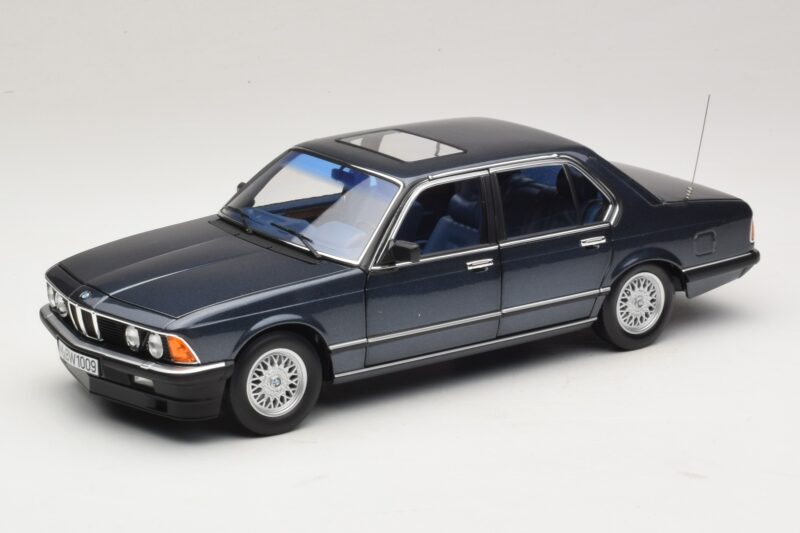
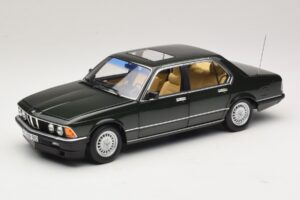
TL;DR: The Touring Modelcars BMW 745i E23 in Arctic Blue Metallic is a 1:18 diecast of the 1984 executive sedan, with opening parts that give it an inspection angle sealed models lack. Zinc alloy provides the heft, and the metallic paint suits the E23's formal shape. It anchors a 1980s BMW or executive-sedan shelf.
The E23 7 Series was BMW's statement that a luxury sedan could still look like a BMW: a low nose, a tall glasshouse and no excess. Touring Modelcars' BMW 745i E23 in 1:18 brings it to the shelf in Arctic Blue Metallic, in diecast with opening parts that reward a closer inspection.
Arctic Blue Metallic is a cool, restrained color, and on the E23's upright body it works the way period paint did: the metallic flake lifts the flat door panels and the long bonnet without turning the car flashy. Diecast helps the finish, because paint sits on a hard metal shell and the gloss reads deep and even under a lamp. Look at the flake under direct light and note how evenly it is distributed across the roof and bonnet, where flaws show first. The tall glasshouse and thin pillars are what make the E23 look light for its size, so check that the window frames stay slim and the glazing sits cleanly inside them.
This model is built with opening parts, and that changes how you handle it. The hinged panels move on metal hinges and close with a solid, weighty feel that a lighter material would not give. It lets you check how well the body is put together, and it adds a second viewing angle that sealed castings cannot offer. The trade is that moving parts need wider gaps than a sealed body would, so shut lines are a little more visible than on a one-piece casting. Open and close the panels gently and display the model with them shut.
The E23 was the first car to wear the 7 Series name, launched in 1977 and designed under the direction of Paul Bracq. It carried BMW's distinctive nose and a tall, airy cabin, and the 745i was the turbocharged flagship of the line. Its natural period rival was the Mercedes-Benz S-Class of the same decade, and the two cars frame a conversation collectors still have about how a luxury sedan should look. The production year of 1984 places this model in the later part of the E23's run, when the shape had settled into its mature form.
Zinc-alloy diecast gives real heft, dimensional stability over decades and chrome and printed detail that survive handling. The price of that is slightly broader tolerances, so edges are a shade softer and panel seams a shade wider than cast resin would show. On a car like the E23, whose flat panels and straight lines suit metal casting, that trade is a fair one. Expect fully painted finish and applied small parts, and judge the model on stance, glazing and paint rather than on razor-sharp edges.
At 1:18 the E23 runs roughly 27 cm long, so it fits a standard shelf without trouble. It suits a shelf of 1980s executive sedans, a BMW lineage display, or a contrast row beside the sports coupes of the same decade. Keep it out of direct sunlight, dust it with a soft brush, and handle the opening parts with a light touch. Compared with the Agate Green version of the same casting, the Arctic Blue is the cooler and more formal of the two. If you plan to buy a classic BMW sedan at 1:18, this is a considered way to start.