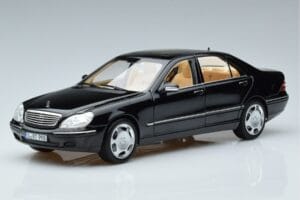
Mercedes S-Class W220 S600 Limited Edition Norev 1:18
Price:
91.00 €
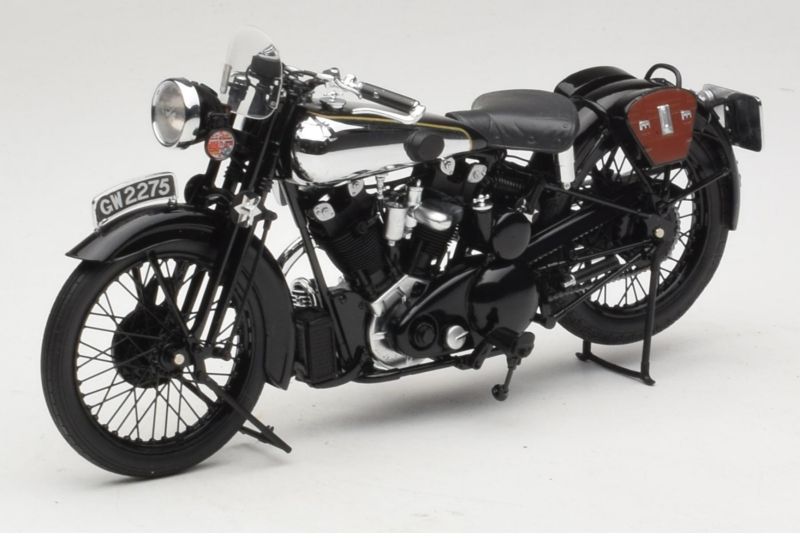
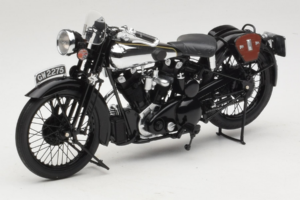
TL;DR: Minichamps' 1:18 diecast Brough Superior SS100 reproduces the hand-built British motorcycle T.E. Lawrence owned and rode, a pre-war machine known as the "Rolls-Royce of motorcycles." It is a two-wheel subject that stands apart in a diecast collection built mostly around cars.
A motorcycle on a shelf of scale cars tends to draw attention on its own, and few motorcycles carry a backstory as specific as this one.
The Brough Superior SS100 was a hand-assembled, high-performance motorcycle built in small numbers during the interwar years, earning a reputation for quality and speed that led enthusiasts to nickname it the "Rolls-Royce of motorcycles." T.E. Lawrence, the British officer known to history as Lawrence of Arabia, owned several SS100s and named them individually, riding one when he died in a crash near his home in 1935. That connection turns an already rare pre-war motorcycle into a subject with real documented history behind it, rather than a generic vintage bike chosen for its shape alone.
Minichamps has a strong reputation across its diecast range for accurate proportions and clean paint execution, and a motorcycle subject actually plays to those strengths: there is no body panel to hide flaws behind, so the frame, tank shape, and exposed engine detail have to be right on their own. At 1:18, the SS100 has a compact footprint next to a car replica, which makes it easy to slot into a themed display without dominating the shelf. It works well displayed alongside other pre-war subjects or simply on its own as a standalone historical piece, where its story does most of the talking.