Last one
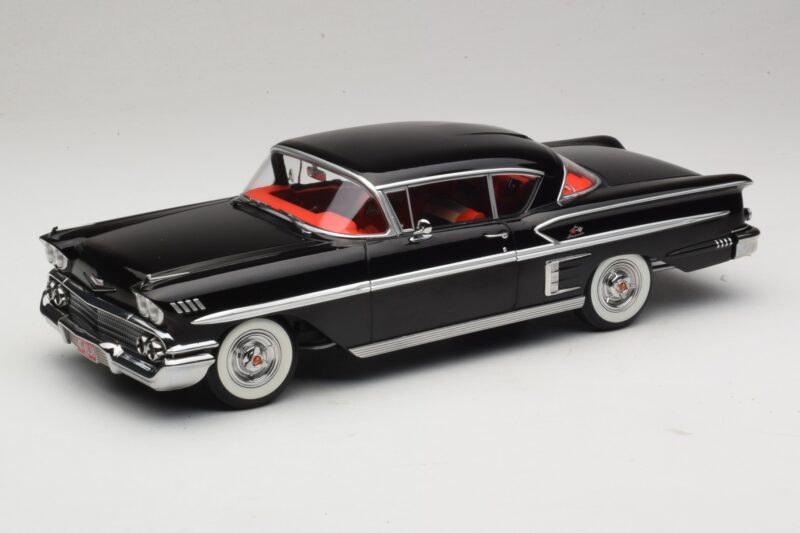
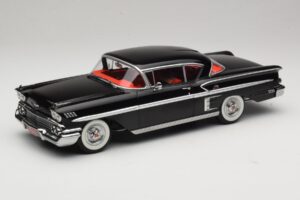
TL;DR: KK-Scale's 1:18 diecast Chevrolet Bel Air Impala Coupe reproduces the 1958 model year that introduced the Impala name as Bel Air's top-trim hardtop, with its signature triple taillights. The sealed one-piece body puts the emphasis on chrome, fin detail, and paint depth rather than opening doors or hood.
1958 was a one-year-only styling exercise for Chevrolet, and the Impala's debut that season as the flashiest Bel Air hardtop made it stand apart even within its own showroom. KK-Scale's black coupe captures that distinctive single-year shape, from the triple taillights to the broad, chrome-heavy grille.
Chevrolet redesigned its full-size lineup for 1958 alone, a styling exercise that would be replaced again the following year, which makes the body shape on this casting genuinely unique within Chevrolet's history rather than a shape shared across several model years. The Impala arrived this year as the top-trim two-door hardtop and convertible within the Bel Air series, not yet its own standalone model, distinguished by triple taillights on each side instead of the dual lights other full-size Chevrolets wore. That triple-light detail became an Impala signature for years afterward, but 1958 is where it started. KK-Scale's coupe reproduces that specific, short-lived combination of Bel Air badging and Impala-exclusive trim.
The real 1958 Chevrolet was a genuinely large car, and KK-Scale's zinc alloy casting carries real weight for its size leaving the packaging, the kind of density that signals metal rather than lighter material. The body is molded as a single sealed shell, so nothing here opens, which is standard practice at this price point and keeps the panel lines along the doors and trunk reading as tight, consistent grooves rather than a series of slightly mismatched edges. The broad grille and the modest but present tailfins that mark this transitional year between rounded 1950s shapes and the sharper fins of the following decade are picked out with enough edge definition to hold up under a display lamp.
Black is a demanding color on a diecast casting because it shows every flaw in surface prep, and here the gloss reads deep and even rather than patchy, a sign the tooling and paint process were handled carefully. The chrome grille bars, side spears, and window surrounds separate cleanly from the black body color instead of bleeding into it, and the triple taillights carry their individual lens detail rather than being molded as one undivided red block. Badge work on the hood and trunk stays legible at close range, a small but telling detail on a car this ornate.
At 1:18, this full-size coupe runs close to 26 centimeters nose to tail, among the larger American subjects a collector will display, and the wheel-to-arch gap and ride height read correctly for a traditional body-on-frame chassis rather than sitting too high. The black finish gives this piece real shelf presence as a visual anchor, especially next to the brighter two-tone Chevrolets and Fords that typically fill a 1950s American lineup. Paint depth under direct light shows enough reflection to suggest a period lacquer finish without crossing into an artificial, overly glossy look. Wheel covers carry the correct full-moon pattern Chevrolet used that year, sized properly within the arches rather than looking undersized the way some lower-tier castings get wrong.
1958 sits at an interesting hinge point in Chevrolet history, the year before the Impala became its own model and the year the triple-taillight signature first appeared, which makes this coupe a logical starting point for a collector building a tailfin-era Chevrolet lineup rather than jumping straight to the more famous 1957 or 1959 cars. The black finish also works as a serious, formal counterpoint to the pastel two-tones that dominate most 1950s diecast collections. At 1:18, it holds its own next to other full-size American coupes from the same decade without needing extra shelf depth. For a buyer who already owns a 1957 Bel Air, this is the piece that completes the triptych.