Back in stock
This model is currently sold out. Enter your email and we'll let you know when it's back in stock.
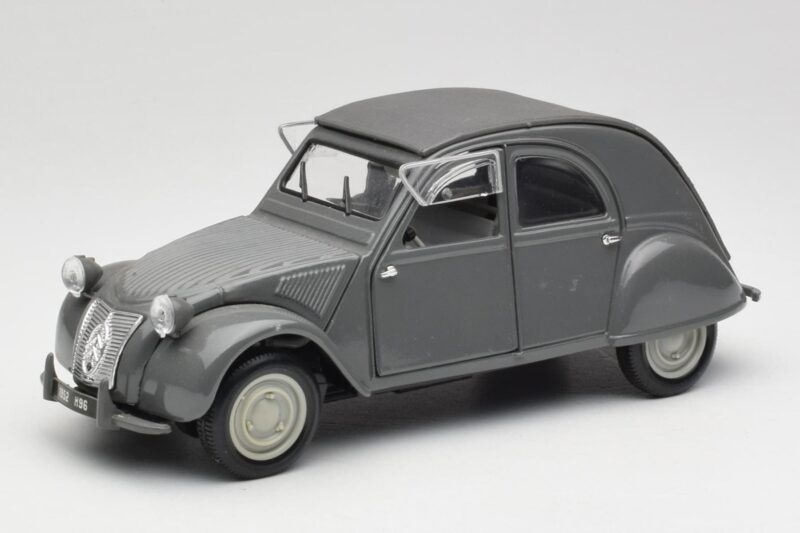
TL;DR: Tchibo's 1:18 diecast Citroen 2CV Type A reproduces the minimalist postwar French economy car in grey, a period-correct color for the earliest cars. Built around simplicity rather than luxury, the 2CV ran for over four decades, and this entry-tier diecast makes an accessible starting point for a French-classics shelf.
Citroen built the 2CV for people who had never owned a car before: cheap, simple, and tough enough for rural French roads. Tchibo's grey diecast nods to that austerity directly, since grey was one of the few paint options early 2CVs actually left the factory in.
The 2CV's flat panels and corrugated bonnet are, if anything, easier to get right in entry-tier diecast than a curvier prewar shape, since there is less compound surfacing to soften in the tooling. Tchibo's casting captures the car's upright, narrow stance and the roll-back canvas roof line without needing the sharp shut lines a costlier resin builder would chase. The grey finish suits the subject too: the 2CV was never a car sold on chrome or paint depth, and a flat, honest grey reads truer to the original than a glossier alternative would. Handled directly, the model carries a light but solid diecast feel, matching a car that was itself built to be simple rather than substantial. This is a case where an accessible diecast and an accessible original car line up well.
Citroen built the 2CV on a brief that had nothing to do with speed or comfort: a car simple enough for a farmer to fix with basic tools, light enough for a small air-cooled twin to move, and softly sprung enough to survive rutted rural roads. That formula stayed in production for more than four decades with only modest updates, longer than almost any other car of its era, and it turned the 2CV into a genuine fixture of French daily life rather than a niche economy model. Collectors drawn to postwar European history often want the 2CV specifically because it represents that philosophy, simplicity as a design goal rather than a compromise, better than almost any other car of the period.
Next to costlier vintage-classics resin, this 2CV reads as the honest, accessible entry: the car that put France on wheels, in a diecast priced the same way. It anchors a French-classics shelf without asking showcase money.