Used
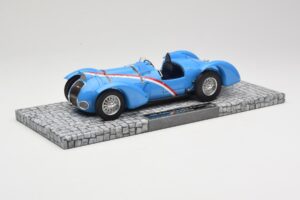
Ecurie Bleue Delahaye Type 145 V12 R. Dreyfus Coupe du Million Montlhery 1937 Minichamps 1:18
Price:
319.00 €
Delahaye’s scale model presence is small and focused, limited to 1:18 pieces from Minichamps and Guiloy that document the marque’s coachbuilt prewar era and its return to hillclimb and special-event competition in the 1960s. This is a niche corner of the hobby, one that rewards collectors drawn to French automotive art rather than broad catalog coverage.
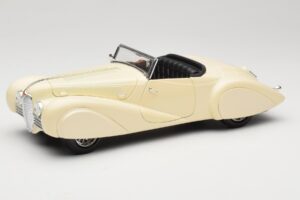
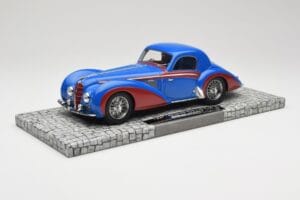
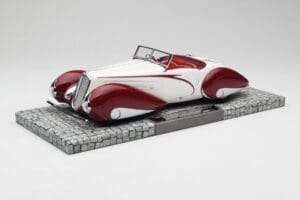
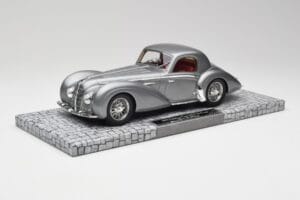
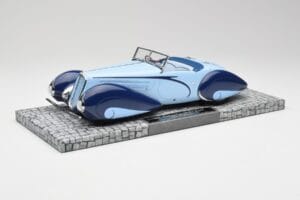
TL;DR: Delahaye scale models come from Minichamps and Guiloy, exclusively in 1:18 diecast and resin. Coverage centers on the prewar Type 135, famous for its Figoni et Falaschi coachwork, alongside 1960s hillclimb and special-event subjects. This is a narrow, specialist corner of the hobby rather than a broad catalog.
Delahaye occupies a small but distinctive place in scale model collecting, one defined more by design history than by manufacturer variety. The marque's fame rests on its prewar coachbuilt grand tourers, bodies commissioned from independent coachbuilders that turned automobiles into rolling sculpture, and Delahaye scale models exist to preserve that legacy in miniature. With only two manufacturers and a single scale in active coverage, this is a category to explore in depth rather than breadth, and that focus is part of its appeal.
Two manufacturers currently cover Delahaye in this collection, and neither runs a large catalog. Minichamps produces Delahaye subjects in both diecast and resin, applying the same mid-tier construction standards it uses across its broader European classic-car range: consistent panel fit, accurately toned paint, and enough interior detail to hold up under Vitrine lighting. Guiloy, a longer-established Spanish diecast producer, brings a different feel to its Delahaye releases, generally simpler in construction and priced more accessibly, making it a reasonable starting point for a collector testing interest in the marque before committing to a more detailed piece.
With just these two sources and one scale, there is no tier ladder to climb here, only two distinct approaches to the same handful of subjects.
Delahaye's reputation was built by coachbuilders, not by the factory alone. The Type 135, the chassis most often reproduced in scale form, became a canvas for independent houses such as Figoni et Falaschi, whose flowing, teardrop-fendered bodies turned the car into one of the most photographed shapes of the prewar era. The chassis underneath was more than just a frame for elegant bodywork, either: a Delahaye took outright victory at Le Mans in 1938, proving the engineering held up under competition as well as at the concours lawn. That dual identity, coachbuilt elegance paired with genuine racing credibility, is precisely why surviving examples still place at the top level of concours judging today. Scale manufacturers working in 1:18 have enough room to capture the sweep of a Figoni et Falaschi body accurately, from the fender line to the split rear window, details that would be lost at a smaller scale.
Building a Delahaye collection means accepting a genuinely narrow scope rather than working around it. With one scale and two manufacturers, a collector cannot chase manufacturer variety the way they might with a mainstream marque; the interest here has to come from the cars themselves. Pairing a prewar Type 135 with one of the marque's 1960s hillclimb and special-event subjects gives a small collection real range across two very different chapters of Delahaye's history, from Figoni-bodied road cars to the more purpose-built competition machines that followed. This category rewards patience and a genuine interest in coachbuilt design more than it rewards frequent buying, and that focused scope is exactly what makes it worthwhile for the right collector.
The prewar Type 135, especially versions wearing Figoni et Falaschi coachwork, is the most frequently reproduced Delahaye subject in 1:18. Its flowing fenders and distinctive proportions make it the design most scale manufacturers choose when covering the marque.
Guiloy offers a simpler, more accessibly priced diecast construction, while Minichamps applies the tighter panel fit and interior detail typical of its broader European classic-car range. Neither dominates the category; the choice comes down to budget and how much detail a collector wants.
Yes. The 1960s hillclimb and special-event subjects represent Delahaye's later competition-focused work, distinct from the coachbuilt prewar grand tourers. Collecting both eras side by side shows the marque's shift from elegant road cars to purpose-built performance machines.
Within this collection, yes. Both Minichamps and Guiloy produce their Delahaye subjects exclusively in 1:18, which suits the marque's flowing coachbuilt bodywork well, since the scale gives enough room for fender lines and cabin detail to read clearly.