Last one
Used
This model is currently sold out. Enter your email and we'll let you know when it's back in stock.
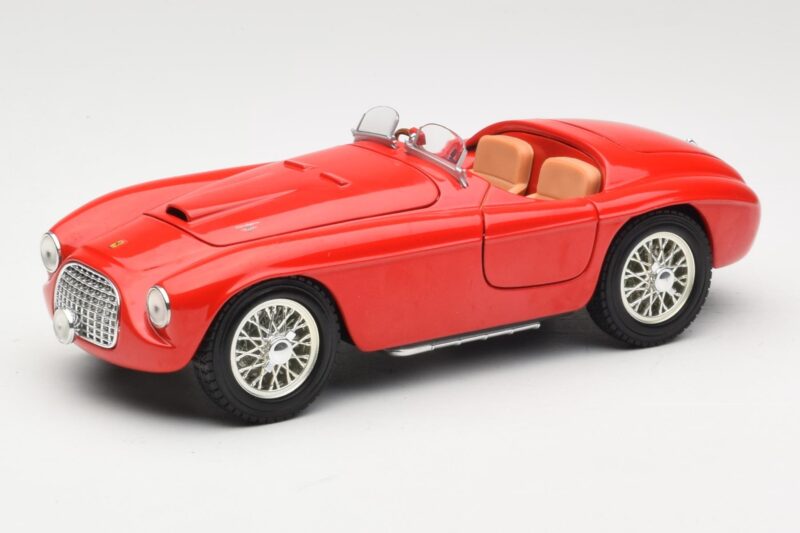
TL;DR: This Hot Wheels Ferrari 166 MM 1:18 in Red revisits one of Ferrari's founding-era sports racers, built with the open two-seat body Carrozzeria Touring made famous as the barchetta style. Accessible diecast pricing makes it a practical entry into Ferrari's earliest competition history.
Ferrari's identity as a road-car brand came later. In its first years, everything the company built was meant to race, and the 166 MM belongs to that founding chapter.
The 166 MM carries none of the aerodynamic complexity of later Ferraris, just a clean, open cockpit and gently curved fenders, and Hot Wheels' diecast rendition keeps that simplicity intact. The Red finish is applied evenly across the rounded body, with the model's mass-tier construction showing in slightly generous panel gaps rather than boutique-resin precision. That's an honest tradeoff for a subject rarely modeled at all in this scale, let alone by a brand associated with small-scale toy diecast rather than adult-collector Ferraris.
Cars like the 166 MM were built when Ferrari was still establishing itself purely through competition results, years before road-going production became the company's second business. The open Touring body style seen here became so associated with this era of Ferrari that "barchetta," meaning little boat, entered the automotive lexicon as a description for any open two-seat sports car built in this spirit.
Most Ferrari collections lean heavily on 1960s-onward road cars. Adding this 166 MM pushes that starting point back to the brand's earliest identity, and its accessible diecast price makes that historical reach easy to justify.